Editor's Note: This article originally appeared in the April 2026 print edition of Greenhouse Management under the headline “Healing through horticulture.”

Facing language barriers and challenges transferring his credentials from El Salvador after immigrating to the United States, José Saravia carved out a new career path in horticulture.
“Horticulture was the best option because it’s hands-on and you can learn by watching,” says Saravia, who didn’t have the confidence in his English skills initially to pursue a nursing career.
Now, working as a patient care technician at Bon Secours St. Francis Hospital in Charleston, South Carolina, Saravia has pioneered a therapeutic horticulture program that blends science, compassion and connection — redefining the valuable role plants play in health care.
Plant background
Back in El Salvador, where his father is a Lutheran pastor, Saravia was involved in farming projects, community gardens and other ecological initiatives through the Lutheran World Federation. Once he settled in Charleston, Saravia and his wife found volunteer opportunities landscaping historical gardens through the Charleston Parks Conservancy. This hands-on experience with plants pushed him to pursue a degree in horticulture.
“I started the horticulture program without much knowledge about local plant material, disease or propagation, but it was one of the most beautiful experiences to learn all these new things,” says Saravia, who earned his horticulture degree from Trident Technical College.
A fellow student who launched a horticultural therapy program at the Medical University of South Carolina introduced Saravia to the concept of therapeutic horticulture. Saravia was instantly attracted to the idea, since it perfectly blended his degree in clinical laboratory science and his doctorate in theology by using plants to address patients’ physical and psychological development through connection with the natural world.
Pioneering a program
Saravia was working nights at Bon Secours St. Francis Hospital when he discovered the therapeutic horticulture program at North Carolina State University, which allowed him to take online classes at his own pace.
Through this program, he learned how horticultural therapy could benefit stroke and dementia patients and others recovering from brain cancer, spinal injuries and post-traumatic stress disorder in the neuro-spine department where he worked.
For example, a 2018 study from South Korea demonstrated that stroke patients involved in a task-oriented horticultural therapy program showed significantly improved physical and psychological function, including increased hand strength and balance as well as decreased depression.
“We’re trying to find a way to use plant materials in different kinds of activities, with the objective to heal people,” Saravia says.
Saravia presented the idea to his manager, who sought approval from hospital executives to launch a therapeutic horticulture program within Bon Secours St. Francis Hospital’s neuro-spine unit.
Once he got the green light in the fall of 2024, Saravia sought donations of plants and other supplies from the institutions at which he studied and the organizations he volunteered with. Then, he began engaging patients in plant-related activities designed to improve physical and emotional wellbeing.
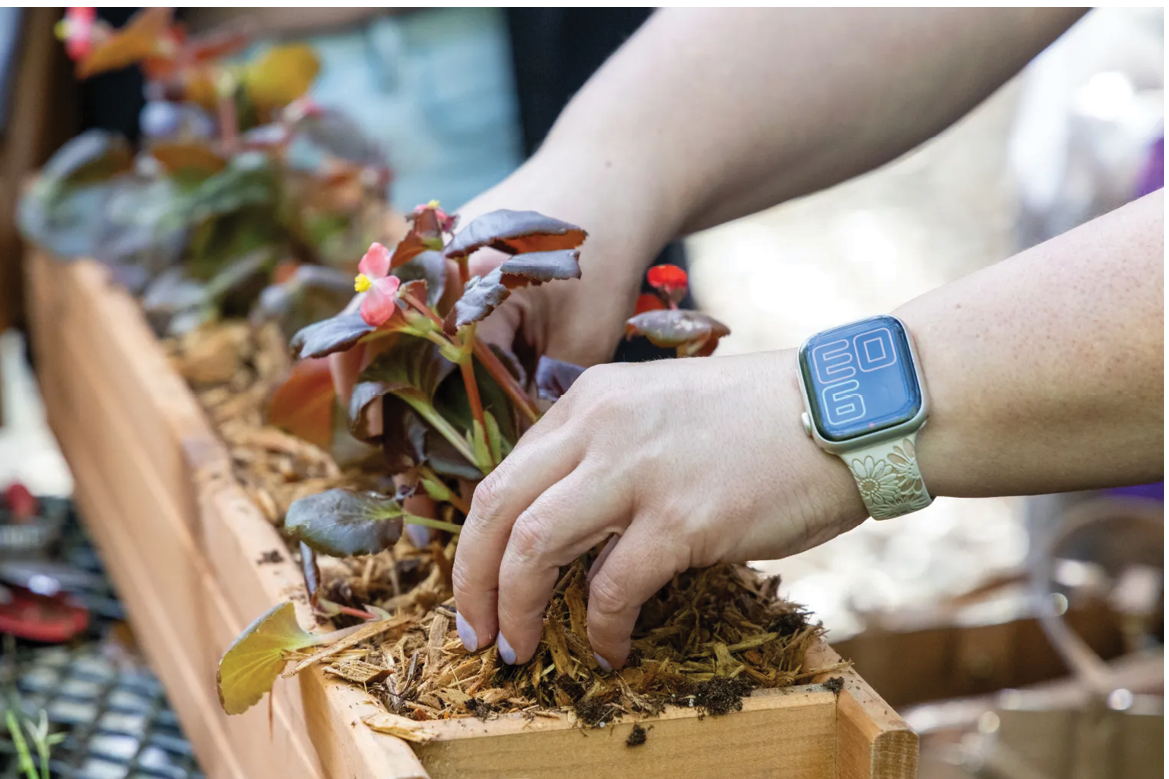
For stroke patients, for example, “We started with small activities to stimulate the nervous system, like moving plants, feeling the different shapes and textures and putting soil into containers. I also ask them to describe the color of the plant and to describe pictures of people watering plants,” Saravia says. “The rehabilitation process for stroke patients is long, so the objective is to try to provide different types of activities to stimulate them.”
For dementia patients, Saravia uses plants to stimulate memory with aromatherapy.
“Sometimes they can remember activities they did in the past that generate some happiness,” he says. “One day, we had a dementia patient who smelled a marigold plant, and he remembered that his grandmother used to like marigold plants. It was almost impossible to get a reaction in his brain otherwise, but he remembered that.”
Growing impact
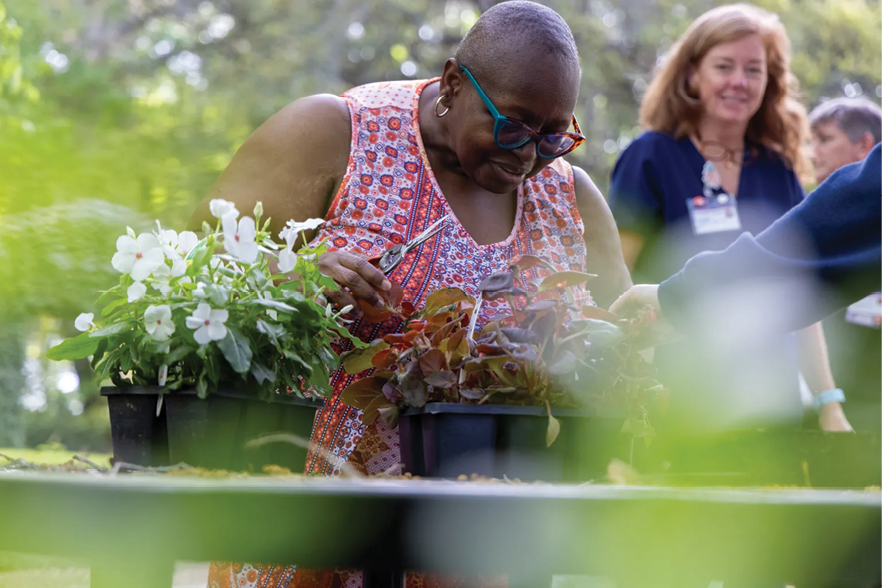
Since its inception just over a year ago, Saravia’s therapeutic horticulture program has already demonstrated measurable growth and impact.
“We started about 15 months ago,” he says, “and now, I’m working with around 24 patients per week.”
Saravia is looking for ways to expand the program’s reach beyond his unit.
“We’re exploring how we can use the program in different ways because the hospital is growing extremely fast,” he says. “For example, we have a new children’s unit that could benefit from these kinds of activities. We’re also building a new hospital in North Charleston, and we might like to have this program in the rehabilitation center there.”
Saravia also sees opportunities to leverage the hospital’s existing resources, like its meditation garden, by planning more therapeutic horticulture activities outside.
The key to expanding the program and building buy-in from the patients and administrators, he says, is education. “I like to provide an introduction about therapeutic horticulture, the types of activities I want to provide, and what kind of benefits they’re going to get,” he says. “Almost nobody knows about therapeutic horticulture, so I try to share information, because the most important thing is education.”
Explore the April 2026 Issue
Check out more from this issue and find your next story to read.
Latest from Greenhouse Management
- The Growth Industry Episode 17: Investing in IGCs with WorryFree® Plants
- New UF study sheds light on the hidden toll of back pain among horticulture workers
- 2026 Irrigation and Automation Market Report: Tradition rains
- Empowering the Future of Precision Cultivation: Resource Efficiency, Root-Zone Science and Scalable Automation
- Oasis Grower Solutions hires plant scientist Timothy Frey
- New green industry leadership development program for women now available
- Clean production protocol
- Jiffy hosting Microgreens Grower Day