Photo courtesy of MIT Greenhouse Solutions via University of Arkansas Division of Agriculture
USDA’s National Institute of Food and Agriculture Research Facilities Act Program has awarded $121 million in funding to 36 universities across the U.S. to modernize, expand and build state-of-the-art agricultural research facilities.
Projects ranging from planning grants to large-scale construction of research complexes will strengthen the nation’s capacity for cutting-edge research in food and agricultural sciences, NIFA said.
These investments support the construction and renovation of laboratories, greenhouses, livestock and aquaculture centers and integrated research hubs that advance food and agricultural innovation.
RFAP projects strengthen research capacity, accelerate technology development and support workforce training in areas such as food safety, precision agriculture, controlled environment production and resilient livestock systems.
The awardees are:
- Arkansas State University
- University of Nevada, Reno
- Clemson University
- Colorado State University
- Iowa State University of Science and Technology
- Kentucky State University
- Louisiana State University Agricultural Center
- Michigan State University
- Mississippi State University
- North Carolina State University
- North Dakota State University
- Oregon State University
- Regents of New Mexico State University
- Regents of the University of Idaho
- South Dakota State University
- Texas Tech University
- The Connecticut Agricultural Experiment Station
- The Regents of the University of California
- Rutgers, the State University of New Jersey
- The Trustees of the University of Pennsylvania
- University of Arkansas
- University of Arkansas, Research and Extension Center
- University of Central Missouri
- University of Connecticut
- University of Houston
- University of Kentucky Research Foundation
- University of Maryland
- University of Maryland Eastern Shore
- University of New Hampshire
- University of Tennessee at Martin
- University of Washington
- Utah State University
- Virginia Polytechnic Institute and State University
- Virginia State University
- West Texas A&M University
- West Virginia State University Research and Development Corporation
Click here to explore the funded projects.
Two highlighted awardees are listed below.
NIFA awards $2.5 million to University of Arkansas Division of Agriculture for greenhouse modernization
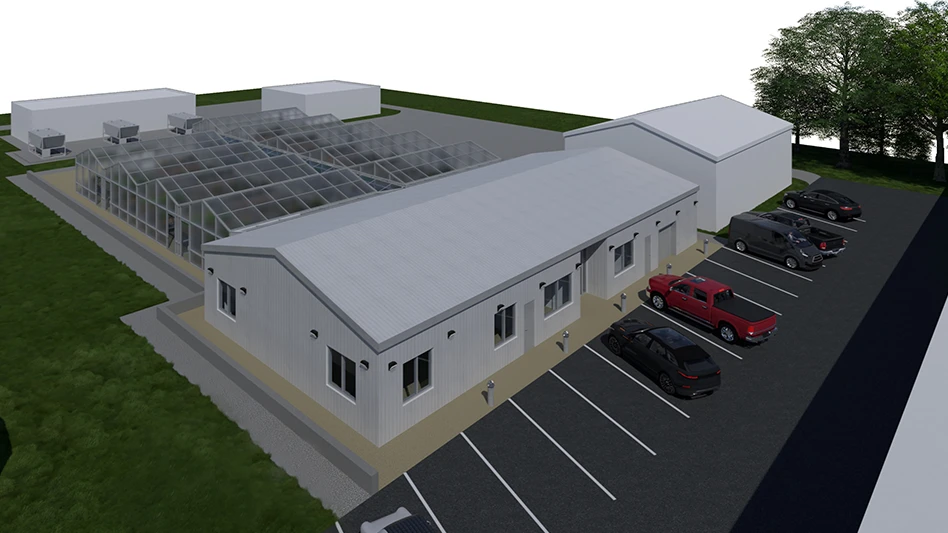
Climate-controlled greenhouses that will replace facilities dating back to the 1960s are coming to the University of Arkansas Division of Agriculture thanks to a $2.5 million grant from the U.S. Department of Agriculture.
Combined with a UADA match, the award creates a $5 million investment in agricultural research and extension infrastructure. The USDA’s National Institute of Food and Agriculture awarded the grant through the Research Facilities Act Program as part of a $121 million nationwide investment at more than 30 universities.
UADA greenhouse facilities are used to develop new crop varieties, improve production practices and address emerging challenges facing agriculture. Fruit and vegetable breeders and researchers in plant disease management, hydroponics, ornamental plants, turfgrass science and food science also use the greenhouses.
Mary Savin, head of the department of horticulture for UADA and project leader, said the seven aging greenhouses at the Milo J. Shult Agricultural Research and Extension Center no longer provide the level of environmental control needed for year-round agricultural research.
The complex of nine greenhouses will incorporate advanced environmental control technologies, including modern heating and cooling systems, ventilation, irrigation, lighting, humidity controls, and automated monitoring systems. A classroom and more preparation space for greenhouse research are also in the plans.
“This new greenhouse facility will provide infrastructure to support multidisciplinary research, partnerships with stakeholder, and experiential learning to educate the next generation of workforce leaders,” Savin said. “Researchers will be able to conduct longer and more reliable studies, complete multiple breeding and growing cycles, and evaluate new crops, production practices and agricultural technologies under precisely controlled conditions.”
“The greenhouse complex will position Arkansas researchers to better serve producers and communities for decades to come,” added Jean-François Meullenet, senior associate vice president for agriculture-research and director of the Arkansas Agricultural Experiment Station, UADA’s research arm. “It will modernize critical infrastructure and expand opportunities for innovation, teaching and outreach.”
Planning is underway, with construction expected to be completed in late 2028. UADA will sustain the complex through continued institutional support, greenhouse-use fees and revenue from research and industry partnerships.
Here's why UADA said the greenhouse complex is needed:
- Current greenhouses offer limited environmental control: Most of the current facilities lack the equipment, utility infrastructure and capability needed for precise climate management. Researchers cannot consistently control temperature, light or other growing conditions.
- New greenhouses will replace glass with polycarbonate panels: Polycarbonate is expected to be more durable during severe weather common in the Southeast and more energy-efficient, supporting greater year-round use.
- Researchers will be able to customize greenhouse environments: Programmable control systems will allow different greenhouses to maintain distinct temperature, light and environmental conditions tailored to specific experiments.
- Current limitations restrict experiment duration: Some research projects can currently run only two to three weeks before greenhouse conditions become problematic. The upgraded facilities will support longer-term studies.
- Plant breeding programs will gain new capabilities: Automated controls and phenotyping tools will support high-throughput, precision breeding research and allow multiple breeding cycles per year without seasonal interruptions.
- New greenhouses will enhance education and workforce development: Students and stakeholders will gain hands-on experience with modern greenhouse technologies and develop industry-relevant skills.
USDA awards more than $16.2 million for Michigan State University greenhouse renovations
Through the Research Facilities Act Program, USDA NIFA, has awarded more than $16.2 million for Michigan State University’s ongoing Plant Science Research Greenhouse Complex renovations.
Per the program’s requirements, MSU is providing matching funds to create more than $32.5 million in new support for the project. MSU received the third-largest award from the total $121 million investment in research facilities across the country.
The Research Facilities Act Program provides financial assistance to institutions for the construction, alteration or modernization of research facilities that host basic, applied and developmental agricultural research.
The program places an emphasis on infrastructure that promotes research, teaching and extension activities that enable the training of future researchers and professionals in a wide range of agricultural industries.
Program priorities focus on themes such as advancing agricultural productivity and profitability, supporting domestic agricultural markets, promoting sustainable resource use and enhancing resilience against insects, diseases and environmental pressures.
“The USDA NIFA funding will allow our researchers, staff and students to benefit from high-quality greenhouse facilities, and we’re grateful to USDA for recognizing the importance of this project,” said Matt Daum, associate provost and dean of the College of Agriculture and Natural Resources. “We also appreciate the tremendous role our partners have played in securing funding, including legislators at the federal and state levels, as well as our agriculture commodity organizations, business leaders and Michigan’s farmers.”
To date, roughly $40 million from the state of Michigan and MSU units has led to new construction and renovation of about 60% of the research greenhouses, including a new headhouse, environmental control systems, LED lighting, glazing panels and taller ceilings for larger crops.
Upon completion of the latest project phase in April 2026, however, 40% of the greenhouses have received little to no updates.
When USDA NIFA announced a request for proposals through the Research Facilities Act Program in June, MSU leaders saw great opportunity to enhance the greenhouses for the more than 400 users in CANR and the College of Natural Science.
“In a state with an unpredictable growing season, our greenhouses are critical for plant research,” said Eric Hegg, dean of the College of Natural Science. “This funding will give our faculty quality spaces and controlled environments to do what they do best — the unseen but vital research that lays the foundation for farmers, plant breeders and agricultural innovators to better feed the world.”
In addition to addressing the unrenovated greenhouses by installing LED lighting, environmental controls and taller ceilings, other features will be added throughout the complex. This includes automated shade and energy curtains that give researchers the ability to manipulate environmental conditions such as light exposure, temperature and humidity — all while increasing energy efficiency.
“Funding from USDA NIFA and the university will greatly expand the research our scientists can perform in the greenhouses,” said Erik Runkle, a professor and MSU Extension specialist in the Department of Horticulture and co-chair of the MSU Plant Science Research Greenhouse User Committee. “The new facilities will give us much tighter and more reliable control of temperature and light, which are the main drivers of plant growth. They will also eliminate research barriers, such as height restrictions on tall crops and obstacles in drought studies and pest control research.
“Just as importantly, they will operate more sustainably than the greenhouses they replace. Once this project and the Plant and Environmental Sciences Building are complete, we will have one of the largest and most sophisticated plant growth facilities in the U.S. and beyond.”
Chad Cotti, MSU AgBioResearch interim director, said with USDA NIFA’s support, MSU scientists will have the necessary tools to meet the plant agriculture industry’s needs of today and tomorrow.
“MSU is one of the world’s leading plant science research institutions, and we need modern infrastructure to build on that foundation,” Cotti said. “This funding strengthens our mission of finding solutions to the major challenges facing plant agriculture in Michigan, across the U.S. and all over the world. The upgrades already made to the facility allow us to do many types of experiments that were not previously possible, but bringing the entire complex up to that level will spur innovation in even more areas for years to come.”
The greenhouses are vital to some of MSU’s research endeavors, including the Department of Energy-funded Plant Research Laboratory and the Plant Resilience Institute.
On the applied research side, two State of Michigan-funded programs administered by MSU AgBioResearch and MSU Extension — Project GREEEN and the Agricultural Resiliency Program — support a variety of research in the greenhouses. Both are partnerships among MSU, the Michigan Plant Coalition and the Michigan Department of Agriculture and Rural Development.
MSU Extension Director Quentin Tyler said strong backing from Michigan’s agricultural industries was critical to receiving the award.
Michigan Agri-Business Association President Chuck Lippstreu and several other partners submitted letters of support to USDA NIFA on behalf of MSU.
The funding application effort was co-led by Kang Xia, CANR associate dean for research and associate director for AgBioResearch, and Michelle Mazei-Robison, associate dean for research and infrastructure for the College of Natural Science.
Also providing support was a team of faculty and staff as well as MSU leadership in the Office of Research and Innovation, Office of the Provost, Infrastructure Planning and Facilities, Institutional Space Planning and Management, Office of Financial Planning and Budget and MSU Foundation.
Latest from Greenhouse Management
- The Growth Industry Episode 17: Investing in IGCs with WorryFree® Plants
- New UF study sheds light on the hidden toll of back pain among horticulture workers
- 2026 Irrigation and Automation Market Report: Tradition rains
- Empowering the Future of Precision Cultivation: Resource Efficiency, Root-Zone Science and Scalable Automation
- Oasis Grower Solutions hires plant scientist Timothy Frey
- New green industry leadership development program for women now available
- Clean production protocol
- Seed Your Future launches '50K to Grow 50K' campaign to connect young people with horticulture careers