Editor's Note: This article originally appeared in the June 2026 print edition of Greenhouse Management under the headline “Sharing plant stories.”
Growing up, Katelyn Boyce was fascinated by nature. As a child, she memorized the scientific names of different frogs, just for fun.
“I’ve always been a big nerd about nature in general,” she says.
Boyce ended up studying organismal biology at a small liberal arts college, Messiah University, in Mechanicsburg, Pennsylvania, to explore her general interest in animals and ecology. Although she didn’t have any particular interest in horticulture at the time, she ended up taking most of the plant-related classes they offered.
“The more I learned about plants, the more I was drawn to that, because animals were annoying to work with,” she says, noting the challenge of collecting field data on species that wouldn’t sit still.
Finally, a class field trip to Quality Greenhouses in Dillsburg, Pennsylvania, turned her budding interest in plants into a tangible career.
“I don’t think I would have ever considered the horticulture industry as a career path until that field trip,” she says. “Just that one experience of visiting and learning about this company opened a lot of doors.”

Pursuing plant breeding
After deciding to study plants instead of animals, Boyce pursued an undergraduate research project that involved flax breeding. As part of her research, she spent a lot of time in the greenhouse crossing parent plants to produce hybrid seeds.
“That really informed my grad school research,” says Boyce, who decided to continue her education in plant breeding at The Ohio State University.
When Boyce ended up with only one class for her last semester of undergrad in spring 2023, she decided to find an internship — and landed back at Quality Greenhouses, shadowing one of the perennial growers there.
“I hadn’t intended to fall in love (with the work), but I did,” she says. “By the time that internship ended and I was getting ready to go to grad school, I wondered, ‘Do I want to go to grad school or just stay here and keep working with perennials?’”

Boyce followed through with her master’s in horticulture and crop science at OSU, completing her thesis research in wheat breeding. But her passion for ornamentals never faded.
“The whole time I was at Ohio State, working on my thesis and getting a bunch of experience in plant breeding, I couldn’t stop thinking about the time I spent in the horticulture industry,” she says.
To bridge her interests in perennials and plant breeding, her internship supervisor at Quality Greenhouses introduced her to Brent Horvath, president of Intrinsic Perennial Gardens, a wholesale container nursery in northern Illinois. Boyce lined up another internship there throughout the summer of 2025, assisting with Horvath’s breeding program and setting up some beneficial insect programs.
After her Intrinsic internship, Boyce returned to OSU to defend her thesis in December. By the time she returned home for the holidays, she had secured a full-time position at Quality Greenhouses. But instead of working directly with plants, she started her job in January 2026 as the company’s marketing and communications manager.
Building a buzz
Even though Boyce’s marketing role isn’t directly related to her breeding research, “I’ve still found it really fulfilling because there’s a huge problem-solving component and a huge creative component in communicating information about the plants,” she says.
So far, she’s been observing what’s working well and exploring how to improve the brand’s communication tactics across channels to maximize visibility and engagement. Armed with an updated branding kit and a new website, she’s starting to brainstorm future marketing strategies and campaign ideas.
For example, she’s dreaming up ways to promote native plants, not just for their visual appeal but for the functionality they add to landscapes.

“I see a growing interest in the ecological function of plants,” she says. “(People are) specifically choosing plants to attract pollinators or help control erosion. As somebody with a background in ecological biology, if we can use gardening to support birds and bees and other organisms that interact with the environment, that would be amazing. But it takes a lot of care and detail to actually communicate all of that effectively.”
Along the way, Boyce also sees opportunities to highlight the people behind the plants at Quality Greenhouses by sharing their stories, too.
“There are so many hands that plants pass through, and people grossly underestimate just how much work it takes to get plants out to the public,” she says. “I would love to incorporate that human component into our company’s social media to highlight the work that people here do. It’s a bunch of different plant nerds of all different flavors, and that’s my favorite part.”
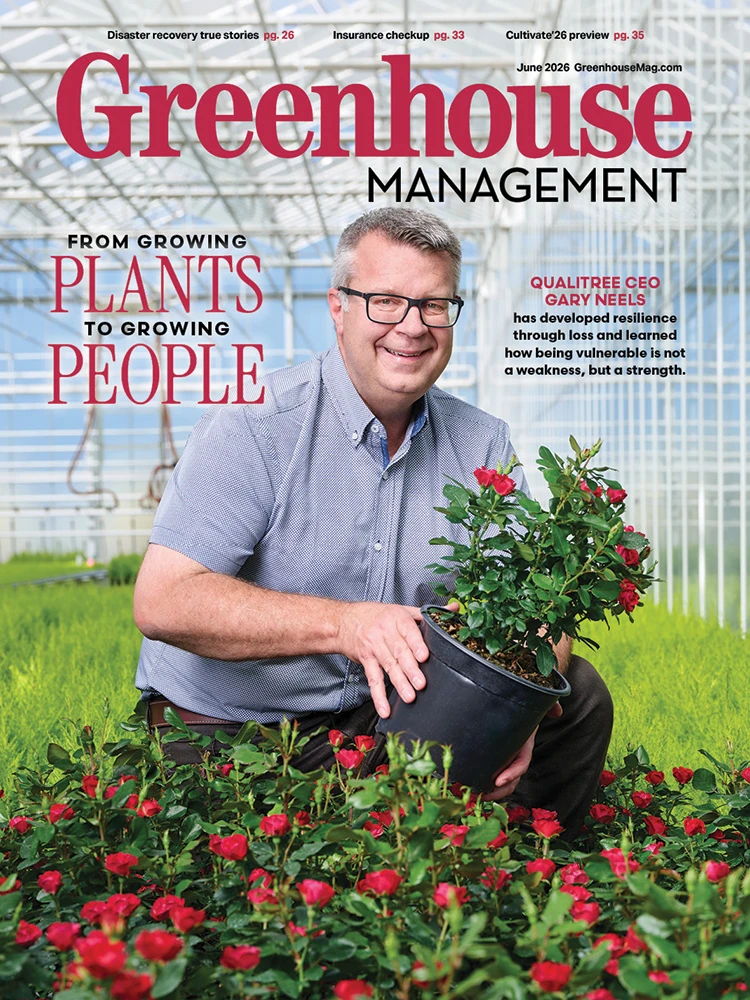
Explore the June 2026 Issue
Check out more from this issue and find your next story to read.
Latest from Greenhouse Management
- The Growth Industry Episode 17: Investing in IGCs with WorryFree® Plants
- New UF study sheds light on the hidden toll of back pain among horticulture workers
- 2026 Irrigation and Automation Market Report: Tradition rains
- Empowering the Future of Precision Cultivation: Resource Efficiency, Root-Zone Science and Scalable Automation
- Oasis Grower Solutions hires plant scientist Timothy Frey
- New green industry leadership development program for women now available
- Clean production protocol
- Jiffy hosting Microgreens Grower Day