Editor's Note: This article originally appeared in the November 2026 print edition of Greenhouse Management under the headline “Passing down a legacy.”

There are pictures of young Samuel Di Rito watering plants in his grandparents’ greenhouse when he was not much bigger than the watering wand.
From the time he was just a few days old, his mom started bringing him to the family business, Collier’s Greenhouse & Garden Center in Jackson, Georgia.
“It’s just been part of me,” he says. “I always knew this is what I wanted to do.”
During high school, Di Rito spent summers and weekends loading plants. When he enrolled at Auburn University, he applied for a Navy ROTC scholarship, which required an engineering degree.
“The closest I could get to horticulture was biosystems engineering,” he says, “which is just a fancy name for ag engineering.”
After graduating, Di Rito spent three years in active duty as a commissioned officer in charge of small boat operations for his ship. His experience in the Navy taught him valuable skills in management, public speaking and project management — honing the professionalism he’d later bring back to the family business.
Di Rito returned to Collier’s in January 2021.
“Once I got back, everybody in the family said, ‘The business is going to you next, so start taking notes,’” he recalls.
Since then, he’s been soaking up all the knowledge he can as he prepares to lead the greenhouse into the third generation. When his 82-year-old grandmother retires, Di Rito, 31, will officially take over the family business.
Planting seeds for the future
Di Rito’s grandparents started growing annuals in their backyard for wholesale in 1963. Since moving to its current location about 15 years later, Collier’s has steadily grown and added greenhouses, with just over an acre under cover today.
As a retail grower, it produces annuals, perennials, herbs, vegetables and houseplants in-house and brings in trees and shrubs to round out the plant selection.
The business consists of five full-time family members, including Di Rito and his parents, aunt and grandmother, along with one other full-time employee. They add three or four part-time employees in the spring.
The small operation requires all hands on deck, which means as general manager, Di Rito has his hands in everything — from coordinating schedules and managing social media to running the register and watering plants. Thankfully, his grandmother began teaching him about the business from a very young age by planting cucumber seeds.
“I learned the whole process from seed to sale,” he says. “Then, my grandma took the proceeds from the cucumbers and put them in a college savings account.”
When customers, who had watched Di Rito grow up in the greenhouse, learned that he was headed off to school, they asked what would happen with the “college cucumbers.”
So, the family kept growing cucumbers and put the proceeds toward an annual scholarship to support a local high school graduate pursuing horticulture, agriculture or a related field like biology.
“This year, we offered a $1,500 scholarship,” Di Rito says, “which was the second-highest scholarship in our town this year.”

Inspiring the next generation
Looking ahead, Di Rito’s goal is to continue growing his family’s business by leveraging his engineering background and military experience. Last year, for example, he helped install a new irrigation system.
“The next step is more greenhouses,” he says. “We need more space to handle the demand and continue the family legacy.”
As a third-generation operator, Di Rito is already considering the next generation, even though his kids are only 4 and 1.
Beyond his own family, Di Rito is actively inspiring future horticulture leaders through his involvement in industry associations including AmericanHort and the Georgia Green Industry Association, as well as at events like Cultivate.
Through these interactions, Di Rito seeks opportunities to share retail insights with other growers while finding new ideas to educate and engage his customers. As much as he loves working in the greenhouse, “the best part is interacting with customers to get them excited about plants,” he says.

Social media has been a powerful tool for generating excitement and drawing in customers, whether he’s posting helpful videos or sharing photos of blooming plants. But as much as consumers want colorful mixed containers and ready-to-plant veggies, he has realized that they want more than just a product.
“They want to spend, but they’re going to spend on an experience,” he says. “People want interaction.”
To that end, Di Rito began offering basic seed starting classes in February. He limited the first class to 25 seats, which filled up within an hour, so he added a second class that also sold out.
In September, he hosted Collier’s first make-and-take planting workshop that drew 40 guests and such high demand that he added a second workshop that attracted even more interest.
“Garden centers have an opportunity to be more than a place where people buy plants,” Di Rito posted on LinkedIn after the first workshop. “We can create experiences. … We can give customers a reason to spend time with us, not just shop with us.”
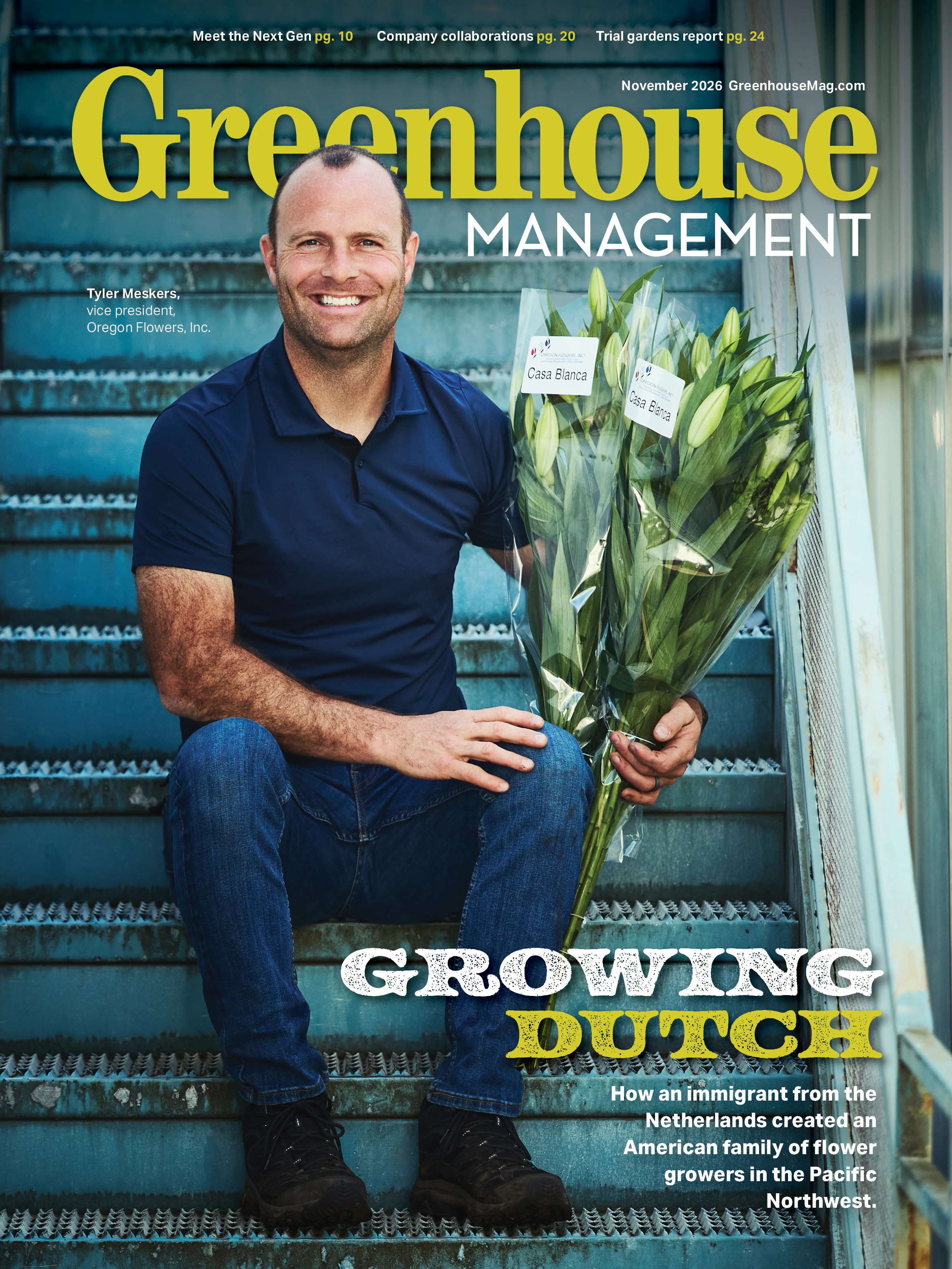
Explore the November 2026 Issue
Check out more from this issue and find your next story to read.
Latest from Greenhouse Management
- The Growth Industry Episode 17: Investing in IGCs with WorryFree® Plants
- New UF study sheds light on the hidden toll of back pain among horticulture workers
- 2026 Irrigation and Automation Market Report: Tradition rains
- Empowering the Future of Precision Cultivation: Resource Efficiency, Root-Zone Science and Scalable Automation
- Oasis Grower Solutions hires plant scientist Timothy Frey
- New green industry leadership development program for women now available
- Clean production protocol
- Jiffy hosting Microgreens Grower Day