Editor's Note: This article originally appeared in the July 2026 print edition of Greenhouse Management under the headline “Transformational transition.”

Max McKeown inherited a green thumb early on, surrounded by plants in his grandma’s garden in rural Southeast Arkansas.
When he went to college and realized that “you could actually get a degree growing ornamental plants and managing gardens,” he says, “it sounded like a dream come true. I knew I wouldn’t work a day in my life.”
Although he’s been “working” in gardens since he started school, McKeown landed roles that align perfectly with his passion for creating beautiful spaces with plants. While earning his bachelor’s degree in horticulture, landscape and turf sciences from the University of Arkansas, McKeown worked in the university’s teaching gardens.
“Seeing people take pictures of plants we had grown really solidified that I was making the right career choice,” he says.
McKeown pursued a master’s degree in plant, environmental and soil sciences at Louisiana State University, where he studied groundcovers at the LSU AgCenter Hammond Research Station trial gardens. His research project exposed him to large-scale commercial production, setting him up for success in his current position as horticultural manager at Huntsville Botanical Garden in Alabama.
A day in the life
All of the landscape operations for the 118-acre botanical garden fall under McKeown’s oversight, from seasonal displays to biannual plant sales. One of the biggest misconceptions he encounters about his role is that he must spend all his time outside, doing grunt work in the garden.
McKeown spends a third of his day at his desk planning plant sales and seasonal displays, and another third in meetings with other departments to coordinate events and educational classes.
“I constantly live six months in the future,” says McKeown, who spent his spring scouring plant availability sheets, ordering pumpkins and hunting down liners and other supplies for the fall sale.
The remaining third of McKeown’s time is in fact spent outside in the garden, managing his team to keep the gardens looking beautiful year-round to improve the visitor experience.
“There’s a lot of science involved in horticulture, especially with fertilizers, substrate management and propagation protocols,” he says. “There’s also a lot of art and creativity in our field. You can evoke feelings in a landscape simply through the plant selection and the colors that you choose.”

A growing effort
Before McKeown joined the team, Huntsville Botanical Garden was predominantly buying finished plant material for its seasonal displays. But in his role, he’s been working to curate the gardens with more material grown on-site.
“Since I’ve gotten here, I’ve been utilizing our greenhouse spaces more and more,” he says. “My first year, we grew about half of the plants ourselves from plugs or seeds. This year, we grew about 90% of our plants. This fall, we’ll be growing 100% in-house.”
The reasons behind this shift are threefold, he says. First, buying finished plants offers a narrow selection compared to the wide variety of annuals, tropicals, vegetables and native and non-native perennials they can grow themselves.
Second, he says, “they’re much more expensive to buy finished,” so growing their own material is more cost-effective. Third, “we can control the quality when we grow it ourselves,” he says.
McKeown is also increasing the percentage of plants grown on-site for the spring and fall plant sales, with the exception of trees and shrubs, which take up a lot of space and require years to mature. This year, roughly 30% of the 16,000 plants at the spring sale were propagated directly from the garden collections.
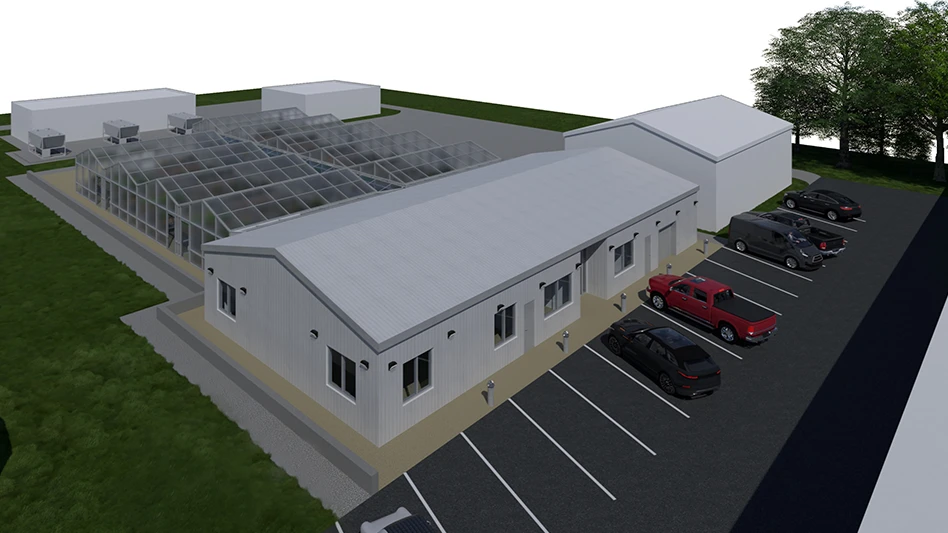
To accommodate these growing efforts, Huntsville Botanical Garden recently broke ground on its INTUITIVE Plant Science Complex, funded in part by a nearby aerospace engineering firm of the same name.
The transformational capital project will renovate the existing greenhouse structures — consisting of three 100-by-30-foot greenhouses and two smaller 50-by-30 greenhouses — and add new greenhouses with state-of-the-art automation, expanding the capacity for plant research, education and conservation.

Knowledge transfer
Although the new automated greenhouses will help alleviate the labor burden, McKeown says hiring is one of the biggest challenges facing public gardens.
“It’s very difficult to find good quality talent,” he says. “We just don’t have many applicants in the first place, nor are the applicants qualified.”
While there are candidates from related fields such as environmental science and land management, he says the skills don’t always transfer directly and require additional training from his team.
To help fill the gap, McKeown recently served as a subject matter expert for the Arborversity Horticulture Training Program, an online learning management system being developed by Chicago’s Morton Arboretum. The course curriculum, featuring the knowledge of public garden leaders around the country, won’t be complete until 2027, but McKeown plans to leverage the program to upskill his team once it’s available.
Collaborating and sharing knowledge are critical to transferring skills to the next generation of horticulturists, McKeown says.
“You’re stronger together by sharing knowledge than by gatekeeping it,” he says. “A lot of my success has come from my connections with others in the field.”
Explore the July 2026 Issue
Check out more from this issue and find your next story to read.
Latest from Greenhouse Management
- The Growth Industry Episode 17: Investing in IGCs with WorryFree® Plants
- New UF study sheds light on the hidden toll of back pain among horticulture workers
- 2026 Irrigation and Automation Market Report: Tradition rains
- Empowering the Future of Precision Cultivation: Resource Efficiency, Root-Zone Science and Scalable Automation
- Oasis Grower Solutions hires plant scientist Timothy Frey
- New green industry leadership development program for women now available
- Clean production protocol
- Jiffy hosting Microgreens Grower Day