Editor's Note: This article originally appeared in the August 2026 print edition of Greenhouse Management under the headline “Pivot to plants.”
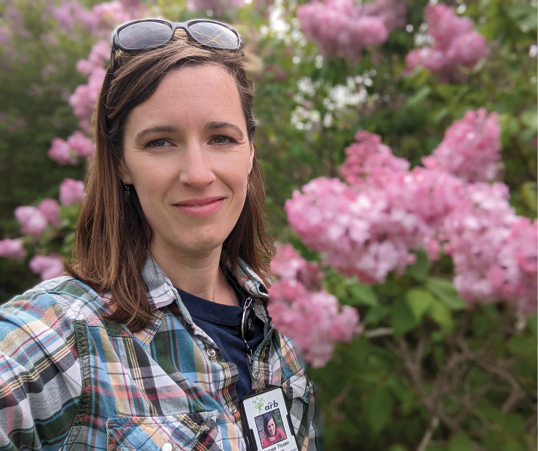
Nearly two decades after earning her undergraduate degree in elementary education, Aimee Thuen stepped back into a college classroom — this time, to earn her master’s degree in horticulture.
“It was kind of scary, honestly,” she says. “It had been 20 years since I’d been in college.”
But thanks to the core science classes she had taken previously, combined with the hands-on experience of running her own cut flower farm, Thuen found a natural fit in horticulture as her second career.
“It’s never too late to find something you love,” says Thuen, who expects to earn her degree next year while already working in the industry full-time. “That’s what keeps us going.”

From classroom to garden
While initially studying to become a teacher, Thuen “looked longingly at the botany classes,” because she’d always loved gardening. But without any mentors in the green industry, she “just didn’t end up there.” At least not right away.
Instead, she pursued a teaching career in Idaho, then spent a few years as a stay-at-home mom before starting her own cut flower farm growing specialty blooms, native plants and foliage for florists and local markets.
“It was wildly fun,” says Thuen, who took several professional-level courses to build her horticulture skills. “I loved every minute of it, but the strenuous, long hours of owning your own business eventually burned me out.”
When her family moved to Minnesota in 2021, Thuen decided to close the flower farm. Then, she spotted the University of Minnesota Landscape Arboretum on the map near her new home, and a light bulb went on.
“That sounded like a really good blend of my interests and knowledge in the horticulture field, as well as my background in education, because a central mission of public gardens is to educate,” she says.
She started volunteering almost immediately, with the intent of eventually becoming an employee and student.
She was hired as an assistant gardener in 2022, then promoted to gardener the following year. After starting the master’s program in 2024, she rose the ranks again to senior gardener.
“It made sense to line up my education with my professional goals,” says Thuen, who accepted another promotion to horticulturist last fall. “I’ve had the opportunity to put the skills I’ve learned into action daily. As a student, it’s been invaluable to practice the information I learn in class.”
Real-world solutions
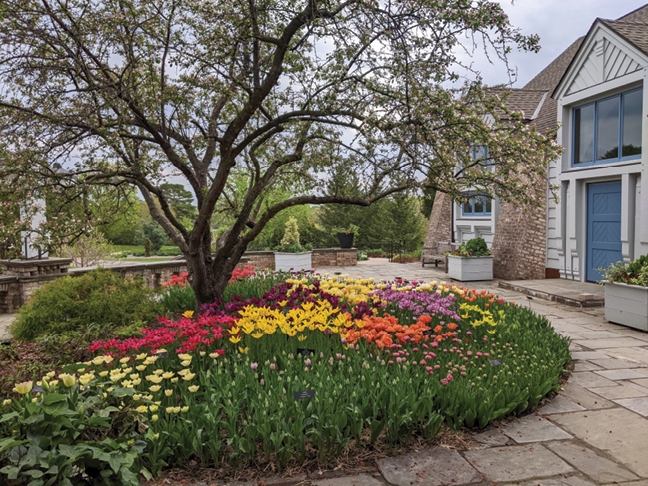
The intersection between Thuen’s graduate research and her real-life experience has been crucial to her progress. For example, as assistant gardener, Thuen maintained several perennial and annual display gardens, including the endowed planting of over 40,000 tulips across 7,000 square feet.
Of course, this came with challenges. The display’s endowment “prohibited us from rotating crops, so disease pressure built up in the soil,” she explains. “I was constantly dealing with Botrytis tulipae.”
Thuen began looking for alternatives to fungicides that would combat the fungal pathogen, which causes tulip fire, also known as tulip blight.
At a cut flower conference in St. Louis, Professor James Faust from Clemson University shared his research about battling a similar strain, Botrytis cinerea, when shipping cut rose stems and greenhouse-grown petunias using a biological treatment called calcium propionate. This FDA-approved biodegradable salt is used to keep breads shelf-stable and has been tested as a post-harvest treatment for produce and cut flowers.
Inspired by the idea, Thuen conducted her own experiment using calcium propionate to manage B. tulipae after chilling tulip bulbs in a cooler last winter and forcing them to bloom in a greenhouse in February and March. The initial data analysis shows some positive impact, so she plans to run another round of research to reproduce the results.
Shared plant passion
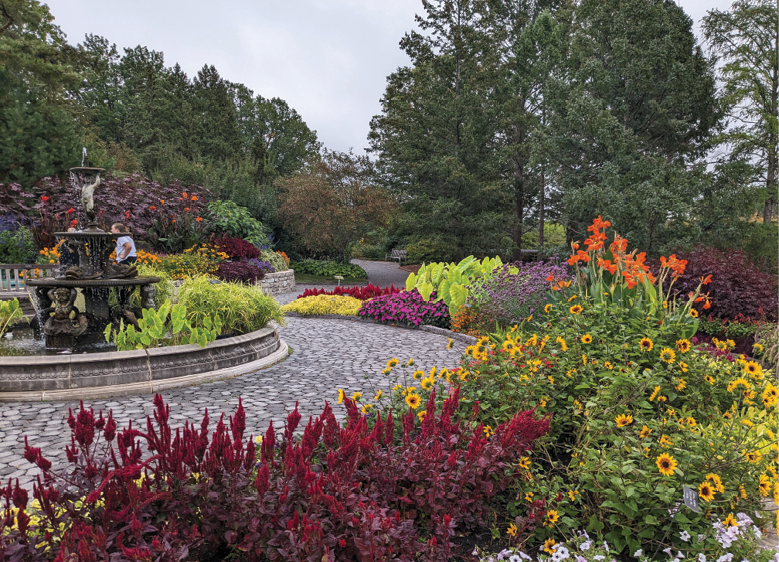
Since her promotion, Thuen has moved out of the Tulip Display Garden to manage the arboretum’s endowed shrub collection — the Bailey Shrub Walk — along with the Harrison Sculpture Garden, the nationally accredited ornamental grass collection and the newly developed Chinese Garden.
Whatever plants she’s tending, Thuen’s experience at the arboretum has taught her that horticulture is not “all sunshine and flowers and butterflies every day,” she says. “It’s amazing, but it’s hard work, whether the weather is nice or not.”
Yet Thuen is enthusiastic about sharing the joy and toil of her job with others as she supervises and trains other gardeners, interns and volunteers. As volunteer numbers dwindle, she encourages everyone with any interest in plants to get involved in local gardens, plant clubs and extension offices to reconnect with nature.
“It’s really good for us as humans to get our hands dirty,” she says. “It benefits our mental health a lot more than we think. Many of the volunteers that I work with happily come back week after week because they go home feeling satisfied that they’ve done something physical and rewarding. It just feels good to pull a weed, apply some mulch and make things pretty.”

Explore the August 2026 Issue
Check out more from this issue and find your next story to read.
Latest from Greenhouse Management
- The Growth Industry Episode 17: Investing in IGCs with WorryFree® Plants
- New UF study sheds light on the hidden toll of back pain among horticulture workers
- 2026 Irrigation and Automation Market Report: Tradition rains
- Empowering the Future of Precision Cultivation: Resource Efficiency, Root-Zone Science and Scalable Automation
- Oasis Grower Solutions hires plant scientist Timothy Frey
- New green industry leadership development program for women now available
- Clean production protocol
- Jiffy hosting Microgreens Grower Day