Editor's Note: This article originally appeared in the June 2026 print edition of Greenhouse Management under the headline “Sustainability reality check.”

Sustainability is no longer a future goal. It’s an operational reality for growers today. From evolving regulations to rising retailer expectations, the shift is clear: Progress must be measurable, practical and built for long-term impact.
Insights from Growscape’s 2026 Sustainability Report and EarthSafe platform launch reflect a more practical, innovative approach, grounded in what actually works in the field.
Here’s the reality check.
1. Sustainability is now measured, not assumed
Retailers and partners increasingly expect clear, documented data to support sustainability scorecards and compliance requirements.
2. Responsible growth depends on alignment with labor and logistics
Sustainability efforts have higher success rates when they align with staffing, timing and day-to-day workflows. Simplicity drives adoption.
3. “Recyclable” doesn’t guarantee recovery
Waste reduction requires real infrastructure and scalable systems. Without them, materials end up in landfills.
4. Recycling only works if it fits how growers operate
Adoption hinges on programs that handle volume, coordinate logistics, integrate with existing equipment and avoid disrupting operations.
5. The definition of “recyclable” is expanding
Plastic is only part of the equation. Corrugate, pallets, metal and other materials are increasingly included in programs like ReSource to manage multiple waste streams more efficiently.
6. Local execution drives measurable stewardship
With volatility and uncertainty impacting global supply chains, localized sourcing strengthens resilience. Regional recycling partnerships can reduce transportation costs and emissions while alleviating complexity.
7. Compliance is evolving quickly… and unevenly
State-level sustainability regulations are shifting responsibility to brand owners. Programs like ReAssure help growers navigate this changing landscape with greater confidence and clear guidance.
8. Materials innovation must balance performance and responsibility
Regulations are driving cost-efficient innovation. Advancements in backyard plantable bioplastics like ReTerra deliver functionality and environmental progress while staying ahead of compliance.
9. Sustainability is no longer siloed
New state regulations extend accountability across the value chain, making sustainability a business-wide priority. Decisions around materials, disposal and reporting now carry real financial impact and require a coordinated approach.
10. Consistency drives long-term impact
Effective sustainability strategies are grounded, well-managed and designed to adapt. The solutions that stick are practical, scalable and repeatable, not just implemented once.
The industry is moving toward a more connected model of sustainability that links materials, recovery and reporting into a cohesive system. Initiatives like EarthSafe emphasize coordination across the lifecycle rather than isolated efforts.
As expectations and regulations evolve, growers who focus on practical, integrated solutions that deliver measurable results will be better positioned for what comes next. In today’s environment, responsible growth is defined by what growers can sustain, not just what they can start.
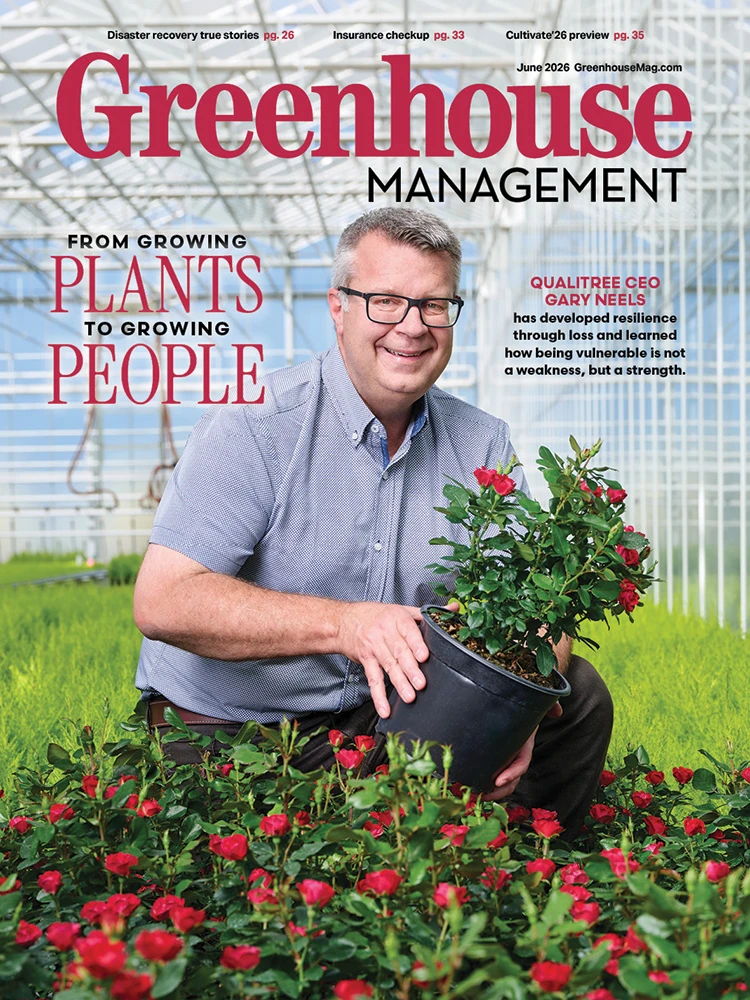
Explore the June 2026 Issue
Check out more from this issue and find your next story to read.
Latest from Greenhouse Management
- The Growth Industry Episode 17: Investing in IGCs with WorryFree® Plants
- New UF study sheds light on the hidden toll of back pain among horticulture workers
- 2026 Irrigation and Automation Market Report: Tradition rains
- Empowering the Future of Precision Cultivation: Resource Efficiency, Root-Zone Science and Scalable Automation
- Oasis Grower Solutions hires plant scientist Timothy Frey
- New green industry leadership development program for women now available
- Clean production protocol
- Jiffy hosting Microgreens Grower Day