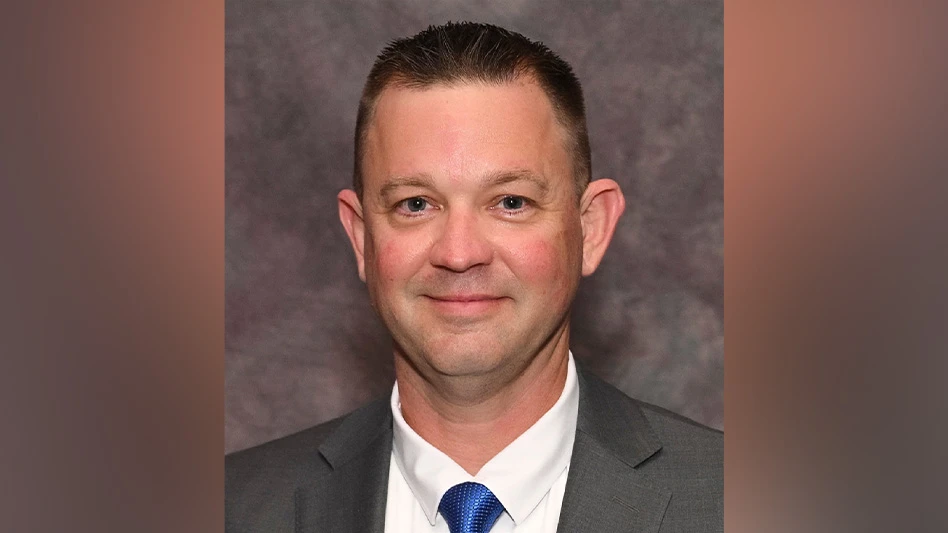
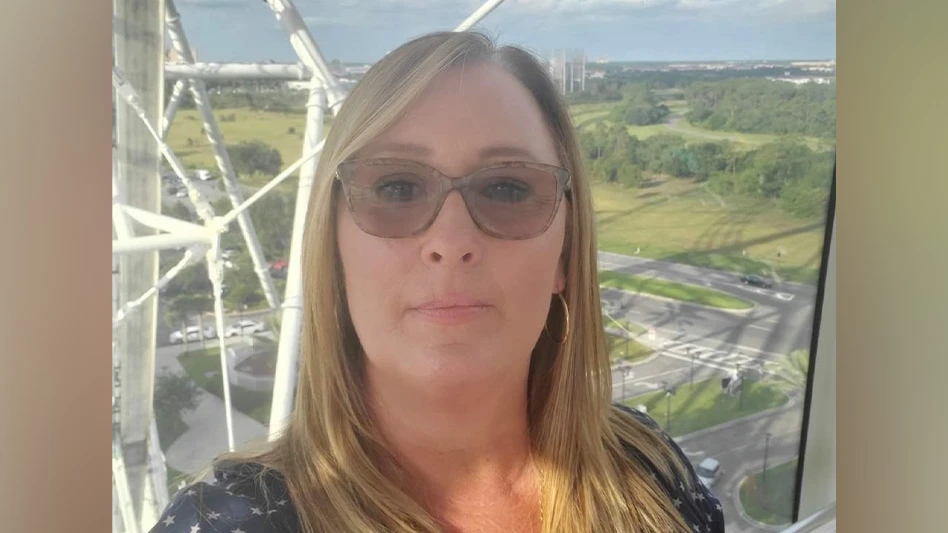
Audrey Hall, president of Eco Serve Pest Services, Orchard Park, N.Y., recognized for her keen entrepreneurial mindset by the business community in the Buffalo, N.Y., area — and beyond — has some urgent advice for her own industry.
“Artificial intelligence (AI) is coming at us fast,” said Hall, who is secretary on the board of directors for the University at Buffalo’s Center for Entrepreneurial Leadership Alumni Association. “It’s everywhere.”
Hall’s entry into the world of AI had help. She was aided by the University at Buffalo’s Center for Entrepreneurial Leadership, which just last year opened the National AI Institute for Exceptional Education after receiving a $20 million grant from the National Science Foundation. “We would not be this far along without their expert help,” she said.
The applications of AI are so multitudinous its advent might seem overwhelming to leaders of pest control businesses who are new at using it. Not to worry, said Hall, whose company was ranked second in The Best Places to Work by Buffalo Business First. “It’s a cool time to be in the business.”s.”
NOT A ONE-TRICK PONY. The use of AI by pest management professionals (PMPs) keeps expanding, meaning the outlook for the future is mind-boggling. In addition to planning management strategies, analyzing historical data and addressing customer service concerns — tasks known to be costly and time-consuming — AI can make Integrated Pest Management (IPM) more efficient, helping to reduce the need for manual pest detection. The possibilities are endless.
For example, Eco Serve Pest Services uses AI for a wide variety of tasks, including operational and logistical functions such as checking through email, writing press releases and predicting trends in pest activity. The savings in time and expense when predicting pest behavior are considerable, given that a single commercial client can have hundreds of stations needing to be checked on a weekly basis. Time saved in performing routine control functions can be shifted toward providing improved contact and communications with customers.

Tom Drapeau, president of Freedom Pest Control, Merrimack, Mass., says that customer interaction and sales support is where AI really comes into its own. “Our AI-driven after-hours and overflow customer service representative has replaced a human-staffed answering service,” he said. “This ensures all calls are answered immediately with no transfer delays.” In addition, this system reduces post-call wrap-up time through automatic transcription and call summary generation. The results have been noticeable enough that Freedom Pest Control plans to add sales capabilities to their AI task load in the near future.
Drapeau further noted that AI is a game changer where his company’s training and workflow management is concerned. The Trainual employee training platform stores all relevant information in one searchable database accessible via desktop or mobile app. Employees can ask the AI tool questions like “How much vacation time do I have?” or “How do we treat bed bugs?” and receive instant answers with references. It also provides e-signatures to confirm employees have reviewed company policies and tests for more technical topics. AI can also be used to track company meetings with summaries of each discussion, as well as optimizing technician routes to cut travel time and fuel costs.
Hall’s and Drapeau’s visions for AI echo those expressed by Matthew Bertram, senior consultant at Future Point of View and keynote speaker at PCT’s Top 100 Awards Ceremony & Executive Summit in June 2024, in Nashville, Tenn. According to Bertram, AI will free employees from certain tasks, allowing them to perform others. “That person in customer service might get 20% of their time back, so now the questions are: How do I refocus them? How do I retrain them? How do I upskill them so that they can do something else?” Bertram syas this task replacement will pose both opportunities and challenges but will ultimately benefit the business.
FLAGGING LEAD OPPORTUNITIES. Another way Freedom Pest Control uses AI is by appealing to its customer base through Sellify, an open-source file sync and share platform. “Sellify sends AI- crafted text messages designed to engage customers in conversations that lead to sales,” Drapeau explained. With a 2.5% close rate on a campaign of 1,000 customers — often reached in a single day — this significantly reduces manual follow-up.

Drapeau says that AI tools like ChatGPT have become essential for writing email campaigns, responding to Google reviews and even negotiating with vendors. “While it’s hard to quantify exact time savings, AI dramatically improves the quality and effectiveness of our communications,” he said. The results speak for themselves. “Eliminating manual call answering, reducing lead follow-up time, optimizing ad spending and streamlining scheduling have all significantly lowered our costs while faster response times and boosted sales campaigns have increased our revenue,” Drapeau said.
AI FOR BED BUGS. It’s no secret that, size-wise, bed bugs can scoot around as fast as a human sprinter. However, while they certainly can run, AI has made it much harder for bed bugs to hide. PMPs are using AI technology to track down these masters of concealment even in the most hidden cracks and crevices using tactics that range from pre-trained models that verify their presence through images snapped at traps — and even bites on people — to Generative Pre-trained Transformers (GPTs) that can recognize features in a room likely to harbor the tiny biters.
Andy Sanefski, founder of Perimetek Pest Management, East Syracuse, N.Y., said that AI has vastly improved his company’s approach to bed bug infestations. “I look at AI like an idea calculator,” Sanefski said. “It can take various factors in narrative form and combine them with input data from the field to quickly draw conclusions that would take us much longer to accomplish otherwise. We use it as an aid in data analysis, trend reporting and predictive analytics work.”

Sanefski described how his company uses AI for bed bug identification. “You can build a captive GPT that is trained on what a hotel room with a high liability for bed bugs might look like,” he said. The GPT is first provided with a description of room features and characteristics, as well as information pertaining to how bed bugs may utilize them. Once fed with photographs taken in the field, it generates a risk assessment for the room. For example, it may identify a couch or other upholstered furniture as being a medium- to high-level risk of harboring bed bugs, while a smooth desk or simple wooden chair would rank lower.
“It is shockingly thorough and accurate,” said Sanefski. “It will also make assumptive leaps when presented with unexpected or novel inputs. These logical leaps are sometimes extremely insightful and lead to uncovering unanticipated areas of risk for the client.”
PEST CONTROL-FOCUSED AI. Developments in useful pest control-related AI are mounting, growing a new generation of support businesses. Tom Porter, a second-generation PMP, started the AI-based company ChemCal Pro in 2023, describing it as a platform “designed to help PMPs make more informed, efficient and accurate application decisions.” The company’s aim is to reduce red tape faced by the pest management industry through simplifying labels, creating easy-to-use calculation tools and providing guidance on pests and pesticides for PMPs.
“Our mobile-friendly platform consolidates pesticide information, saving professionals time and effort,” Porter continued. “A technician selects the treatment area, application site, pest type and square footage of the zone in question. The system then calculates the correct dilution rate based on product specifications, eliminating guesswork and giving the end user both concentrate and finished product amounts.”
A key benefit of this approach is making it easier for technicians to sort through voluminous regulations governing various pesticides — often a daunting task, especially for those new to the business. By making regulations clearer and more accessible, the likelihood of overuse or underuse of products may decrease. According to Porter, this means ChemCal Pro can help streamline how technicians navigate complex label information by generating a clear, detailed summary that highlights key product details and safety guidelines (with the understanding that the product label is the authoritative source and should be read and followed each time a product is applied). He envisions that AI-driven tools like these will lead to significant cost savings by reducing waste and compliance issues.
RESEARCH ADVANCEMENT. The future of AI in detecting pests seems bright. “AI enables accurate pest identification, early detection and predictive modeling, enhancing decision-making for pest control by minimizing indiscriminate pesticide application and optimizing interventions,” suggests a paper published in Smart Agricultural Technology last year. It goes on to explain that “AI offers a transformative approach by utilizing advanced algorithms to analyze intricate data patterns from numerous sources like sensors and imagery.”
In this vein, researchers at the Stevens Institute of Technology have developed and tested new technology that combines highly sensitive vibration sensors, vibro-acoustic insect libraries and AI to detect emerald ash borer and Asian longhorn beetle larvae in trees. The technique — based on the university’s patented passive-acoustic detection technology originally developed for the U.S. Navy — involved researchers creating and analyzing a library of vibrations caused by beetle larvae. From this, they developed an AI tool able to analyze signals recorded in the field to pinpoint the distinctive vibrations of the beetles. They also created a library of background noises, allowing the algorithm to screen out interference.
WORKING OUT TECH BUGS. Image analysis for detecting and identifying pests is a natural fit for AI technology. Trapview, a Slovenian company with an office in North America, produces a pheromone trap that photographs the insects it catches. Used for agricultural crops, the Trapview platform relies on AI to make real-time predictions, such as how the pests will spread, to assist field technicians in swift interventions with targeted responses.
However, as an article in the January 2025 issue of PCT noted, using on-site photos of insects for immediate identification through a phone app may have a way to go before all the technology bugs are worked out. Not all apps have usable or accurate information, and taking a usable identification photo under difficult conditions (e.g., while inside an attic or crawlspace) may be next to impossible.
Nevertheless, new research by scientists in Taiwan, published in the Journal of Economic Entomology, shows promise. The research team employed smartphones to take 18,000 pictures of four termite species, a choice explained by author Hou-Feng Li, Ph.D. of the National Chung Hsing University. “The dataset is a group of photos, each associated with a species name,” Li said. “In this study, we focused on the pest species in Taiwan, and hence we only used the commonly encountered four species to train the model. It is easy to understand, for application, as not many people need a software/model/app to identify all termite pests around the world.”
The system relied on deep convolutional neural networks (DCNNs or CNNs) to extract and differentiate patterns within images to automatically identify the species. The hardware and software comprising an artificial neural network is modeled after the way real neurons are arranged in the human brain, meaning DCNNs mimic the actual processes our brains use to analyze angles, lines and other features that combine to produce an image.
The results of the study demonstrated that the algorithms used in deep learning systems can determine which features are associated with different species, and suggest this technology may one day be adapted for use by PMPs and even homeowners.
HIGH HOPES. Generally, hopes are high for AI becoming a major tool — even an indispensable one — for the pest control industry. Bertram’s advice? “Bake AI into your company’s culture as soon as possible. Pest control businesses will have to pay to invest in AI now, lest they pay for lost opportunities and inefficiencies later.”
The author is a contributing writer for PCT.
Explore the April 2026 Issue
Check out more from this issue and find your next story to read.
Latest from Pest Control Technology
- Envu Offers Fall Promotion for Horizon Members
- Pest Management Foundation Announces the E. Raymond Crim, III Scholarship
- Tyro Group Acquires Dowell Pest Control
- Podcast: Beyond the Pest | Ep. 14 — Dr. Zach DeVries
- Webinar: The AI-Run Pest Control Company: Hype vs. Reality, What Actually Works (and What Doesn’t)
- Select Exterminating Acquires Three Businesses Across New York and New Jersey
- Catseye Pest Control Acquires Security Pest Elimination and Biologic Pest Control
- Researchers Confirm New York's First Bourbon Virus Case