CDC
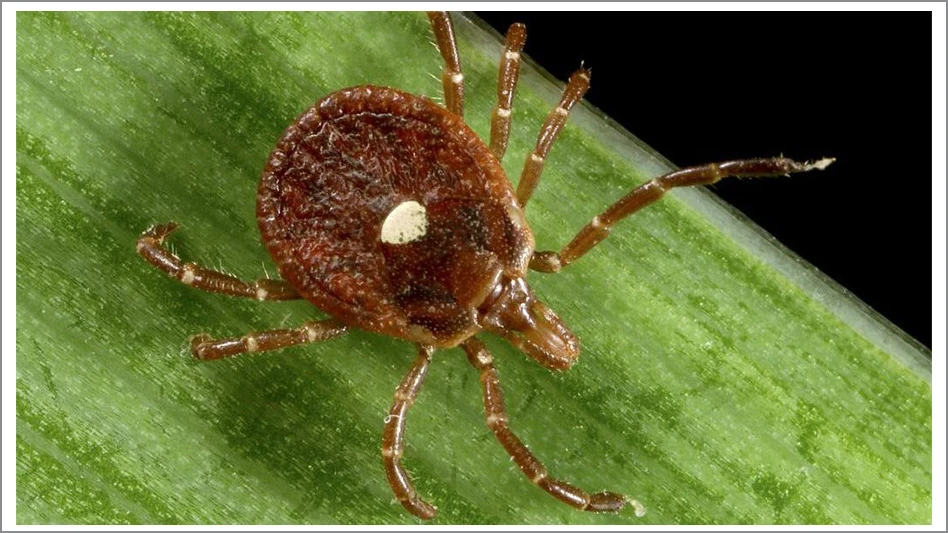
LONG ISLAND, N.Y. — New York's first case of Bourbon virus, a rare tickborne illness believed to be primarily transmitted through the bites of infected lone star ticks (Amblyomma americanum), has been confirmed by a team of researchers led by Stony Brook Medicine, according to Stony Brook University News.
As reported by numerous news outlets, including CBS News, Michael Larkin, 67, found two tiny lone star ticks on his leg when he was landscaping in his backyard. A few days after removing the ticks, Larkin began to feel ill. Also according to CBS, Larkin eventually had to go to the hospital because of the "debilitating" illness. The team at Stony Brook Medicine confirmed Larkin had Bourbon virus in April after a year-long anti-body study. Larkin spent five days in the hospital and has since made a full recovery, according to the New York Post.
In an interview with CBS, Dr. Luis Marcos, professor of medicine, Stony Brook Medicine, and one of the researchers who helped identify New York's first Bourbon virus case, said Long Island has many lone star ticks and that this case "may be the very, very tip of the iceberg."
According to the Centers for Disease Control and Prevention (CDC), Bourbon virus was first identified in 2014 in Bourbon County, Kansas. The virus has been reported in a small number of cases across parts of the Midwest, East Coast and Southern United States. When infected by Bourbon virus, symptoms can include fever, fatigue, rash, headache, body aches, nausea and vomiting. Some patients experience low white blood cell and platelet counts. There is no specific antiviral treatment or vaccine for Bourbon virus, so the CDC recommends preventing tick bites as the best way to reduce the risk of infection.
The Mallis Handbook of Pest Control notes that the female lone star tick is characterized by a light-colored dot on its dorsal shield. Currently, while the lone star tick is widely distributed in the eastern U.S., it is most common in the South.
Also according to the Mallis Handbook, the best way to avoid contracting tick-borne diseases is to avoid tick bites. Here are some suggested ways to protect against tick bites:
- Wear long-sleeved shirts, long pants and light-colored clothing when working or walking in tick-infested areas. Additionally, tuck pants into socks or boots.
- Apply tick repellents to the outside of clothing, particularly the pant legs.
- Inspect clothing and body after being in tick-infested areas. For those working or walking in tick country often, it is a good idea to do these inspections at least once a day.
Latest from Pest Control Technology
- Envu Offers Fall Promotion for Horizon Members
- Pest Management Foundation Announces the E. Raymond Crim, III Scholarship
- Tyro Group Acquires Dowell Pest Control
- Podcast: Beyond the Pest | Ep. 14 — Dr. Zach DeVries
- Webinar: The AI-Run Pest Control Company: Hype vs. Reality, What Actually Works (and What Doesn’t)
- Select Exterminating Acquires Three Businesses Across New York and New Jersey
- Catseye Pest Control Acquires Security Pest Elimination and Biologic Pest Control
- New DataWave MarketLens Report Covers the US Structural Pest Management Market