Like other pest control services — including rodents, termites and mosquitoes — small fly management plays a critical role in winning new accounts and expanding existing customer relationships.
As the PCT survey showed, 31% of respondents said small fly control services had become a more significant part of their service location’s business over the last five years, while 49% said there had been no change. Only 9% responded fly services accounted for a less significant portion of their service location’s business.
WHERE’S THE GROWTH? According to Suburban Pest Control’s Timothy Best, the growth potential is very clear.
“Growth continues to be strongest in commercial accounts where fly activity constitutes a compliance risk, not just a nuisance,” Best said. “Drain cleaning as a service component, whether performed directly by the PMP or coordinated with a plumbing partner, is a meaningful differentiator.
“Offering it as a documented add-on service, priced separately and framed around department of health risk mitigation, creates a clear value proposition for decision-makers. Multi-location accounts such as restaurant groups and hotel chains represent recurring contract opportunities where a standardized small fly program can be deployed across multiple properties.”

Best’s company serves New York City and surrounding boroughs, as well as Rockland and Westchester counties. The company has clients in a wide range of commercial sectors from food service to hospitality and more.
Chad Highley, owner of Environmental Pest Control, Marlow, Okla., said the small fly market offers recurring revenue opportunities.
“Fly control is a natural extension for pest control companies because it relies on the same core skills: inspection, species identification, understanding breeding sources and applying targeted treatments,” Highley said. “It’s not a ‘new trade’ — it’s just a more detail-driven version of what good technicians already do.”
Highley added the segment continues to see steady growth, particularly in commercial markets, as stricter health regulations, online feedback and rising customer expectations encourage businesses to proactively address fly issues before complaints arise.
NUMBERS TELL THE STORY. According to the PCT survey, 40% of those who responded said the revenue generated from small fly control will grow in the year ahead. Sixty percent expect small fly revenue to remain the same with only 1% anticipating revenue to decline.
The busiest season for small fly control is summer, with 51% of respondents identifying it as their peak season. The survey states that spring is second at 17%, followed by fall at 8%.
Showing how geographic areas make a difference — i.e., locations that normally don’t have a true winter season — 22% responded that the season doesn’t matter when it relates to how busy fly control services are being requested.

According to Andy Nieves, vice president of BHB Pest Elimination, Wallington, N.J., small fly control represents a small share of revenues for a very specific reason.
“I believe it’s because too many times, it is treated or bundled in with a general pest control service,” Nieves said. “I know I personally am guilty of selling a general pest control program that included flies in the past. It really needs to be a separate stand-alone service program.”
Nieves said that in many situations, he tailors a fly service program to a client’s specific needs. “Depending on the size of the property, a thorough commercial inspection for fly activity can easily take an hour or more,” he said.
Dale Shreve, general manager of Santa Barbara, Calif.-based Lenz Pest Control, agrees commercial accounts are the biggest opportunity.
“Most of the growth is coming from commercial accounts such as restaurants, schools, bars and food-handling facilities,” Shreve said. “These locations have more drains, more moisture, more trash and more opportunities for breeding sources.”
ADD-ON SERVICE. Because of the nature of the work, many pest management companies offer fly control as an add-on service. Shreve cited drain cleaning as part of the reason. “Drain cleaning is definitely part of it because many small fly problems start in drains, floor sinks, grease traps or areas with organic buildup,” Shreve said. “The more a company can offer drain cleaning and sanitation support, the more valuable they become to the customer.”

McNall of Mosquito Squad Plus of the Mid-Atlantic agreed on the importance of encouraging customers to include drain cleaning as part of their fly control program.
“This is an add-on service. We attempt to get drain cleaning with every account. If they do not do a drain cleaning program we will offer it as a one-time service, if needed,” he said. “The biggest opportunity is to share knowledge of what can be done and show them that they can have their fly issues resolved. Explaining how small flies live, the areas they will live and breed, and what we can do to assist them is key.”
PRICING. McNall and others cited pricing as a challenge. Small flies can take time as the inspection is crucial — and time is money. “Getting on the floor and looking in areas that the flies could be breeding takes time,” McNall said.
Small fly services can be time consuming depending on location and how difficult it can be to access the drains that need to be inspected and cleaned.
Of the survey respondents, 50% are planning to increase prices for small fly services in the next year. The increase is often based on the amount of time necessary to do the job properly.
“Most fly problems are seen as a nuisance issue, unlike a rat running around a restaurant,” said Samuel Soto, owner of First Rate Pest Solutions, New Windsor, N.Y.
Soto said he charges a premium for fly service as it is often tedious work requiring quality time to properly solve the problem.
“The biggest challenges are correcting the conducive conditions and client cooperation. The biggest opportunity is developing IPM protocols that are effective and sustainable,” he said.
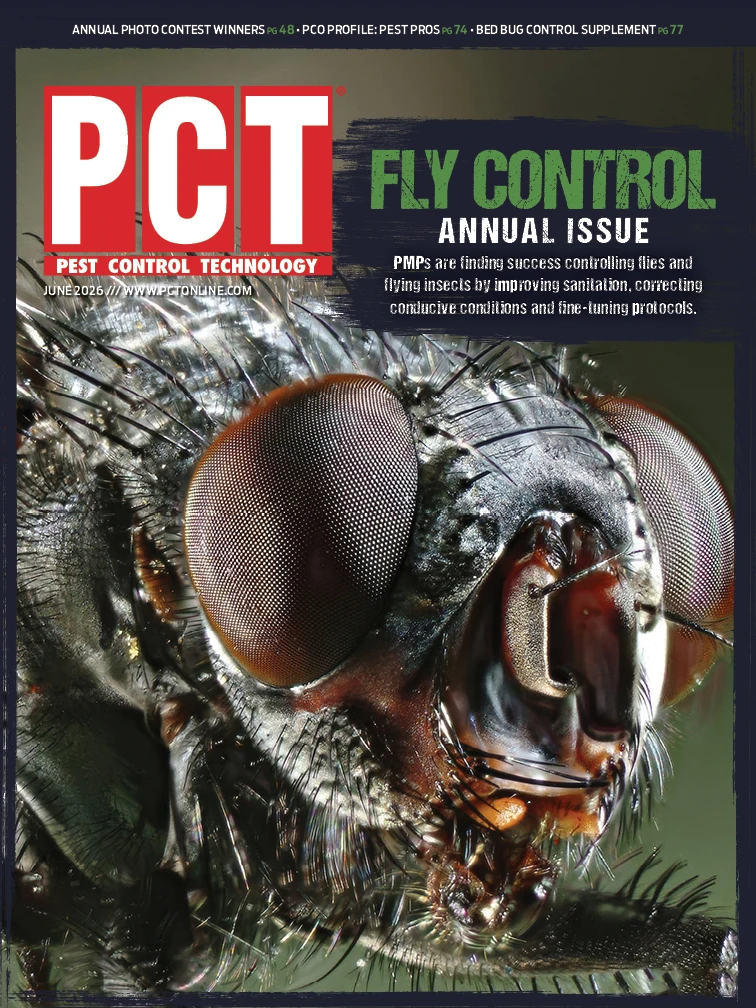
Explore the June 2026 Issue
Check out more from this issue and find your next story to read.
Latest from Pest Control Technology
- Envu Offers Fall Promotion for Horizon Members
- Pest Management Foundation Announces the E. Raymond Crim, III Scholarship
- Tyro Group Acquires Dowell Pest Control
- Podcast: Beyond the Pest | Ep. 14 — Dr. Zach DeVries
- Webinar: The AI-Run Pest Control Company: Hype vs. Reality, What Actually Works (and What Doesn’t)
- Select Exterminating Acquires Three Businesses Across New York and New Jersey
- Catseye Pest Control Acquires Security Pest Elimination and Biologic Pest Control
- Researchers Confirm New York's First Bourbon Virus Case