
Mark Dwyer
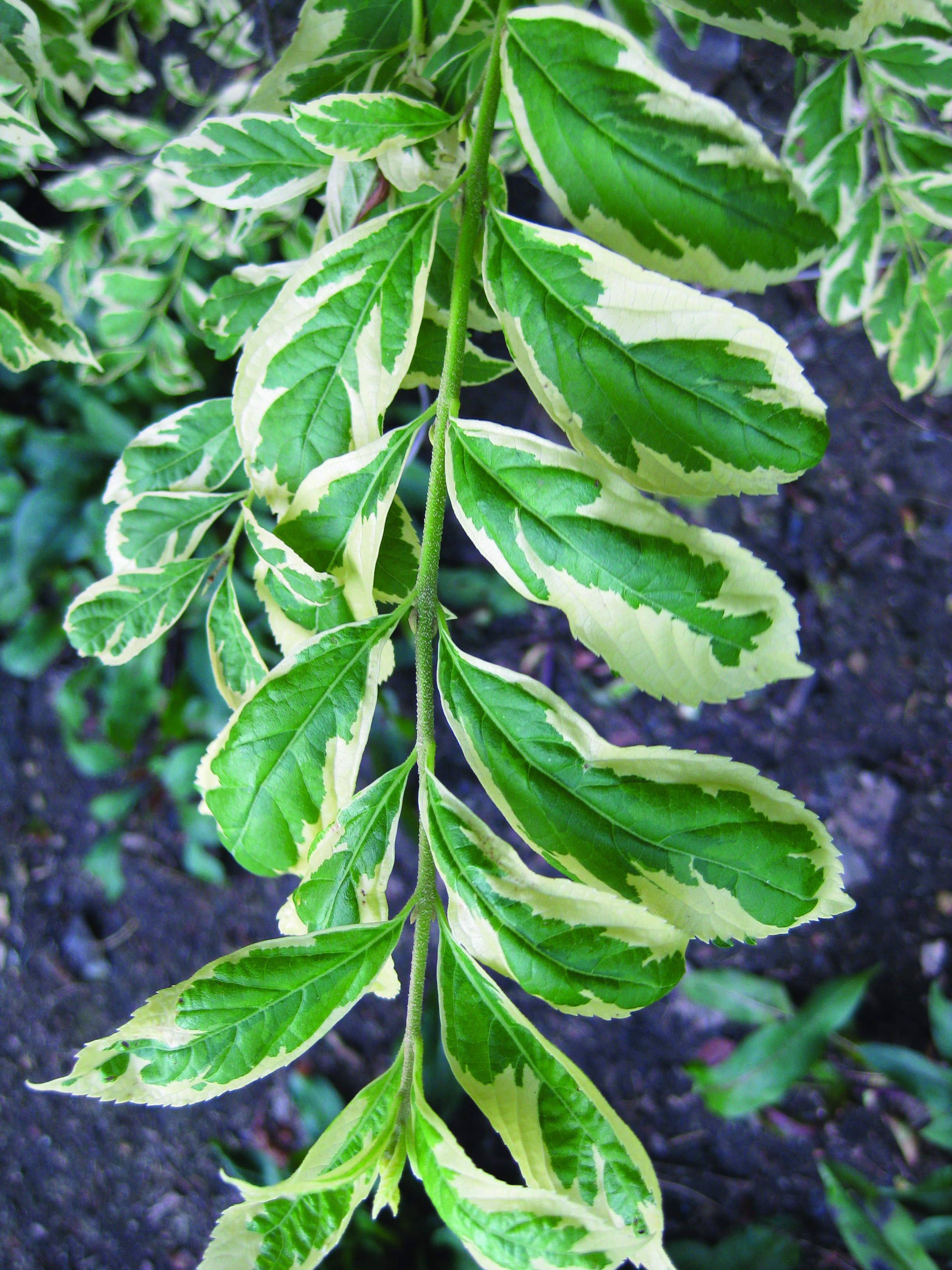
I’ve long been accused of being a “variegation chaser” and unabashedly admit to this proclivity. The public gardens I’ve been involved with over the years and my home landscape continue to provide evidence of this addiction. I discovered an amazing variegated shrub selection when I stumbled upon the ‘Duet’ beautyberry (Callicarpa dichotoma f. albifructa). It has proven just hardy in my climate in southern Wisconsin, and I find myself drawn to the nice form and bright variegation. While I’ve planted many other beautyberries over the years for their amazing purple fruiting (drupes) display, this variegated form is striking and features a white fruiting display. While not hardy for me, I’ve long admired the native American beautyberry (Callicarpa americana) when well-placed and thriving.
This species of beautyberry is native to Japan, China and Korea with ‘Duet’ ultimately reaching 4 to 6 feet tall and wide over time and filling out nicely to the ground. This selection was discovered as a variegated sport by Dr. Gary Bachman and Edgar Davis in 2000 at the Tennessee Technological University and was later shared and introduced by the National Arboretum in 2006 (registered in 2007). ‘Duet’ is a stable selection with green reversions being quite rare.
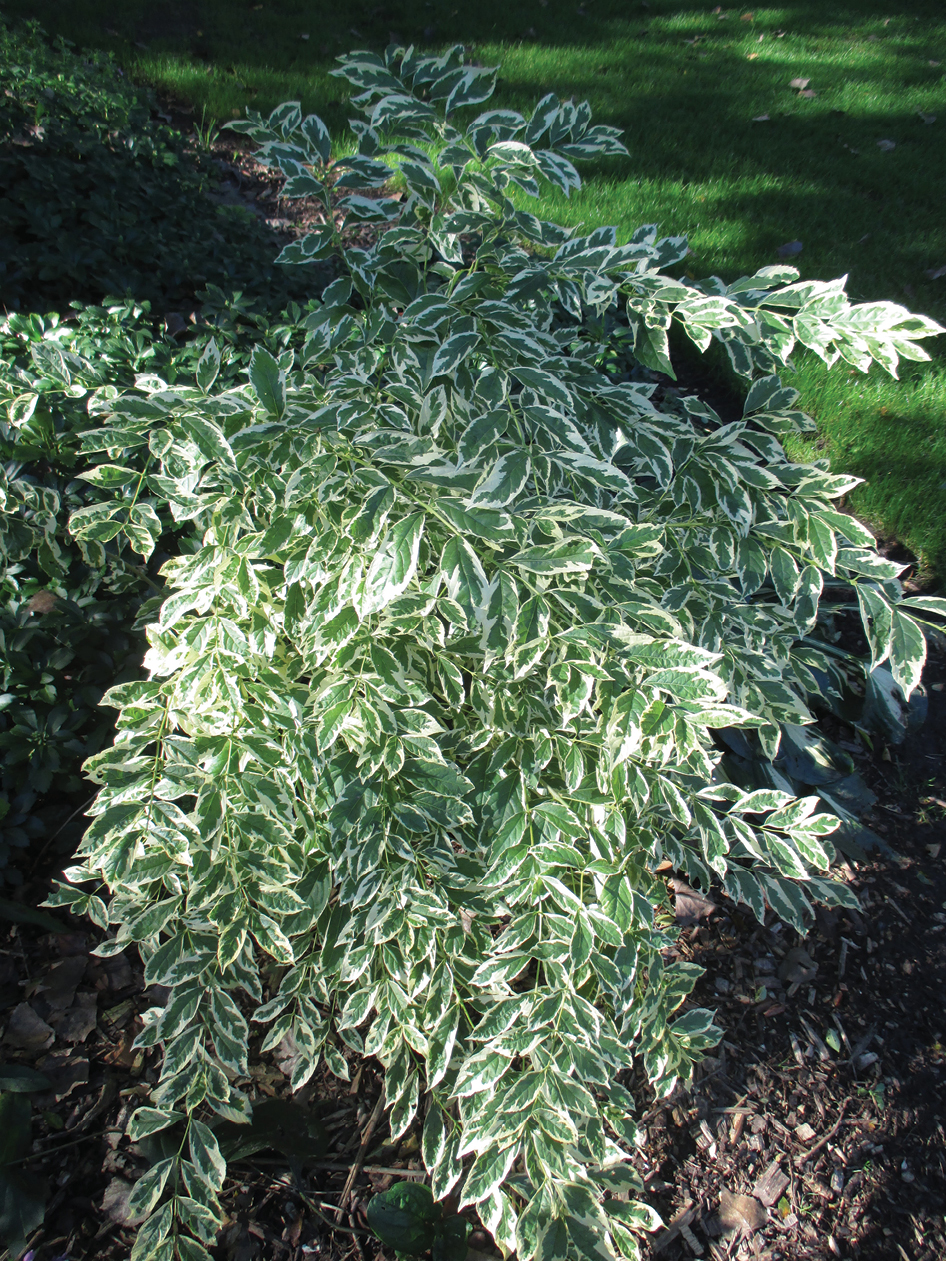
The elliptic leaves emerge a blue-green with yellow margins, which age to a consistently crisp white. While best positioned in full sun for flowering and fruiting, use in hot climates should consider filtered afternoon shade to avoid leaf scorching. Avoid too much shade or the stems can become quite leggy. Adaptable to a wide range of soils, this shrub prefers average to medium moisture in well-drained situations. The flowers, ranging from white to pink and purple, are incidental and result in clusters of pure white fruits (drupes) peaking in October. I’ve not observed robust fruiting on this selection although multiple specimens support the best fruit production through cross-pollination. There are very valid concerns about non-native Callicarpa seed dispersal, although ‘Duet’ has been observed to exhibit less aggressive reseeding tendencies.
This beautyberry flowers and fruits on new wood and responds to hard pruning in late winter to regenerate stem growth. This selection is both deer resistant and tolerant of urban pollution. Propagation is through softwood cuttings. The combination of solid performance and curb appeal make ‘Duet’ beautyberry a contender for consideration.

Explore the August 2026 Issue
Check out more from this issue and find your next story to read.
Latest from Nursery Management
- Plantpeddler announces results of Variety Day 2026
- Get to know Marcus Jansen
- Stat of the Week: Companies with a customer experience mindset drive revenue 4-8% higher than others
- SmartPlant offers market intelligence for horticulture industry
- Monrovia presents garden design trends for 2027
- Elusive blue
- American Floral Endowment announces 2026-27 educational grants
- Cities may be the ultimate training grounds for invasive species, UF/IFAS researchers say