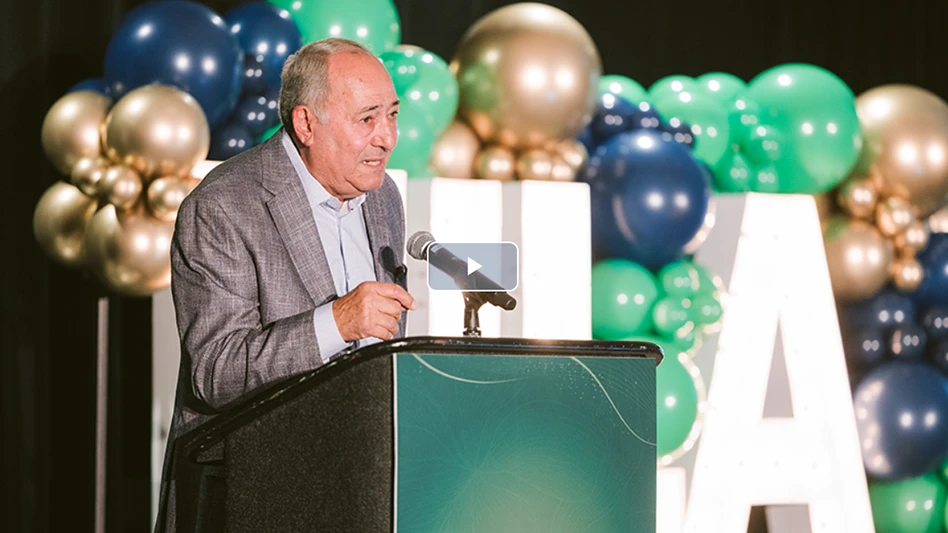
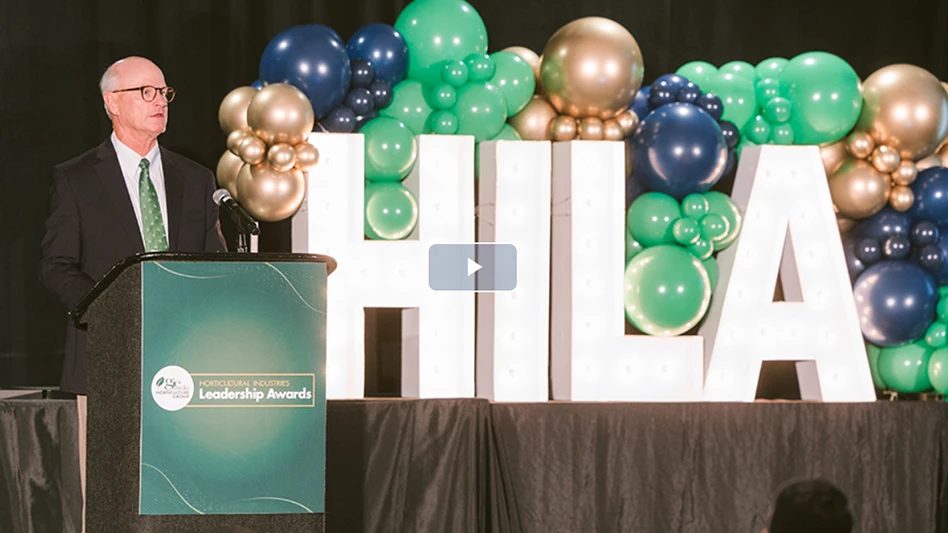
Photos used in the video: courtesy of Ball Horticultural Company
Marcus Jansen was the product development manager, of PanAmerican Seed for several years. He recently transitioned to landscape business manager for Ball Seed.
Katie McDaniel: How did you get started in horticulture?
Marcus Jansen: I grew up in a farm family in the Quincy, Illinois, area on the Mississippi River. I grew up around production agriculture, but found out very quickly that I gravitated toward ornamental plants more than crops. I have a bachelor’s and a master’s degree in horticulture from Iowa State University. I dabbled in landscaping, public gardens and ultimately landed in this world of supplying plants into the ornamental horticulture sector.
KM: What did you do as product development manager at PanAmerican Seed?
MJ: As a product manager, it was my job to work alongside our breeders to help bring new plants to market. A lot of that job involves plant trialing, working with breeders to identify our target and then once they’ve created something, determining what is worthy of becoming a product. It has to be not only phenotypically what we’re looking for, but it’s got to be reasonable for growers to produce. Another piece of my job as a product manager for Pan American Seed was overseeing the Pro Landscape Performers program. We have a lot of great ornamental plants — some are a little bit more bulletproof for the professional landscape market than others. I was involved in the trialing and organization of that program as well, which is what has led me into my current role.
KM: How do you decide which plant will be added to the brand?
MJ: As a product manager, we are given a target of what crops we are to work on and then the respective breeder that we will work with. For example, I might be assigned lobelia, and I partnered with Ping Ren, our breeder, on breeding lobelia.
It’s my job as a product manager to identify the needs from the market. We get feedback from our customers that tell us what they want out of breeding. Sometimes it’s to solve a problem, sometimes it’s to bring a new novelty, to bring more uniformity.
KM: What would you like to see happen in the industry?
MJ: Whether we’re ready for it or not, I think our industry is forcing us to focus on plants that are more than just ornamental. They can’t just be pretty little meatballs that you stick in the ground or a container, and they do their own thing. We need plants that serve our pollinator communities; plants that can handle heat and drought and erratic weather.
I think my sector of the industry that’s developing new plant varieties needs to lean into that and recognize that we can focus on some aspects beyond producibility or pretty colors. We’re going to have to work our way toward functional plants.
KM: What do you enjoy doing when you’re not working?
MJ: I would say a big part of my life is music. So as my side gig, I sing as a professional tenor. I’m with a choir here in St. Charles, Illinois, in the western suburbs called the St. Charles Singers. I get to sing several concerts a year with that group and do other singing gigs here and there. It keeps music in my life.
Also, I’m a big national park geek. Whether it’s a state park, local park, national park, I just love going and chasing new outdoor spaces, exploring the plants in those places as well. So that’s usually where you can find me singing or outside somewhere.
KM: What is your favorite plant and why?
MJ: I just came off of the Perennial Plant Association National Symposium in Michigan, and I love my fellow perennial plant folks. One that’s consistently been a favorite for me, I’d say in the past five, 10 years, has been Threadleaf Blue Star or Arkansas Blue Star, Amsonia hubrichtii. I like big perennials that fill in a landscape and take up a lot of space, and I like the seasonality of this perennial. You get that cool light blue flower in spring and then that nice thin foliage texture all the way through the summer. Then the star of the show, in my opinion, is that golden fall color, or at least the golden fall color we get here in this part of the Midwest where I live that really rounds out the season so nicely. There’s a couple great cultivars on the market, but even the straight species is pretty great.
For more: ballhort.com
Latest from Nursery Management
- Plantpeddler announces results of Variety Day 2026
- Stat of the Week: Companies with a customer experience mindset drive revenue 4-8% higher than others
- SmartPlant offers market intelligence for horticulture industry
- Monrovia presents garden design trends for 2027
- Elusive blue
- American Floral Endowment announces 2026-27 educational grants
- Cities may be the ultimate training grounds for invasive species, UF/IFAS researchers say
- Monrovia to preview new plants and consumer trends for 2027