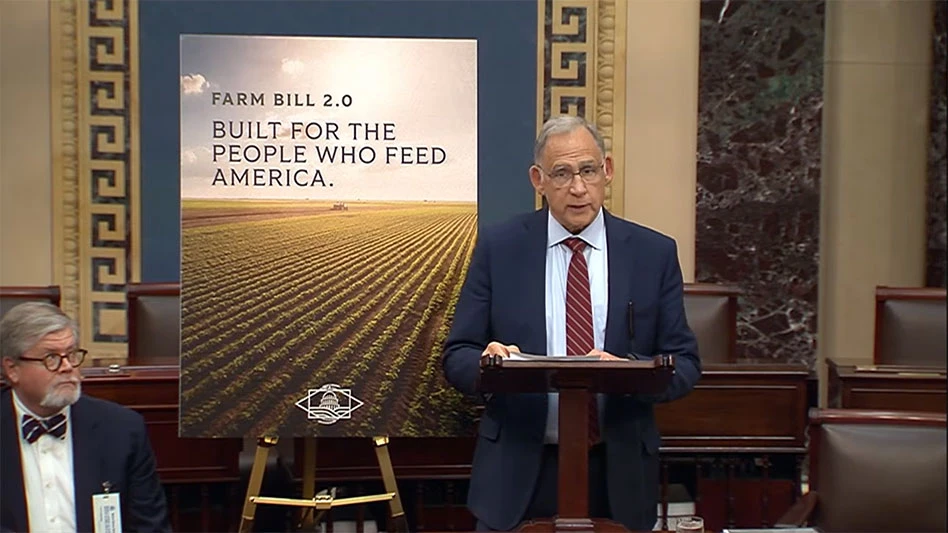
Photo courtesy of Senate Agriculture Committee
The U.S. Senate Committee on Agriculture, Nutrition, and Forestry met Sept. 16 for the first time since early August to re-vote on the Agriculture Act of 2026 — the Senate’s version of a Farm Bill — and pass it along party lines by a vote of 12 to 11.
Republicans prevailed on the vote this time with the presence of both Sen. Mitch McConnell (R-KY) and Sen. Tom Tuberville (R-AL), who were absent during the last meeting. (McConnell returned to Congress Sept. 14 after a three-month absence due to a hospital stay and subsequent recovery after a fall in June.)
The Senate Agriculture Committee last voted on the act Aug. 6, when it failed to move out of a committee after a 10-11 vote. Tuberville did not participate in that vote, and the proxy votes of McConnell and Sen. Elissa Slotkin (D-MI) could not count toward final passage. As a result, the markup technically recessed, subject to the call of the chair, who did not adjourn the markup.
Committee Chairman John Boozman (R-AR), who introduced the 900-plus-page bill in late June, was pleased the bill passed out of committee this time and is hoping for a quick vote in the full Senate.
“Farm country is hurting and needs results now,” Boozman said in a statement. “Advancing this bill out of committee is a critical step toward getting a fully updated Farm Bill signed into law. While this is clearly welcome progress, we need more of our colleagues’ votes to reflect the urgency of supporting farmers, ranchers, forest landowners and rural communities. I will always stand with the families who feed America and the world. They continue to have my commitment on getting bipartisan Farm Bill 2.0 across the finish line.”
One of the sticking point for Democrats who voted against the bill is how quickly states would be required to take on a larger share of administrative costs for the Supplemental Nutritional Assistance Program, or SNAP. The Republican members of the committee were in favor of a one-year delay, while Democrats pushed for two years. But that is not the only factor that led to the 11 dissenting votes.
Sen. Peter Welch (D-VT), who filed 42 amendments to the bill in August, said Republicans moved the bill out of committee without considering changes.
“Plain and simple: This is not a good Farm Bill,” Welch said in a statement. “Republicans shouldn’t have voted this out of Committee without major changes. Instead of working together to craft a bill that could earn bipartisan support, Republicans took a go-it-alone approach and refused to consider commonsense amendments. I’m still committed to improving this bill before it gets to the Senate floor.”
The House of Representatives passed its 2026 Farm Bill, dubbed The Farm, Food, and National Security Act of 2026, at the end of April. Once the Senate passes its version, the House and Senate Agriculture Committees will meet for a conference committee to reconcile any differences between the two bills.
Senate Majority Leader John Thune said he wants to move quickly toward reconciling the Senate bill with the House-passed version. However, the Senate is in session for only two more weeks before lawmakers turn to the November elections.
Latest from Nursery Management
- Plantpeddler announces results of Variety Day 2026
- Get to know Marcus Jansen
- Stat of the Week: Companies with a customer experience mindset drive revenue 4-8% higher than others
- SmartPlant offers market intelligence for horticulture industry
- Monrovia presents garden design trends for 2027
- Elusive blue
- American Floral Endowment announces 2026-27 educational grants
- Cities may be the ultimate training grounds for invasive species, UF/IFAS researchers say