Yelp
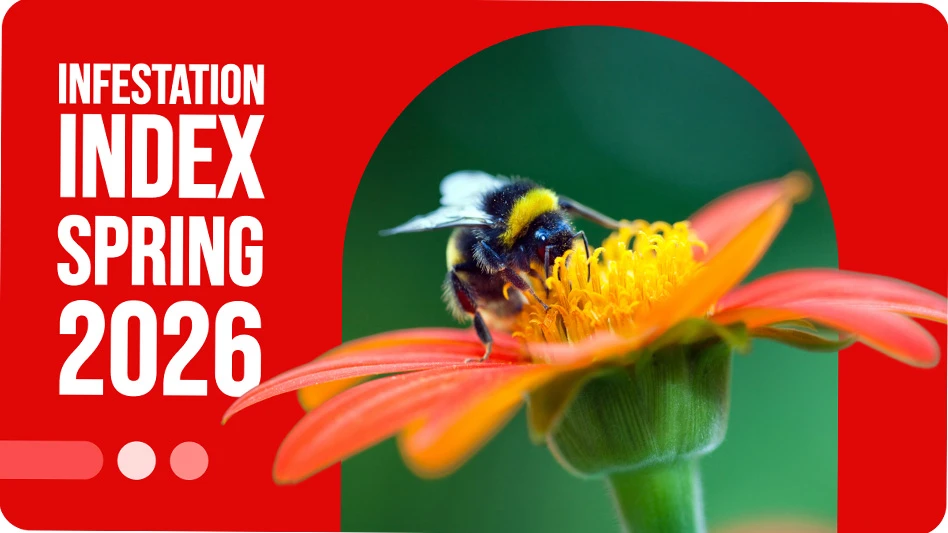
SAN FRANCISCO — As temperatures rise and flowers bloom, pest season is kicking into high gear across the country — with bees, wasps and mosquitoes becoming more active around homes, backyards and outdoor spaces. To help stay ahead of the swarm, Yelp's 2026 Infestation Index spotlights the top 20 cities searching for pest control services this season and the outdoor insects creating demand.
Whether it’s a bee colony, a wasp nest forming, or mosquitoes turning your backyard into a no-go zone, spring can bring a wave of pest activity that will escalate quickly if left unchecked. According to Yelp, searches for pest control are up 34%, comparing March 2025–February 2026 vs. March 2024-February 2025, reflecting a growing urgency among homeowners to find trusted professionals as spring infestation season begins. Yelp project requests for pest extermination jumped 66% from February to March 2025 alone, underscoring how sharply demand spikes when spring arrives.
“Spring is when pest activity really ramps up, and the best defense is getting ahead of it before a small issue becomes a big expense,” says Tara Lewis, Yelp’s trend expert and vice president of community expansion. “Whether you’re spotting a swarm in the yard or trying to keep mosquitoes from taking over your outdoor space, Yelp can help connect you with trusted local pros to pest-proof your home for the season.”
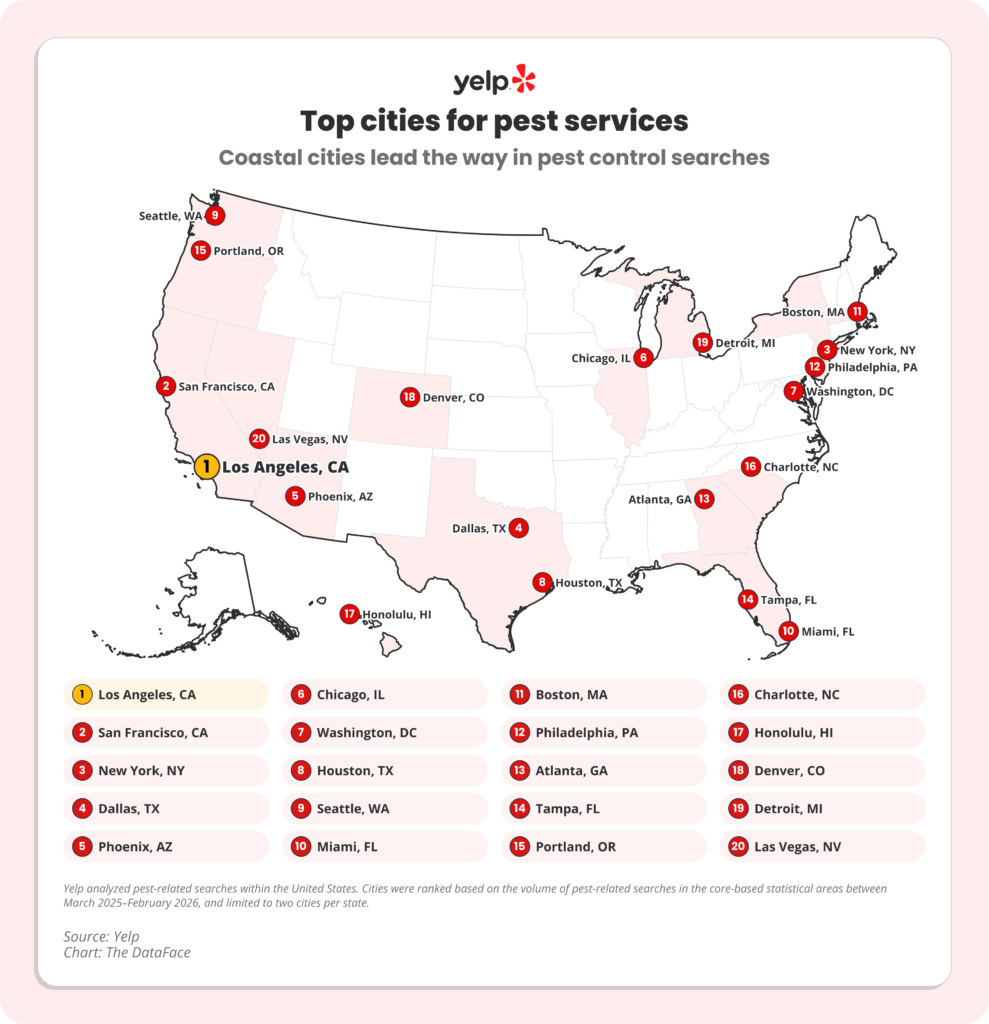
Yelp data reveals the major metropolitan areas where residents are most actively searching for pest control help. Coastal metros dominate the rankings, but the list spans every region of the country.
Yelp
Los Angeles and San Francisco lead the nation in pest control searches. The Golden State’s mild winters and dense urban environments create year-round conditions for pests to thrive, while spring warmth can accelerate breeding cycles and demand for professional services.
On the East Coast, New York lands at number three, proving that pest season doesn’t discriminate by climate. As snow melts and temperatures climb, overwintering wasps reawaken and residents in the New York metropolitan area are taking action early. Washington, D.C., which previously ranked number one in Yelp’s inaugural Infestation Index for roach, mosquito and bed bug searches, remains a top metro at number seven.
Texas makes a strong showing, with Dallas and Houston both landing in the top eight. Pacific Northwest metros Seattle and Portland both appear, reflecting a region where moisture-rich springs create ideal conditions for ants, wasps, and other insects to flourish.
Top culprits: Bees, wasps, and mosquitoes. While spring brings a variety of unwanted visitors, a few pests draw particular attention. Project requests for bee control spiked 197% on Yelp, comparing February 2025 to March 2025, while wasp and hornet extermination rose 212%, a strong indicator that concerns around the stinging insects are top of mind in the warmer months. Requests for mosquito exterminations were up 157% during the same time period. It’s smart to schedule help early and protect your home before pest issues escalate or even begin. Requests for preventive pest control rose 57% in March 2025, and continued to rise throughout the summer months.
Yelp offers its own assistant with AI-powered photo recognition to help customers identify their pest issue and connect them with PMPs.
Methodology. To determine the top cities, Yelp analyzed pest control-related searches within the United States. Cities were ranked based on the volume of pest control-related searches in the core-based statistical areas between March 2025-February 2026 and limited to two cities per state.
For project request trends, Yelp analyzed the change in user request a quote project requests from March 2025 vs Feb 2025. For search trends, Yelp measured the frequency of the phrases mentioned per million searches on Yelp, comparing March 2025–February 2026 vs. March 2024-February 2025.
Latest from Pest Control Technology
- Envu Offers Fall Promotion for Horizon Members
- Pest Management Foundation Announces the E. Raymond Crim, III Scholarship
- Tyro Group Acquires Dowell Pest Control
- Podcast: Beyond the Pest | Ep. 14 — Dr. Zach DeVries
- Webinar: The AI-Run Pest Control Company: Hype vs. Reality, What Actually Works (and What Doesn’t)
- Select Exterminating Acquires Three Businesses Across New York and New Jersey
- Catseye Pest Control Acquires Security Pest Elimination and Biologic Pest Control
- Researchers Confirm New York's First Bourbon Virus Case