Editor's note: The following wildlife control feature is from Daine Patton, founder and CEO of Nebraska- based Bats to Rats. A National Wildlife Expo speaker and BBB Torch Award winner, he is known for permanent exclusion solutions, family-first leadership, and advocating for higher standards across the pest and wildlife industry.
A proper wildlife job doesn’t start with tools; it starts with a thorough inspection. Miss something during inspection, and it doesn’t matter how good your materials are or how clean your installation looks—the problem will return.
When we perform an inspection, we start at one corner of the house and work completely around the structure until we return to that same point. We always work from the bottom up.
At ground level, we look for gaps, cracks or crevices about the size of a dime or larger that could allow entry for rodents or bats. Anything bigger becomes a concern for other nuisance wildlife as well. We pay close attention to areas like abutments, wall penetrations and all types of vents. These are common problem areas, but they’re also easy to overlook without an intentional approach.
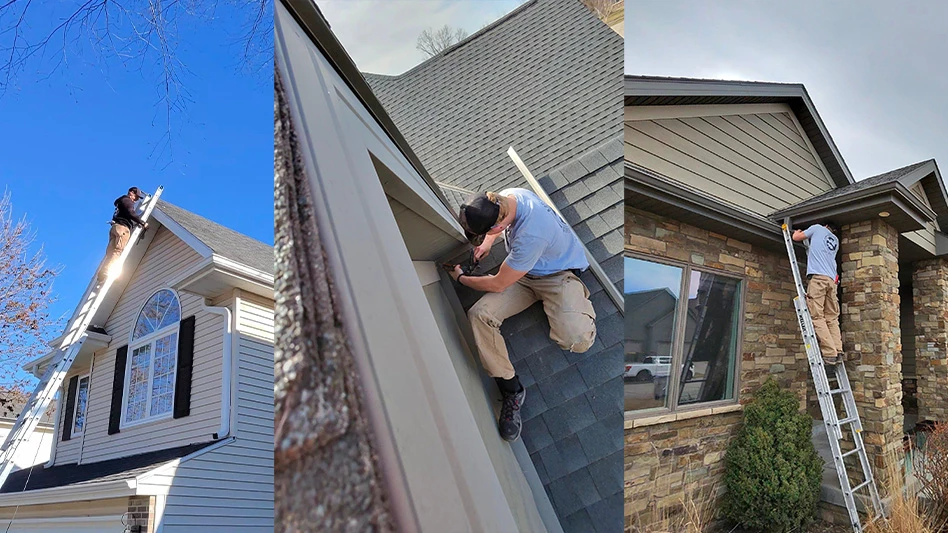
Once we’ve covered the lower portion, we bring out ladders and move higher. From there, we assess the roofline, taking a detailed look at dormers, soffit returns, gable vents, roof vents and any roof penetrations. We also evaluate construction gaps, gutter lines, soffits and fascia. Anywhere building materials meet or change is a potential entry point, and those transitions require close inspection.
Over time, it becomes clear that some of the most common entry points are also the easiest to miss.
One of the most overlooked areas is beneath the drip edge where gutters are installed. A construction gap often exists behind the gutters, tucked under the drip edge, and it’s easy to miss during a typical inspection. Identifying it often requires getting up close and, in many cases, using a mirror to see underneath.
Roof vents are another frequent issue. From the ground, they may appear intact, but a closer look can reveal gaps or wear that create entry points. Ridge vents present similar risks. As they age, they can warp or become uneven, opening access for wildlife.
These are the details that separate a cursory check from a professional inspection.
Once problem areas are identified, the next step is proper exclusion—and this is where many operators fall short.
We focus on selecting the right materials for each structure rather than relying on a one-size-fits-all approach. Much of our work involves custom metal fabrication because every building is different, and those differences matter when creating a long-term solution.
We also use high-quality products from suppliers such as AAC Distributing, Hy-Guard Exclusion, Pest Blok and Wildlife Control Supplies. These manufacturers provide reliable options for vent covers, ridge vent protection, gable vents and other critical components. Proven, durable products are essential, especially when backing work with a warranty.
For sealing, we rely on high-grade polyurethane sealants that remain flexible over time. Materials must expand and contract with the structure without cracking or becoming brittle. Appearance also matters, so we use products that blend well to maintain a clean, professional finish.
The difference between a lasting solution and a temporary fix comes down to material quality and attention to detail. Cut corners on either, and the problem will return.
Two common mistakes continue to undermine results across the industry.
First is the use of low-quality materials. Spray foam, chicken wire and low-grade silicone may seem like quick fixes, but they fail over time—and often make problems worse. Effective exclusion requires materials specifically designed for the job.
Second is rushing the inspection process. Finding one obvious gap doesn’t mean the problem is solved. Wildlife rarely relies on a single entry point. Without a full structural inspection, missed access points lead directly to callbacks.
The right approach is straightforward but requires discipline: slow down, follow a system and assume every structure has multiple vulnerabilities. Pair a thorough inspection with proper materials and installation, and you deliver results that last.
Latest from Pest Control Technology
- Envu Offers Fall Promotion for Horizon Members
- Pest Management Foundation Announces the E. Raymond Crim, III Scholarship
- Tyro Group Acquires Dowell Pest Control
- Podcast: Beyond the Pest | Ep. 14 — Dr. Zach DeVries
- Webinar: The AI-Run Pest Control Company: Hype vs. Reality, What Actually Works (and What Doesn’t)
- Select Exterminating Acquires Three Businesses Across New York and New Jersey
- Catseye Pest Control Acquires Security Pest Elimination and Biologic Pest Control
- Researchers Confirm New York's First Bourbon Virus Case