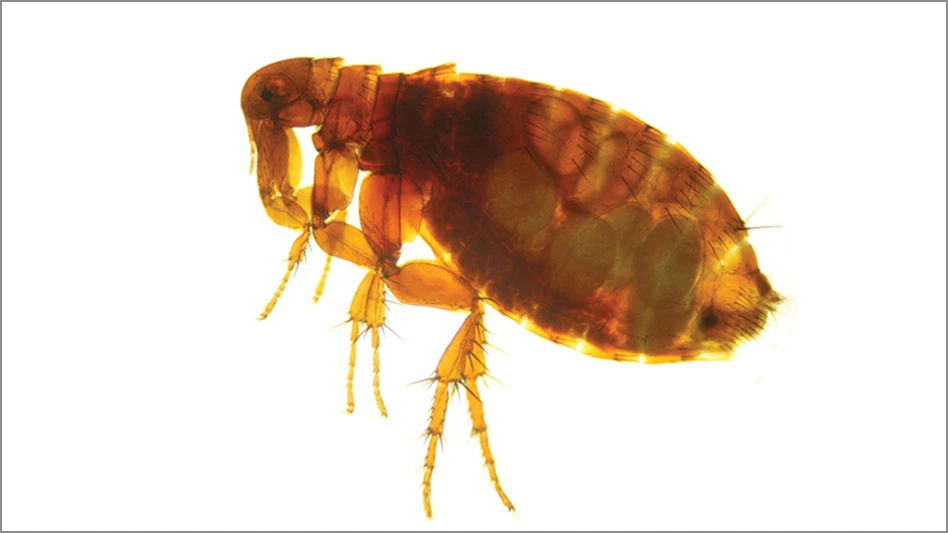
Photo courtesy of Matt Frye, Cornell IPM
SANTA FE, N.M. — A Santa Fe County, N.M., rodent has been diagnosed with plague, the first confirmed wild animal plague case in the county in 2026, the New Mexico Department of Health (NMDOH) reported on July 2.
NMDOH reports the rodent was turned in by a person who found it dead on their property. Earlier this year, three Santa Fe County dogs and one Bernalillo County dog were also diagnosed with plague, making a total of five animal plague cases in the state this year.
Plague is a bacterial disease that circulates in wildlife and is commonly transmitted through flea bites. Plague symptoms in cats and dogs include fever, lethargy and loss of appetite. There may be swelling in the lymph node under the jaw.
“While this is an animal case of plague, it’s important to remember humans can get plague from flea bites or direct contact with infected animals, including rodents, wildlife and even pets,” said Dr. Chad Smelser, deputy state epidemiologist for NMDOH. “Pets can be infected with plague if they eat an infected animal or are bitten by infected fleas.”
Plague symptoms in humans include sudden onset of fever, chills, headache and weakness. In most cases, there is a swollen, painful lymph node in the groin, armpit or neck area.
Prompt diagnosis and antibiotic treatment greatly reduce the risk of death in people and pets. Physicians or veterinarians who suspect plague should promptly report to the NMDOH Helpline at 1-833-SWNURSE (1-833-796-8773). Questions can also be text to 66364 (NMDOH).
Latest from Pest Control Technology
- Envu Offers Fall Promotion for Horizon Members
- Pest Management Foundation Announces the E. Raymond Crim, III Scholarship
- Tyro Group Acquires Dowell Pest Control
- Podcast: Beyond the Pest | Ep. 14 — Dr. Zach DeVries
- Webinar: The AI-Run Pest Control Company: Hype vs. Reality, What Actually Works (and What Doesn’t)
- Select Exterminating Acquires Three Businesses Across New York and New Jersey
- Catseye Pest Control Acquires Security Pest Elimination and Biologic Pest Control
- Researchers Confirm New York's First Bourbon Virus Case