Photo credit: Romina Barrozo
Mosquitoes may be able to learn that the smell of DEET means a meal is nearby, potentially weakening the effectiveness of the world’s most widely used insect repellent, according to a new study.
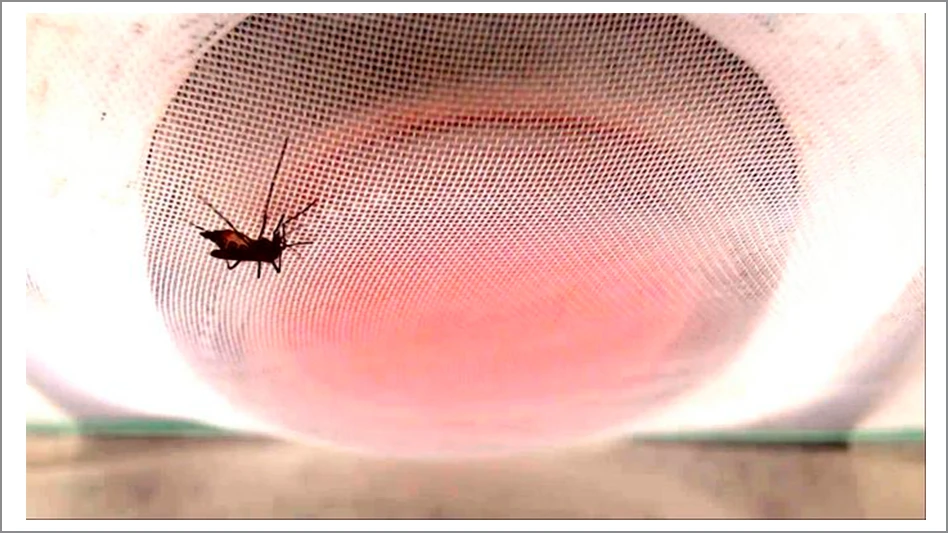
Researchers from the University of Tours in France, Virginia Tech and other institutions found that yellow fever mosquitoes could associate the scent of DEET with access to food after repeated exposure. The findings were published in the Journal of Experimental Biology.
DEET insect repellent is widely used to protect against mosquitoes, ticks and other biting insects that spread disease.
In the study, researchers exposed mosquitoes to warm blood meals while releasing the scent of DEET during feeding sessions. After repeated training, more than 60% of the insects attempted to bite when exposed to DEET alone.
The trained mosquitoes also preferred a DEET-scented hand over an untreated one during experiments involving human volunteers.
Lead researcher Claudio Lazzari said the findings suggest mosquitoes can learn to connect the smell of DEET with food under certain conditions.
“If a mosquito bites someone who applied DEET several hours earlier and the concentration is too low to repel it, but still strong enough to smell, the mosquito may become more likely to bite people who smell of DEET,” Lazzari said.
Despite the findings, researchers stressed that DEET remains the most effective insect repellent available and continues to play a critical role in preventing mosquito-borne diseases.
Source: EurekaAlerts
Latest from Pest Control Technology
- Envu Offers Fall Promotion for Horizon Members
- Pest Management Foundation Announces the E. Raymond Crim, III Scholarship
- Tyro Group Acquires Dowell Pest Control
- Podcast: Beyond the Pest | Ep. 14 — Dr. Zach DeVries
- Webinar: The AI-Run Pest Control Company: Hype vs. Reality, What Actually Works (and What Doesn’t)
- Select Exterminating Acquires Three Businesses Across New York and New Jersey
- Catseye Pest Control Acquires Security Pest Elimination and Biologic Pest Control
- Researchers Confirm New York's First Bourbon Virus Case