Orkin
At first glance, a zoo might seem like just another place that occasionally needs pest control. Take a closer look and you’ll find one of the most extreme examples of a sensitive account. A misplaced treatment could affect rare animals, contaminate specialized habitats or expose visitors and staff to unnecessary hazards.
For that reason, pest management professionals working in zoos rely heavily on Integrated Pest Management (IPM), with an emphasis on sanitation, trapping, monitoring and physical exclusion.
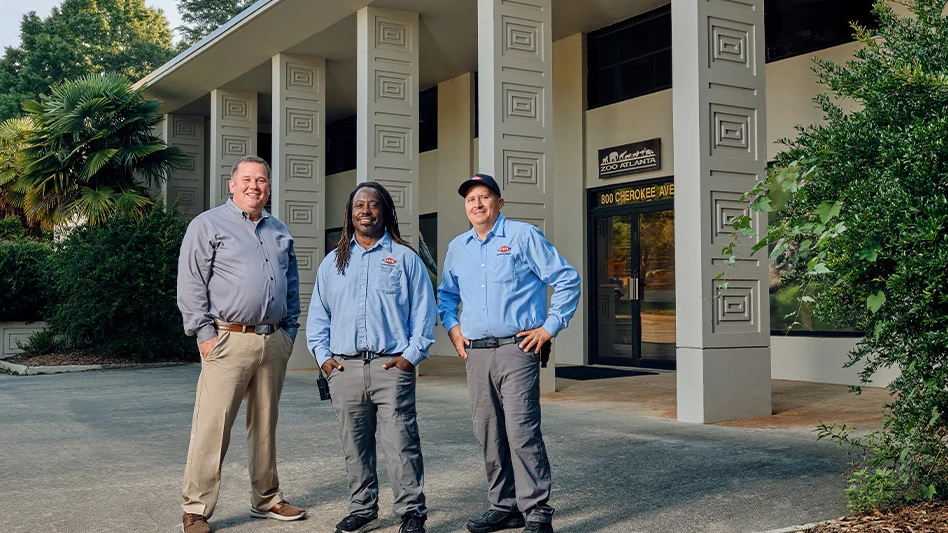
Since 2016, Orkin’s Atlanta Commercial branch has partnered with Zoo Atlanta to build a science-based IPM program designed specifically for the unique challenges of a modern zoo. The work requires constant communication, careful timing and an understanding that every treatment decision must account for the health and behavior of animals, staff and the public.
“Zoos present a level of complexity that few environments can rival,” said Orkin service manager Dan Wilson, who has worked with the Zoo Atlanta account for nearly a decade. “You can’t just see a pest and reach into your bag for a treatment. You have to stop, look around and think about every living thing in that environment.”
Wilson’s background made has made him uniquely suited for the role. Prior to joining Orkin in 2016, he worked in animal care at a research institution in Atlanta, assisting with cognitive studies involving chimpanzees. When changes in research regulations shifted the institution away from active primate research, a visiting Orkin technician encouraged him to consider pest control as a career.
That experience working with primates became an unexpected advantage once Orkin secured the Zoo Atlanta account.
“I think it helped build trust with the keepers,” Wilson said. “I understood what their day-to-day work looked like, the regulations they operate under and how much care goes into maintaining those habitats.”
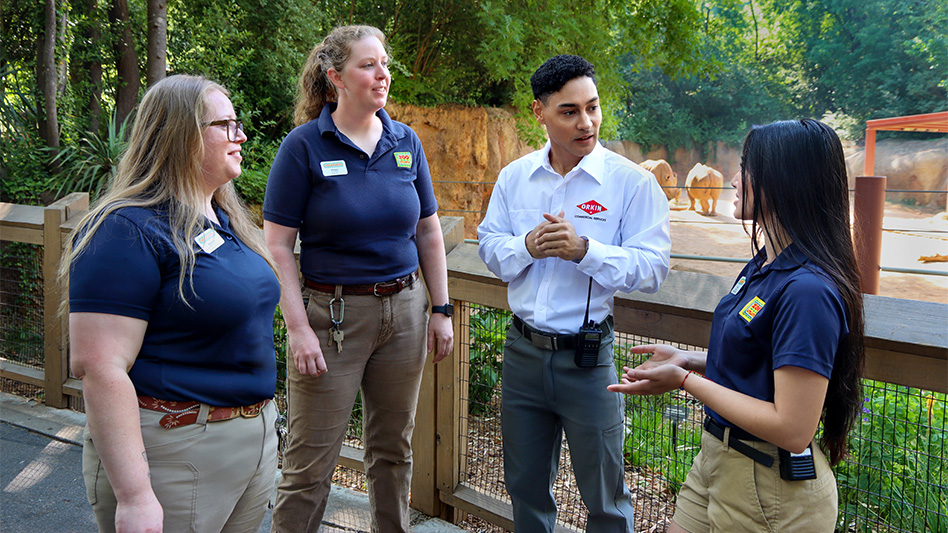
TRUST AND COMMUNICATION. Much of the work Orkin technicians perform goes unnoticed, which is a good thing. Three mornings a week before gates open, Orkin technicians inspect and treat exhibits, restaurants and behind-the-scenes care facilities.
Orkin technicians Yovani Hernandez and Aaron Gray service the zoo multiple times each week, covering everything from carnivore habitats and primate buildings to food service areas and public gathering spaces. Both say the work differs dramatically from traditional commercial pest control.
For example, at the zoo, even routine pest treatments require added layers of caution. Granular bait products, for example, cannot be used near birds because airborne particles could affect their respiratory systems. Treatments inside animal buildings must be timed around cleaning schedules, animal movements and even weather conditions that could unexpectedly force animals back indoors.
“You have to communicate constantly,” Gray said. “We have to know what products are safe around specific animals, when animals can be moved and when areas are clear. Everything has to be coordinated.”
THE PUBLIC ASPECT. The public environment adds another layer of complexity. Yellowjacket nests, one of the zoo’s most common summertime pest issues, cannot simply be treated during peak visitor hours.
“You don’t want to treat a yellow jacket nest at 11 o’clock when school groups are walking through,” Wilson said. “If you disturb that nest, somebody could get stung.”
Instead, zoo staff and Orkin coordinate closely to rope off areas when needed or schedule treatments early in the morning before guests arrive.
Rodents remain one of the zoo’s biggest ongoing pest pressures. Despite perimeter fencing, the zoo sits within a larger urban environment surrounded by neighborhoods, parks and restaurants. Naturalistic habitats designed to enrich the lives of animals can also create ideal harborage areas for pests.
“The zoo does a great job building habitats that are natural for the animals,” Wilson said. “But sometimes rodents think those habitats are pretty good too.” Rather than relying solely on pesticides, the team often focuses on exclusion methods, sanitation improvements and habitat modifications whenever possible.
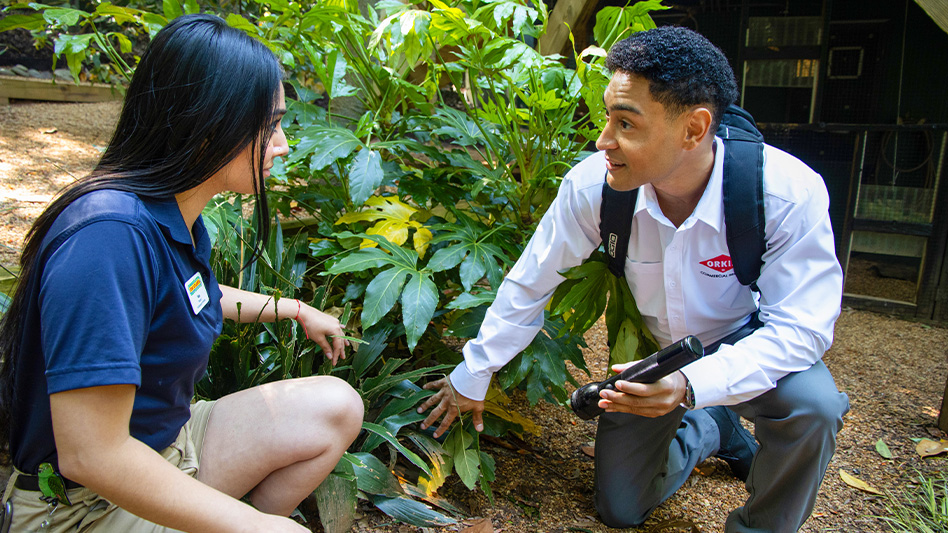
Hernandez noted that many solutions require collaboration with zoo personnel instead of simply applying products. One example he shared involved mara, rabbit-like rodents native to South America, whose ears were being bitten repeatedly by flies. Initial treatments did little to resolve the issue. Eventually, the team collected samples and worked with Orkin entomologists to identify the pest as stable flies. Once identified, Orkin adjusted its treatment strategy, implemented insect growth regulator applications around nearby vegetation and worked with keepers to add preventative measures like fans and fly deterrent systems. The problem subsided.
“That was one of the more challenging ones because we didn’t know what type of fly it was at first,” Hernandez said.
NEW-FOUND RESPECT FOR ANIMALS. For technicians, working inside the zoo also means adapting to the personalities and behaviors of highly intelligent animals.
Wilson remembers one early experience treating a yellowjacket nest near the gorilla habitat while wearing a white protective bee suit. The gorillas immediately reacted with alarm.
“The vet staff wears white, and the gorillas associate that with getting shots or exams,” he explained. “As soon as I walked in, every gorilla started alarm calling. It was the loudest experience I’ve ever had.”
The moment underscored just how observant and intelligent the animals are — and how important it is for technicians to understand the environment they are entering.
“You’re walking into their home,” Wilson said. “You have to respect that.”
That respect has helped create strong relationships between Orkin technicians and zoo staff over the years.
Gray, who also previously worked in animal research, said the zoo account provides something uncommon in pest control: the opportunity to combine technical problem-solving with a lifelong passion for animals.
“It almost doesn’t feel like work sometimes,” Gray said. “You’re learning about animals, watching behaviors and solving problems in a completely different environment every day.”
That combination of science, patience and collaboration defines the Zoo Atlanta partnership. While visitors may never notice the work happening quietly behind the scenes, the success of the zoo’s animal care operation depends in part on those unseen efforts.
Latest from Pest Control Technology
- Envu Offers Fall Promotion for Horizon Members
- Pest Management Foundation Announces the E. Raymond Crim, III Scholarship
- Tyro Group Acquires Dowell Pest Control
- Podcast: Beyond the Pest | Ep. 14 — Dr. Zach DeVries
- Webinar: The AI-Run Pest Control Company: Hype vs. Reality, What Actually Works (and What Doesn’t)
- Select Exterminating Acquires Three Businesses Across New York and New Jersey
- Catseye Pest Control Acquires Security Pest Elimination and Biologic Pest Control
- Researchers Confirm New York's First Bourbon Virus Case