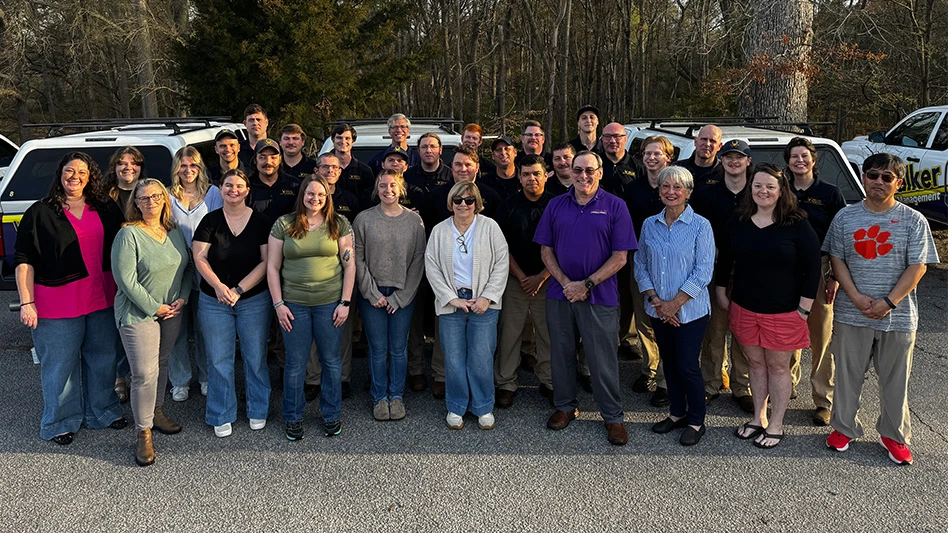
Editor’s note: This article was submitted by David Schaedel, director of sales and marketing at Walker Pest Management, Greenville, S.C. Schaedel co-authored the article with Walker Pest Management Operations Manager Rhiannon Boyd.
Growth is often measured exclusively in numbers and metrics: more customers, more routes, more revenue. While financial health matters, numbers alone don’t build a strong business. What truly sustains growth over time is something far less measurable but far more powerful: trust.
We believe growth is the natural outcome of consistently excellent service. When customers feel heard, valued and cared for from start to finish, they stay longer, trust deeper and recommend more. That foundation, not shortcuts or efficiency, is what creates sustainable success.
Excellence Starts Before the First Service. Customer service doesn’t begin when a technician arrives. It begins the moment a customer reaches out.
When someone calls with a concern about ants near their kitchen or submits a request online, the first interaction sets the tone. Customers want to feel seen, heard and understood not rushed through a process.
Clear communication at this stage is critical. Information shared by the customer must be captured and accessible to the entire team. When a technician arrives already aware of the customer’s specific concern, it shows preparation, professionalism and respect for their time.

“Excellent service starts before we ever get to the property,” said Rhiannon Boyd, operations manager for Walker Pest Management. “If a customer takes the time to tell us what’s going on, that information has to make its way back to the tech. When communication breaks down, everything else falls apart. Our job is to make sure that the tech shows up informed, prepared and ready to solve the customer’s problem.”
When communication flows correctly between office and field, customers experience something rare: a service team that feels coordinated and attentive.
Listening First, Then Serving. Once the technician arrives, their role goes beyond applying a treatment. The most important step is listening and investigation.
Every home and situation is unique. Customers want a bespoke solution that solves their issues. A technician who takes the time to ask questions, observe carefully and tailor the service provides excellence.
In this industry, the culture must prioritize helping first. That means focusing on solutions before upsells, understanding before assumptions and support before convenience.
“Customers can tell right away if you’re there to help or just check a box off of your to-do list,” Boyd said. “When you slow down, ask questions and explain what you’re doing, everything changes. That’s where you can build genuine trust and rapport with your customers”
Trust begins in moments like these when customers feel their concerns truly matter.
Building Trust Through Consistency. One of the strongest drivers of long-term customer relationships is familiarity. When possible, having a primary technician assigned to a home allows that relationship to grow. The technician learns the property, understands patterns and becomes a trusted presence.
But consistency isn’t about one person. It requires building a team that consistently delivers the same caliber of excellence.
When a floater technician steps in, customers should feel just as confident and cared for as they do with their regular technician. That level of consistency only comes from shared standards, shared communication and a shared commitment to service quality.
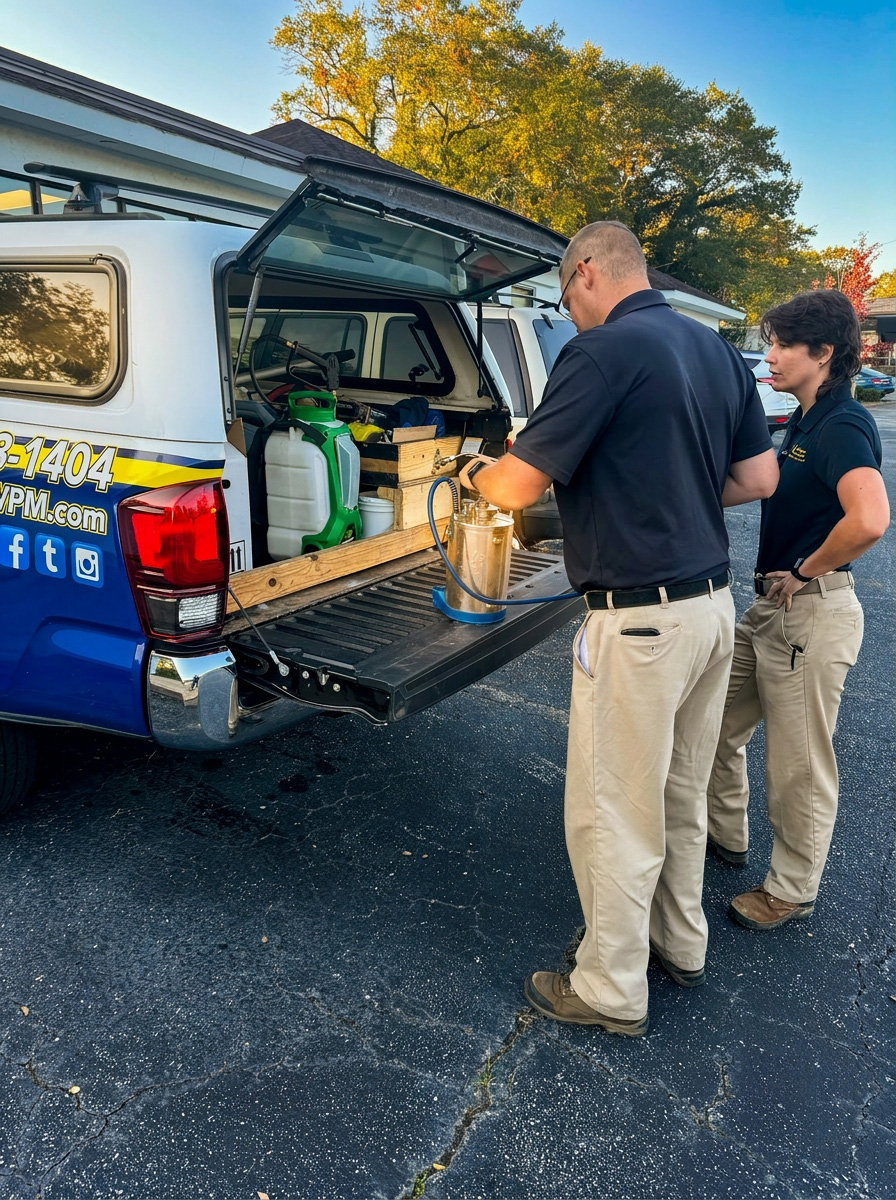
“Customers build relationships with their regular technician and we want that,” Boyd said. “But when someone else steps in, the experience can’t change. Customers need to feel the same standard of excellence regardless of which tech shows up to service their home. That consistency is so important.”
Consistency transforms good service into dependable service, and dependable service is rare.
Time, Presence, and Perceived Value. Efficiency matters, but perception matters too.
Sometimes a pest issue can be addressed quickly, but great service isn’t measured only by how fast a task is completed. It’s measured by how supported the customer feels afterward. Perception is often reality, and if a customer doesn’t feel like they are getting a meaningful amount of time, they will be unhappy. Spending meaningful time at a property allows the technician to listen to their concerns, answer questions, fully review the area, look for future issues and reinforce the value of their service. Customers should never feel rushed or overlooked. Even when the solution is simple, the experience should feel thorough and complete.
Clear Communication at the End of Service. How a service ends is just as important as how it begins.
Customers need clear, actionable communication about what was done, what to expect next, realistic timelines for results and the follow-up steps. If a treatment needs a few days to become fully effective, that expectation must be clearly explained. Transparency builds confidence and prevents frustration.
While clear verbal communication is important, written documentation is crucial to success.
If it isn’t written down, it doesn’t exist. Service notes must be clear, accessible and visible to the office, the team and the customer. This ensures continuity, accountability, and clarity for future visits.
Following Through Builds Real Trust. Service doesn’t end when the technician leaves.
Follow-ups, check-ins and promised next steps must be completed. When expectations are missed, credibility is lost, but when expectations are consistently managed and met, trust is built.
Trust is built over time through reliability, clear communication and consistency. As we all know, trust can be lost so quickly. It is easy to let some small things slide, but consistency is the key to building lasting trust with customers.
Why Excellence Leads to Sustainable Growth. Businesses today often feel pressure to do more with less, to increase prices, reduce time and maximize efficiency. While efficiency is important, service quality cannot be sacrificed without consequences.
Customers stay where they feel valued, they recommend businesses they trust, and they leave reviews based on experiences, not pricing models. Loyal customers stay longer, refer more, require less work to retain and provide stability.
Acquiring new customers is expensive. Keeping existing customers through excellent service is far more powerful and far more sustainable.
“Growth built on trust holds up,” Boyd said. “When customers trust you, they want to stick around and support a team they feel connected to. Building that trust doesn’t happen overnight. You have to show up, follow through and take care of people every time. When you do that consistently, growth becomes a natural outcome.”
The Excellent Way. Excellence is not a single action. It is a chain of moments:
- Listening when customers speak
- Preparing before arrival
- Serving with care and intention
- Communicating clearly
- Documenting thoroughly
- Following through consistently
When these steps are done well, trust grows. And when trust grows, sustainable success follows.
Profitability matters. Efficiency matters. But when excellent service leads, growth becomes stronger, healthier and longer-lasting.
That is the sustainable way towards growth.
Latest from Pest Control Technology
- Envu Offers Fall Promotion for Horizon Members
- Pest Management Foundation Announces the E. Raymond Crim, III Scholarship
- Tyro Group Acquires Dowell Pest Control
- Podcast: Beyond the Pest | Ep. 14 — Dr. Zach DeVries
- Webinar: The AI-Run Pest Control Company: Hype vs. Reality, What Actually Works (and What Doesn’t)
- Select Exterminating Acquires Three Businesses Across New York and New Jersey
- Catseye Pest Control Acquires Security Pest Elimination and Biologic Pest Control
- Researchers Confirm New York's First Bourbon Virus Case