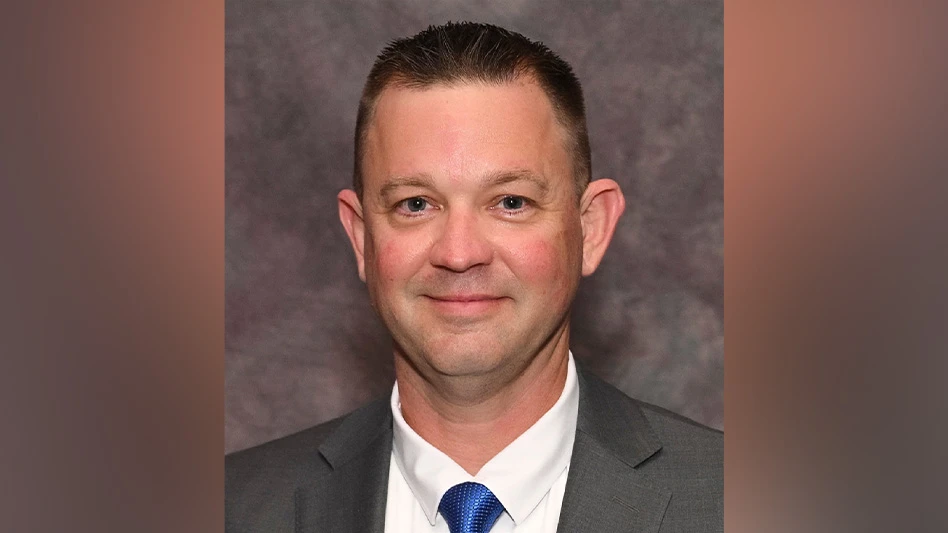
Editor’s note: In the following guest editorial, Adam Palmer, sales manager at Stop Bugging Me Pest Control, Seattle, Wash., shares his experience providing pest control in multi-family housing and how a triage approach can close the accountability gap.

Last year in this same publication, I wrote about the critical need for pest management professionals (PMPs) to lead their clients from a reactive mindset to a proactive one. I argued that shifting from a tenant-driven program to a proactive, IPM-based approach is often not just better science – it can be a financial necessity. However, we must be honest about the reality of our industry: many - if not most - multifamily accounts remain firmly in the reactive category. It is time we addressed the systemic breakdown within these programs that I call the Accountability Gap.
Sometimes, I also refer to this as the “Clean Inbox” problem; it’s the mistaken assumption that because our inbox is empty, the ball must be in someone else’s court on all of our problems, and we can rest easy and wait for the problem to resolve itself. To beat the Clean Inbox trap, we must first understand exactly where the communication breaks down.
DEFINING THE ACCOUNTABILITY GAP. This Accountability Gap is the space between identification and execution. In a typical service cycle, our technicians are excellent at identification. They find the source of the cockroach infestation, they note the broken door sweeps, they identify the ant trails, and they NEVER forget to document the lack of resident preparation. They put this information into a report, hit "send," and move to the next unit.
The gap exists because we assume that "reporting" is the same as "communicating." On the other side of that gap is a Property Manager who is likely managing fifteen different vendors, a dozen maintenance tickets, and a line of prospective tenants. They aren't "diving in" to your notes; they are even more short-staffed than we are and are simply skimming for a "completed" status to the work order.
When a technician treats the same unit for German cockroaches four months in a row, the data is there, but the accountability is missing. No one is standing in that gap to ask: “Why is the problem not getting better? What is the breaking point? What is REALLY going on here?” Without a bridge across this gap, the PMP is just a technician on a treadmill, and the client is a frustrated payer who feels like they are throwing money at a problem that never goes away.
THE MYTH OF THE PERFECT PROTOCOL. In a perfect world, we would bridge this gap with a robust infrastructure. We would have quality assurance committees, dedicated account managers for every door, and sophisticated protocols that trigger a mandatory "stop-and-fix" meeting the moment a unit hits a third repeat treatment.
But we don’t live in a perfect world. We live in a world of manpower shortages and increasingly thin margins. For a PMP managing thousands of multifamily units, building a massive management layer to audit every technician note isn't just complicated - it’s financially impossible.
We need to stop feeling guilty about not being perfect and start being strategic. We have to recognize a hard truth of our business, that sometimes a problem is only worth fixing when it is financially expedient to do so. Every business has preventable problems that aren't worth the cost of the cure. But some problems are BIG. The key to closing the accountability gap without blowing your payroll is Financial Triage.
THE ‘RED FLAG’ SYSTEM. Since we cannot have a manager on every property, we must train our technicians to be the sensors for our triage system. This is where the Red Flag System comes in. Every pest management company should incorporate a "Red Flag" protocol into their regular training, moving technicians away from simply recording observations and towards identifying anomalies.
- The Three-Strike Rule: Train technicians to recognize "Service Loops." If they are standing in the same kitchen for the third time in 60 days, that is no longer a simple case of déjà vu or even a routine treatment - it is a Red Flag.
- The Documentation of Defiance: If a technician notes a lack of prep once, it’s an observation. If they note it twice, it’s a trend. The third time, the technician shouldn't just write "no prep"; they should be trained to explicitly flag the account for management review.
THE MECHANICS OF ESCALATION: BUILDING THE BRIDGE. The most critical part of this system is the Internal Escalation. If a technician identifies a Red Flag but has nowhere to send it, the gap remains wide open. To close it, you need a standardized "hand-off" that requires zero extra paperwork but maximum visibility.
- Standardized Coding: Create a specific service code or "tag" in your software platform - something like “RF-MGMT” (Red Flag - Management). When a technician hits this code, it should automatically trigger an internal notification or populate a specific report.
- The "Check Engine" Light: Treat these flags like the check engine light in a car. The technician isn't responsible for fixing the engine; they are responsible for notifying the shop that the engine is overheating. This shift in mindset reduces technician burnout—they no longer feel like they are "failing" at a unit; they are successfully "alerting" the company. Then of course it is management that MUST step in; if your technicians see that their alerts aren’t being heeded, they will stop alerting management.
- The Triage Meeting: Once a week, spend 15 minutes reviewing the "RF-MGMT" list. If a Red Flag pops up on a flagship account (more on those below), the escalation moves to the final stage.
IMPLEMENTING FINANCIAL TRIAGE. Once a technician throws a Red Flag, management must decide how to deploy resources.
- Identify Your Vulnerabilities: Identify which clients you simply cannot afford to lose. These are your "Flagship" accounts - the ones that represent a significant amount of revenue or are otherwise highly sensitive. You can determine which accounts are your flagship accounts however you like – but chances are you know who they are and they’re popping up in your mind right now.
- High-Value Intervention: When a Red Flag pops up on a flagship account, you don't send another technician; you send a manager or a sales lead. This is the moment you close the Accountability Gap. You pick up the phone and tell the client: "We’ve been in Unit 304 three times. Our notes show a prep issue. This reactive program is no longer working for this unit, and we need to change the strategy before it affects the rest of the building."
- The Professional Pivot: This intervention proves your value. It shows the client that you aren't just a "spray jockey" on a route, but a consultant who is watching their bottom line.
FINAL THOUGHTS. The Accountability Gap is where professional relationships go to die. It is the silent killer of accounts that "seemed fine" until the day the cancellation notice arrived. We can all sadly recount the story of the client who left us - and only afterwards, with even a little bit of reflection, we come to realize that we don’t blame them.
As an industry, we must accept that we cannot be everywhere at once. We cannot audit every unit or read every line of every report. But we can be strategic. By empowering our technicians with a Red Flag system and applying the cold logic of financial triage to our management efforts, we ensure that our expertise is deployed where it matters most.
Stop sending your best technical findings to a "dead letter office" in a client’s inbox. Pick up the phone, bridge the gap, and transform yourself from a replaceable line item on a budget into an indispensable partner. Take control of those high-value relationships that you worked so hard to acquire, and make it happen!
Latest from Pest Control Technology
- Envu Offers Fall Promotion for Horizon Members
- Pest Management Foundation Announces the E. Raymond Crim, III Scholarship
- Tyro Group Acquires Dowell Pest Control
- Podcast: Beyond the Pest | Ep. 14 — Dr. Zach DeVries
- Webinar: The AI-Run Pest Control Company: Hype vs. Reality, What Actually Works (and What Doesn’t)
- Select Exterminating Acquires Three Businesses Across New York and New Jersey
- Catseye Pest Control Acquires Security Pest Elimination and Biologic Pest Control
- Researchers Confirm New York's First Bourbon Virus Case