Allergy Technologies
HERSHEY, Pa. – Allergy Technologies showcased its ATAHC (Allergy Technologies Affordable Housing Control and Prevention) program at the Pennsylvania Association of Housing and Redevelopment Agencies (PAHRA) Spring Conference, held June 7-10 in Hershey, Pa. The company participated as both an exhibitor and presenter, engaging housing authority leaders, property managers, maintenance professionals and industry partners from across Pennsylvania.
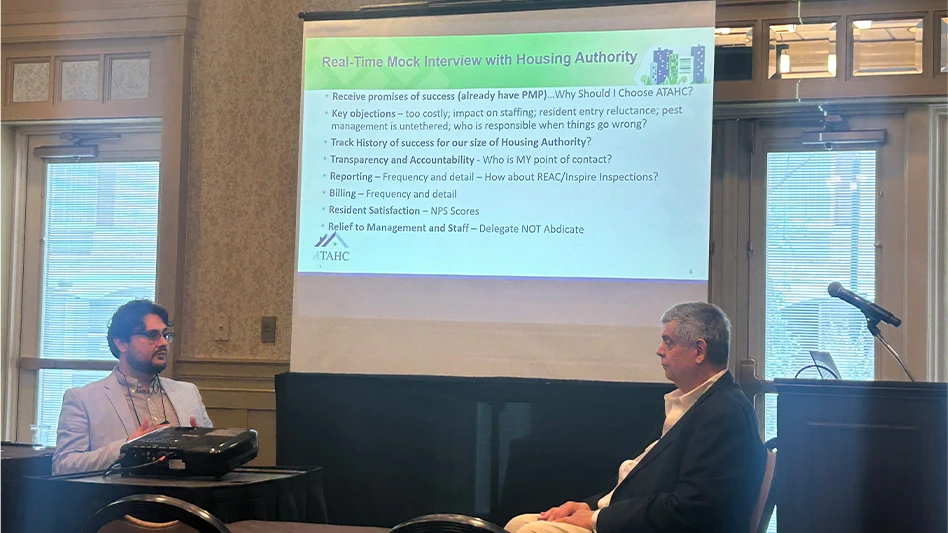
As part of the conference educational program, Allergy Technologies President Joseph Latino joined his colleague Anastas Duka for an interactive presentation titled “Real Talk’ on Pest Control: Rodents, Roaches, Bed Bugs & Other Nuisances.” The session was moderated by Jay Ortiz, facilities & maintenance director for the Lancaster City Housing Authority.
Allergy Technologies said the presentation featured a candid discussion about the realities of managing pest issues, including bed bugs, rodents and cockroaches, in affordable housing communities. Drawing on their combined experience, Latino and Duka explored the unique challenges associated with multifamily housing environments, such as resident engagement, access issues and the limitations of traditional reactive pest control approaches. Audience members were encouraged to participate, ask questions and share their own experiences.
“Affordable housing professionals face complex pest management challenges every day,” Latino said. “Our goal was to have an honest conversation about what works, what doesn’t and how comprehensive prevention-based strategies can help housing providers achieve better long-term outcomes for both their residents and properties.”
Throughout the conference, Allergy Technologies also met with attendees in the exhibit hall to discuss ATAHC. The program combines resident engagement and education, ongoing monitoring, early detection, preventive interventions and data-driven decision-making to drastically reduce infestations and prevent reintroductions before they spread.
Originally developed to address bed bug infestations, Allergy Technologies said the ATAHC approach has expanded to include solutions for rodents, cockroaches and other structural public health nuisance pests through ATAHC Plus and ATAHC Complete, creating a comprehensive prevention-based strategy for affordable housing providers.
Unlike traditional pest control programs that focus primarily on treating individual units after infestations occur, the company said ATAHC treats entire properties on a preventive basis as interconnected ecosystems. The approach has demonstrated significant reductions in pest-related costs, staff time and repeat treatments while helping improve resident quality of life.
“Events like PAHRA provide valuable opportunities to connect with housing professionals who are committed to creating healthier living environments for their residents,” Latino said. “We appreciate the opportunity to share practical solutions and learn from the experiences of housing authorities throughout Pennsylvania.”
Latest from Pest Control Technology
- Envu Offers Fall Promotion for Horizon Members
- Pest Management Foundation Announces the E. Raymond Crim, III Scholarship
- Tyro Group Acquires Dowell Pest Control
- Podcast: Beyond the Pest | Ep. 14 — Dr. Zach DeVries
- Webinar: The AI-Run Pest Control Company: Hype vs. Reality, What Actually Works (and What Doesn’t)
- Select Exterminating Acquires Three Businesses Across New York and New Jersey
- Catseye Pest Control Acquires Security Pest Elimination and Biologic Pest Control
- Researchers Confirm New York's First Bourbon Virus Case