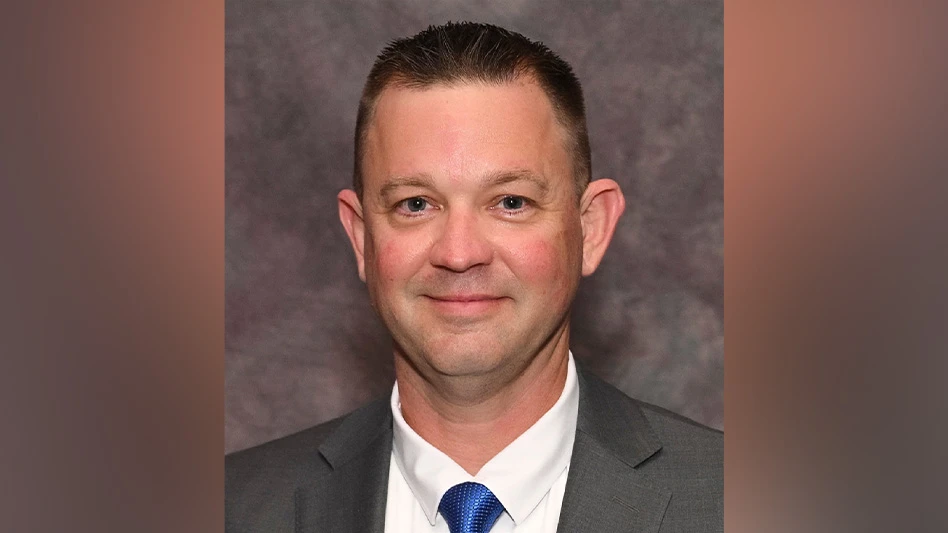
Rollins (No. 1) is growing at an exceptional rate and has a chance to increase its market share in the coming years. In addition, the Atlanta- based company, whose brands include Orkin, HomeTeam Pest Defense, Critter Control and others, will have opportunities to boost profit margins by raising prices and cutting costs, which can be achieved by modernizing company technology, centralizing decision-making, and standardizing operations and protocols across all of its locations. These and other insights were shared by Tim Mulrooney, partner, stock analyst and head of global services at William Blair, in an exclusive interview with PCT.
Mulrooney noted that even as Rollins continues to grow, its shares trade at roughly a 110% premium to the S&P 500 Index, which is below its typical 130–140% premium over the past several years.
Nevertheless, Rollins’ premiums can rise again to the 130-140% range as the company grows, and if uncertainty continues in the overall United States economy. That’s because investors are drawn to companies like Rollins that are stable regardless of economic conditions.
These projections were made by William Blair — a Chicago-based investment banking, equity research and wealth management firm — in its annual Current Better Values List of 10 companies expected to deliver superior performance over the next two years.
William Blair included Rollins on its list of 10 companies.
GROWTH AND MARKET SHARE. In its report, William Blair said Rollins has been growing “organically,” meaning that its existing operations and brands are expanding, as opposed to growth through mergers, acquisitions and external investments. This is a sign of good financial health.
Rollins’ organic growth is in the mid-to-high single digits percentage- wise. That’s considered excellent or “best-in-class” for a commercial service company with locations throughout the world that share resources.
William Blair said Rollins will have opportunities to claim more market share the next several years. On the residential side of its business, Rollins already has begun this process by investing in its workforce and new technology.
Mulrooney noted Rollins’ largest competitor is facing “integration challenges” that have disrupted its operations, creating a tailwind for Rollins. As pest control operators know, integration refers to the process of combining two companies following a merger or acquisition.

Rollins’ residential segment also will benefit from the shift toward digital marketing on cell phones and tablets and through email. Digital marketing favors companies like Rollins that have large brand presence in local markets, William Blair said.
“We believe there is enough room for Rollins and other pest control companies to continue to grow by further penetrating the U.S. homeowner base,” said Mulrooney. “In other words, this is not a zero- sum game in our view.
“Having said that, some competitors are definitely better than others. It is harder to steal market share from companies with strong local brands, efficient operations and high customer retention rates.”
On the commercial side, Rollins has renewed focus on this segment and has benefitted from changes in the industry, notably the sale of Copesan — an alliance of independent, regional commercial pest management providers — in 2021. Rollins invested in sales, technicians and branch expansion, which William Blair said will continue to support above-average organic growth for Rollins in 2026.

Some aspects of Rollins’ growth is hard to predict. Its commercial organic growth, for example, doubled after 2022, exceeding expectations. “My crystal ball for Rollins’ commercial pest business is broken,” Mulrooney said. “For the last three years, my model has embedded some degree of normalization back toward the company’s long-term commercial organic growth rate of about 4%.
“Over the last three years, the company has proven me wrong. This management team has invested significant resources into their nationwide commercial footprint, and they have been reaping the benefits of these efforts while simultaneously confounding expectations to the upside. I will not be surprised if they prove me wrong again in 2026.”
PROFIT MARGINS, MODERNIZATION. William Blair said Rollins can drive incremental margins — the additional profit that results from selling one more unit of a product — between 25-35% higher over the next 35 years. It can be done through stronger pricing and cost initiatives — in other words, by raising prices and cutting costs.
Companies have opportunities to increase prices without losing customers when the demand for their products and services is great, when customers believe their products and services have value and when companies instill loyalty in their customers, said Mulrooney.
William Blair estimates that Rollins’ price increases were about 1% annually before the COVID-19 pandemic. Recently, it’s been closer to 3-4%.
As for cost initiatives, Mulrooney said Rollins is in the early stages of modernizing support functions like human resources, information technology and customer service, along with backend infrastructure like databases, software applications, cloud service and computer security. The process includes the introduction of artificial intelligence.
Such upgrades will help Rollins become more efficient, Mulrooney said, by streamlining business processes and lightening some of the burden on the workforce, thus lowering business costs.
Mulrooney said Rollins also has been professionalizing its business in recent years. This can be accomplished, for example, through increased employee training and raising qualifications for workers.
Centralization is another key part of Rollins’ modernization strategy. By shifting certain administrative tasks away from individual branches, the company allows managers to concentrate more on growth initiatives. In doing so, centralization is intended to enhance the quality of work while also increasing overall productivity.
Finally, standardization at Rollins will ensure that products and services reach a certain level of quality and safety.
“We expect Rollins will be careful and methodical with any new modernization efforts,” Mulrooney said. “It is important to strike the right balance between centralizing functions and maintaining strong customer satisfaction rates.”
TRADING. In 2026, shares in Rollins’ valuation premium — which is the company’s value relative to the S&P 500 — is lower than it has been in the past. That’s regardless of the company’s organic growth and other strong fundamentals, which include good earnings growth, low debt, competent asset management, positive cash flow, strong market share and effective leadership.
Nevertheless, William Blair remains positive that stock’s premiums can rise because Rollins is a “defensive-growth” company, meaning that earnings are stable in any macroeconomic climate because it offers products and services that people always need.
For that reason, Rollins has been able to outperform the broader market during uncertain economic times, William Blair said.
Mulrooney sees two catalysts for Rollins’ stock premiums to return to the 130-140% range of the S&P 500. The first is organic growth. The company has the potential to grow organically by 7-8% and achieve incremental margins in the 30-35% range.
Mulrooney said incremental margins have dipped recently because of the company’s “growth investments,” in sales and service professionals.
“The company is investing for the future, and I believe this is the right strategy,” Mulrooney said. “But it comes at a cost. I expect the valuation would expand as incremental margins sustainably move into the 30-35% range.”
The second catalyst, Mulrooney said, is something over which Rollins has little, if any, control: Economic cycles. Rollins’ valuation tends to rise during macroeconomic uncertainty.
“This is because investment dollars flow from riskier equities into more durable and defensive business models, which certainly includes Rollins,” Mulrooney said.
William Blair’s report lists several investment risks that might affect Rollins. These include weather fluctuations, insurance claims, growth investments impacting near-term profitability, labor availability, wage inflation and overpaying for acquisitions.
Another risk involves possible “follow-on offerings,” which are additional stock shares a company might sell after its initial public offering. These can reduce the value of stocks held by existing shareholders.
“I think the greatest risk to my 2026 outlook is the health of the consumer,” Mulrooney said. “Approximately two-thirds of Rollins’ revenue comes from homeowners, who tend to tighten the purse strings during periods of higher unemployment.
“It is true that pest control is a defensive industry, but it isn’t completely impervious to changes in consumer behavior.”

Explore the May 2026 Issue
Check out more from this issue and find your next story to read.
Latest from Pest Control Technology
- Envu Offers Fall Promotion for Horizon Members
- Pest Management Foundation Announces the E. Raymond Crim, III Scholarship
- Tyro Group Acquires Dowell Pest Control
- Podcast: Beyond the Pest | Ep. 14 — Dr. Zach DeVries
- Webinar: The AI-Run Pest Control Company: Hype vs. Reality, What Actually Works (and What Doesn’t)
- Select Exterminating Acquires Three Businesses Across New York and New Jersey
- Catseye Pest Control Acquires Security Pest Elimination and Biologic Pest Control
- Researchers Confirm New York's First Bourbon Virus Case