There was a time when customers who wanted “green” pest solutions had to look long and hard for a company that could accommodate their wishes. Not so today. With the industry’s shift to IPM and the ever-increasing availability of natural products, pest management companies can offer customers a range of treatment products and protocols to address their concerns, whether related to the health and well-being of their families and pets or the environment.
“It is our responsibility as a commercial pesticide applicator to do things as safely as we possibly can,” said Tanner Bigler, owner of Safe Chem Pest, Clearfield, Utah. “We want our service technicians to be safe in their roles so they can live long and fruitful lives, and we need to keep our customers safe from any chemicals they want to avoid. That doesn’t mean we carry only 25(b) products — we carry a full arsenal of products — but we always use them safely, according to the label and to what’s appropriate for the task at hand.”

Shared Commitment. It’s important to customers that their pest control company delivers that peace of mind. They also want to know that they’re patronizing a company that shares their commitment to environmental stewardship. Increasingly, pest management companies are doing that through not only their service offerings but also their internal practices.
The 2026 State of the Naturals Market Report reflects this evolution. This year’s survey found that, on average, 19.4 percent of the products PMPs across the nation use today are “green,” “natural,” “botanical,” “organic” or “eco-friendly,” according to their survey responses. That average rises to 22.3 percent when including only the businesses that said they use natural products — a 2.8 percent year-over-year increase.
Pest management companies are also increasing their investments into their green programs. In 2026, more than half of PMPs (52 percent) said they have upped their investments in one or more areas related to eco-friendly solutions; that’s 15 percent more respondents than just two years ago, when 37 percent reported spending more. Investments in products, training, equipment, marketing and workforce are all on the rise.


MOVING FORWARD. As the green evolution continues, many PMPs expect an increasing focus on natural solutions. They’re listening to their customers and paying close attention as new natural products are being developed and marketed. They want to test new eco-friendly products with the potential for high efficacy and low impact. And they continue to make changes within their own companies to optimize their operational efficiency while reducing their carbon footprint. Routing software, paperless communications and more fuel-efficient vehicles are all supporting PMPs’ efforts.
“Except for our termite technicians’ trucks, we’ve moved to cars,” said Michael Clark, operations manager, BUGSolutions of Tennessee. “We specialize in servicing multi-unit accounts, and you don’t need giant rigs in the back of a truck for apartments. It definitely helps with fuel efficiency.”

IPM is being more widely embraced, too, as pest management professionals use to nonchemical solutions first.
Jeff Davis, owner, Nukingstreet Pest & Wildlife Control, Enfield, Conn., shared these insights: “There’s a movement toward treating only if you have an active infestation rather than doing a lot of preventative maintenance. Over the next several years, I look for monitoring to play a stronger role as cameras and AI make it possible to not only capture pest activity but also identify species. When we do treat, we need to be conscientious stewards of the environment, whether we’re using organic or synthetic materials.”
Rick Wickham, general manager, Green Shield Pest Pros, Columbus, Ohio, agreed. “I’ve always believed in IPM principles: Consider environmental, behavioral and structural controls first, then supplement with pesticide as the situation calls for,” he said. “We believe less is more and focus on strategic, specific treatments that minimize application and maximize results. Everything revolves around the inspection and pest ID, and using pests’ biology against them. If we do that consistently, we’re going to win more battles than we lose. Our customers will appreciate that we’re getting better results for them, and that’s what it’s all about.”
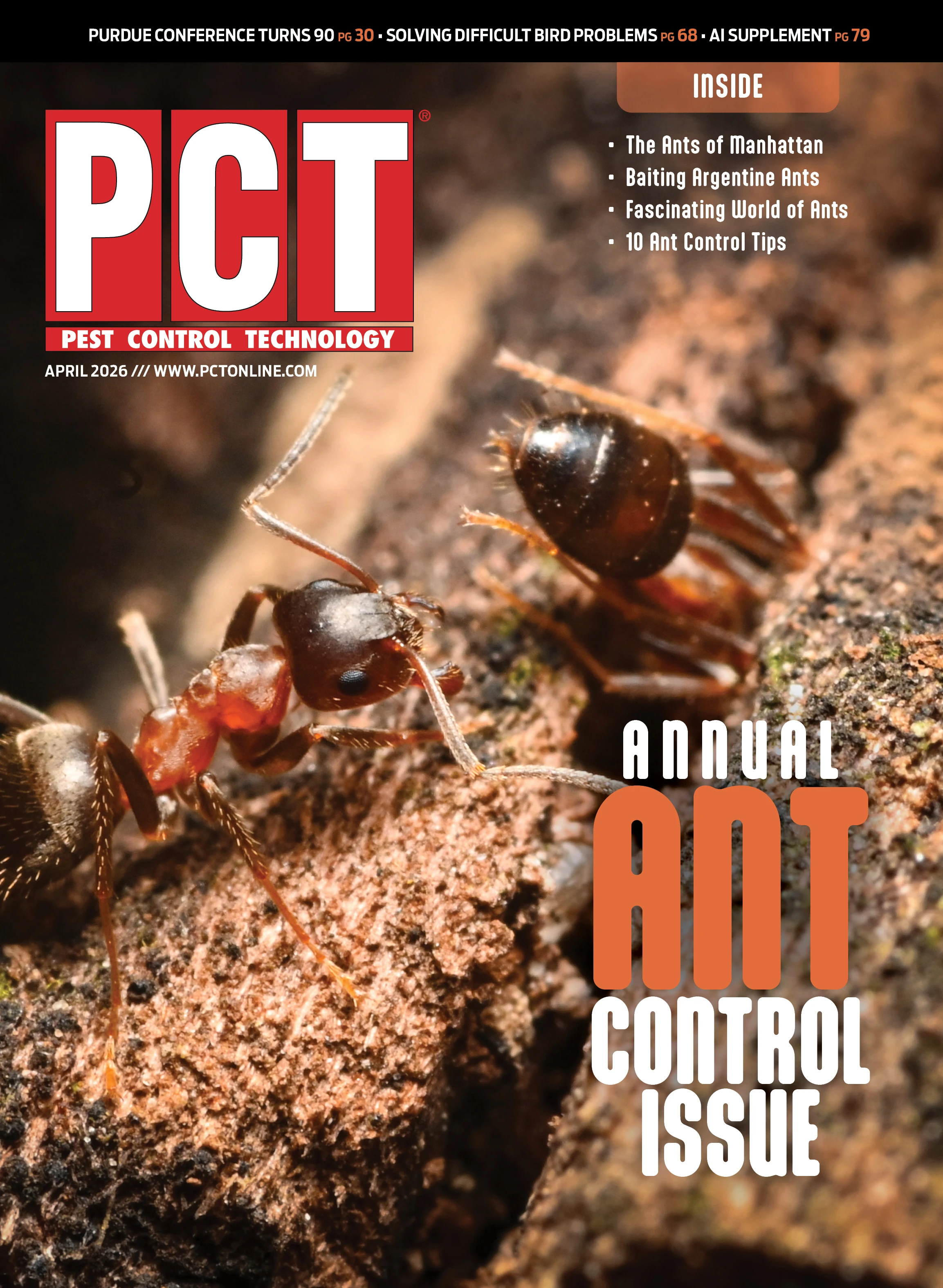
Explore the April 2026 Issue
Check out more from this issue and find your next story to read.
Latest from Pest Control Technology
- Envu Offers Fall Promotion for Horizon Members
- Pest Management Foundation Announces the E. Raymond Crim, III Scholarship
- Tyro Group Acquires Dowell Pest Control
- Podcast: Beyond the Pest | Ep. 14 — Dr. Zach DeVries
- Webinar: The AI-Run Pest Control Company: Hype vs. Reality, What Actually Works (and What Doesn’t)
- Select Exterminating Acquires Three Businesses Across New York and New Jersey
- Catseye Pest Control Acquires Security Pest Elimination and Biologic Pest Control
- Researchers Confirm New York's First Bourbon Virus Case