Adobe Stock | Daniel Vincek
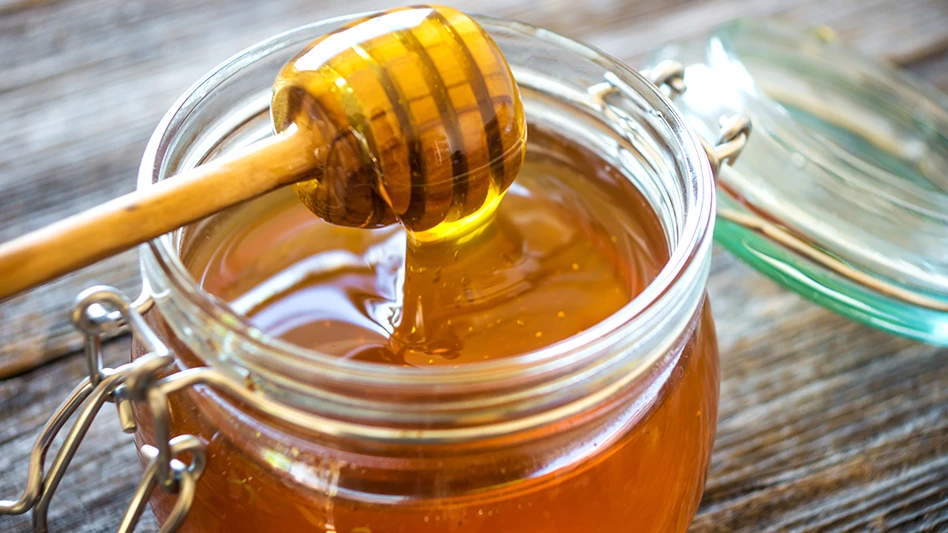
The FDA is releasing data from a sampling assignment in 2025 that tested domestic and imported honey for economically motivated adulteration, also known as food fraud.
Food fraud occurs when an ingredient or part of a food is intentionally left out, taken out or is substituted or when a substance is added to a food to make it appear better or of greater value. The FDA samples various foods to safeguard the integrity of the food supply and protect consumers against food fraud.
The honey sampling was designed to identify products that contained undeclared added sweeteners that are less expensive than honey, such as syrups from sugarcane and corn. The FDA tested honey samples using a stable carbon isotope ratio analysis method, which measures carbon isotopes in both the overall honey and its protein content. If a sample's carbon isotope levels didn't match what is expected from real honey, FDA experts reviewed the results more closely. They considered factors such as natural variations of honey composition and the test’s margin of error to determine if the honey was adulterated.
The assignment follows previous honey assignments in 2021-22 and 2022-23 in an effort to monitor industry compliance, the agency said.
The agency tested 102 honey samples, including 54 domestic samples and 48 import samples. Of 102 samples tested, the violation rate was about 4% for both domestic products (2 out of 54) and imported products (2 out of 48).
In the 2022-2023 assignment, the agency collected and tested 107 imported honey samples and found 3% of those samples to be violative. In 2021-2022, the agency collected and tested 144 imported honey samples and found 10% of those samples to be violative.
For imported violative samples, the FDA stopped the products and future shipments of these products from entering the U.S. by placing the firms and products on import alerts. For domestic violative samples, FDA said it is working with firms on recalls and other corrective actions.
FDA said it is working to enhance its sampling strategies and advance new methods and analytical techniques that will improve detection of undeclared sweeteners. The FDA also maintains partnerships with U.S. and international regulatory agencies to address food fraud of various commodities, including honey.
Latest from Quality Assurance & Food Safety
- Taylor Farms Removes Iceberg Lettuce Sourced from Mexico Amid Cyclospora Outbreak
- FDA, CDC Tie Multistate Cyclospora Outbreak to Taco Bell Lettuce
- BCG and CGF Release New Report on AI Usage by CPG and Retail Companies
- IntelliAM AI Launches Industrial Intelligence Platform
- QA Virtual Conference to Explore Pest Control Strategies for Food Facilities
- Meat and Poultry Companies Adopt Product of USA Label
- Klobuchar Urges CDC, FDA to Restore Food Safety Funding as Cyclosporiasis Cases Rise
- International Experts Share New Scientific Advice to Support Global Food Safety at 102nd JECFA Meeting