USDA
The U.S. Department of Agriculture’s (USDA) Food Safety and Inspection Service (FSIS) is expanding heavy-metals surveillance to multi-ingredient, ready-to-eat products containing meat or poultry beginning July 20, as FSIS, FDA and EPA replace a decades-old agreement governing federal coordination on chemical residues and contaminants.
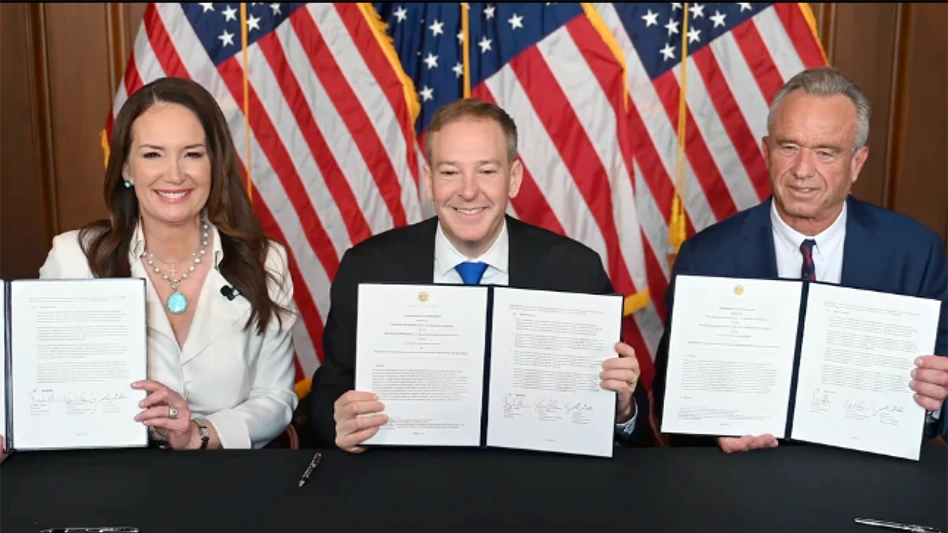
U.S. Secretary of Agriculture Brooke Rollins, U.S. Secretary of Health and Human Services Robert F. Kennedy Jr. and U.S. Environmental Protection Agency Administrator Lee Zeldin signed a new Memorandum of Understanding that replaces a 1984 agreement governing interagency coordination on chemical residues and contaminants in meat, poultry and egg products.
For decades, the USDA, the U.S. Department of Health and Human Services (HHS) and the U.S. Environmental Protection Agency (EPA) have coordinated through the National Residue Program to monitor and regulate meat, poultry and egg products.
The updated MOU:
- Removes USDA’s Agricultural Marketing Service as a signatory and reflects FSIS’s current responsibility for egg products.
- Creates a Senior Executive Council, recognizes the existing Interagency Residue Control Group and Surveillance Advisory Team and establishes agency liaison officers.
- Requires FSIS to provide FDA with weekly residue reports.
- Calls for FDA and EPA to give FSIS recommendations at least annually on sampling frequency, production classes sampled and compounds tested.
- Formalizes collaboration on analytical methods, screening or action levels, regulatory assessments and the sharing of confidential information.
“This new MOU modernizes how our agencies work together and streamlines the way we share information, coordinates scientific expertise and improves how we detect and address potential risks,” said Rollins.
FSIS Implements New Laboratory Method.
FSIS has implemented a new laboratory method to measure the quantity of 18 heavy metals, including metals of public health concern, such as lead, thallium, cadmium and arsenic. The new method also detects mercury, which will be routinely reported for samples collected on or after July 20.
As part of the National Residue Program, FSIS currently measures the quantity of metals in muscle from raw beef, pork, poultry, goat, sheep and Siluriformes (catfish) products. Beginning July 20, FSIS will extend its trace metals analysis to include multi-ingredient processed products containing meat or poultry sampled as part of the Allergen Verification Sampling Program.
If elevated or unusual levels are detected, FSIS conducts science-based assessments to determine when the agency should take action to keep risky products out of the food supply.
Latest from Quality Assurance & Food Safety
- Taylor Farms Removes Iceberg Lettuce Sourced from Mexico Amid Cyclospora Outbreak
- FDA, CDC Tie Multistate Cyclospora Outbreak to Taco Bell Lettuce
- BCG and CGF Release New Report on AI Usage by CPG and Retail Companies
- IntelliAM AI Launches Industrial Intelligence Platform
- QA Virtual Conference to Explore Pest Control Strategies for Food Facilities
- Meat and Poultry Companies Adopt Product of USA Label
- Klobuchar Urges CDC, FDA to Restore Food Safety Funding as Cyclosporiasis Cases Rise
- International Experts Share New Scientific Advice to Support Global Food Safety at 102nd JECFA Meeting