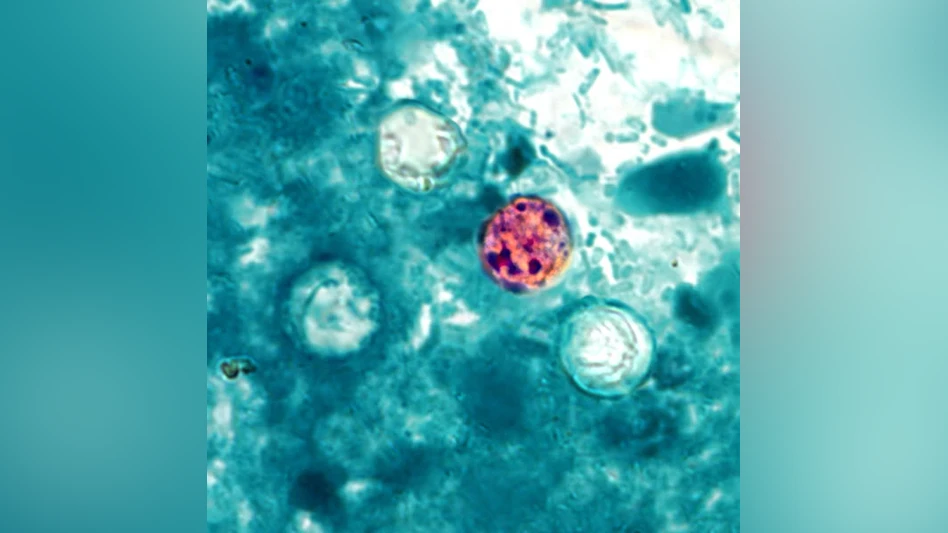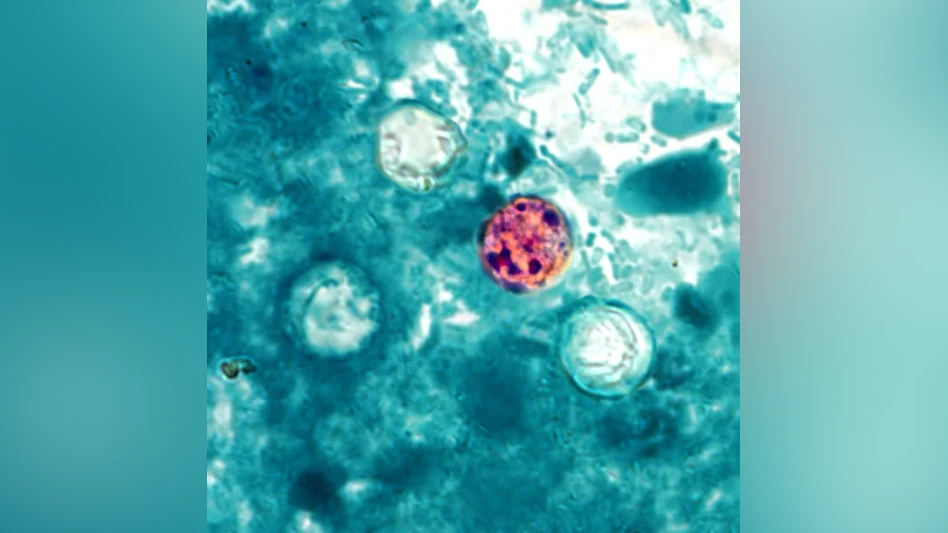
CDC/ DPDx - Melanie Moser
Cyclosporiasis cases in Michigan have surged to 2,640 as of July 13, according to the Michigan Department of Health and Human Services (MDHHS).
Of these cases, 44 have been hospitalized as of July 9, said MDHHS. No deaths have been reported. Cases began being reported on June 22.
The U.S. Centers for Disease Control and Prevention (CDC) is investigating cyclosporiasis outbreaks nationally, though its latest count only accounts for 843 cases across 31 states, with 86 hospitalized.
CDC said it assumes a 6-week reporting lag between illness onset and case reporting to CDC. The agency said it is aware that states are likely to report higher case counts of cyclosporiasis than reflected in CDC data and added that it is working closely with states to update numbers as additional cases are confirmed.
As of July 9, CDC said it was aware of more than 1,500 cases that required further analysis to confirm the illness as domestically acquired cyclosporiasis.
Other states have reported their own cases of cyclosporiasis, including Ohio, which has reported 364 cases as of July 9, and New York, which has reported 470 cases since May 1.
Of the 843 cases reported by CDC, sick people ranged in age from 5-88 years, with a median age of 44, and 59% were female. The median illness onset date was June 18 (range: May 1 – July 5).
Local, state, and federal (CDC, FDA) public health authorities are investigating several clusters of cases in more than one state. Investigations to identify potential sources are ongoing.
Cyclosporiasis cases may not be limited to states with known cases, CDC said. The true number of people sick with cyclosporiasis is likely higher than the number reported, the agency added.
What Is Cyclosporiasis?
Cyclosporiasis is an intestinal illness caused by the Cyclospora parasite. People can become infected by consuming food or water that contains the parasite.
Cyclospora infects the small intestine (bowel) and usually causes frequent, watery and explosive diarrhea. The time between being exposed and becoming sick is usually about one week but can range from two days to two weeks or more. Untreated, the illness may last from a few days to more than a month. Symptoms may go away and then return.
Cyclosporiasis is not usually life-threatening, but dehydration from frequent bouts of diarrhea can cause severe illness, particularly among younger or older people and those who have weakened immune systems.
Latest from Quality Assurance & Food Safety
- Taylor Farms Removes Iceberg Lettuce Sourced from Mexico Amid Cyclospora Outbreak
- FDA, CDC Tie Multistate Cyclospora Outbreak to Taco Bell Lettuce
- BCG and CGF Release New Report on AI Usage by CPG and Retail Companies
- IntelliAM AI Launches Industrial Intelligence Platform
- QA Virtual Conference to Explore Pest Control Strategies for Food Facilities
- Meat and Poultry Companies Adopt Product of USA Label
- Klobuchar Urges CDC, FDA to Restore Food Safety Funding as Cyclosporiasis Cases Rise
- International Experts Share New Scientific Advice to Support Global Food Safety at 102nd JECFA Meeting