Eagle Product Inspection
Food processors operating under FSIS verification programs are facing increased pressure to demonstrate validated detection sensitivity and consistent inspection performance across production environments, according to Eagle Product Inspection. In response, the manufacturer said it has further enhanced its dual energy x-ray technology, expanding availability across its advanced x-ray inspection systems.
As FSIS verification activities continue to emphasize documented performance and repeatable results, the detection of low-density and low-contrast contaminants such as rubber, certain plastics and calcified bone has become more critical, and more challenging, the manufacturer reported.
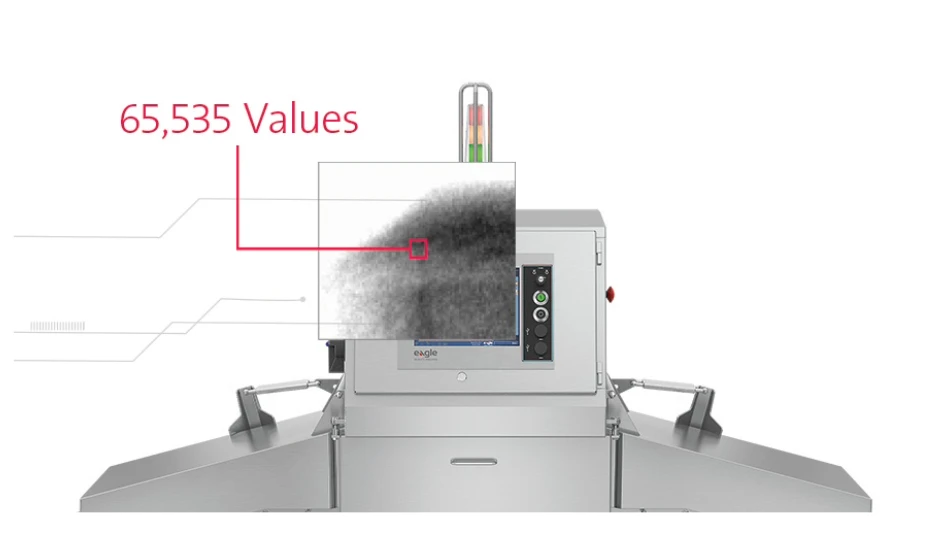
Eagle said its enhanced dual energy technology, powered by PXT photon counting capabilities, improves material discrimination by analyzing multiple energy levels simultaneously. This allows processors to more effectively differentiate between product and foreign materials that may be difficult to detect using traditional single-energy systems.
Eagle said its enhanced dual energy technology supports processors by:
- Improving detection of low-density and low-contrast foreign materials
- Delivering repeatable imaging performance across shifts
- Supporting documented validation and verification protocols
- Reducing variability that can trigger audit scrutiny
- Aligning with retailer zero-tolerance expectations
“Processors today are being asked to do more than detect contaminants, they’re expected to prove performance, document consistency and withstand increasing audit scrutiny,” said Christy Draus, head of marketing at Eagle Product Inspection. “Our enhanced dual energy technology is designed to help processors meet those expectations with greater confidence, particularly when it comes to detecting difficult-to-detect materials that have historically challenged inspection systems.”
Latest from Quality Assurance & Food Safety
- Taylor Farms Removes Iceberg Lettuce Sourced from Mexico Amid Cyclospora Outbreak
- FDA, CDC Tie Multistate Cyclospora Outbreak to Taco Bell Lettuce
- BCG and CGF Release New Report on AI Usage by CPG and Retail Companies
- IntelliAM AI Launches Industrial Intelligence Platform
- QA Virtual Conference to Explore Pest Control Strategies for Food Facilities
- Meat and Poultry Companies Adopt Product of USA Label
- Klobuchar Urges CDC, FDA to Restore Food Safety Funding as Cyclosporiasis Cases Rise
- International Experts Share New Scientific Advice to Support Global Food Safety at 102nd JECFA Meeting