Editor's Note: This article originally appeared in the June 2026 print edition of Greenhouse Management under the headline “Survive to thrive.”
In 2024 and 2025, two green industry businesses hundreds of miles apart faced very different catastrophes. In Houston, Texas, Buchanan’s Native Plants weathered back-to-back storms that destroyed key infrastructure twice within a matter of months.
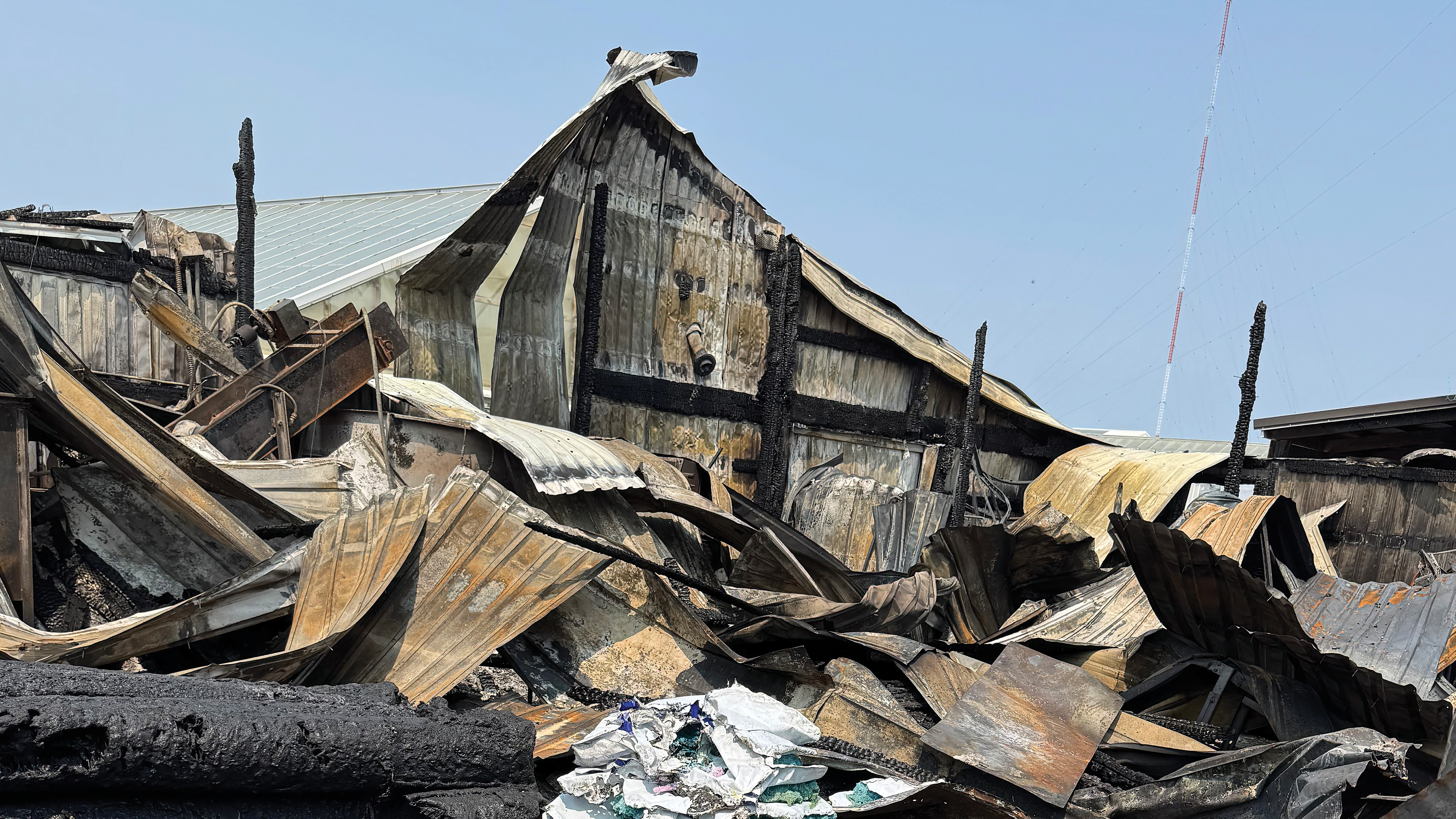
In Bettendorf, Iowa, Wallace’s Garden Center battled a devastating fire that tore through production space and multiple hoop houses at the height of spring season.
But these businesses have proved that there are silver linings when the clouds of disaster loom. Both operations emerged with stronger systems, upgraded facilities and renewed confidence in their teams.
Buchanan’s Native Plants: Weathering the storm
For Heather Buchanan, CFO of Buchanan’s Native Plants and daughter-in-law of founder Donna Buchanan, 2024 became a lesson in flexibility, preparation and persistence.
The retail garden center specializes in Texas native plants and pollinator-friendly gardening. Located inside Houston’s Loop 610, the business operates on just over 2 acres in a historic residential neighborhood, focusing on resilient plants that can survive the region’s extremes.
“We call them Texas tough plants,” Buchanan says. “That’s kind of what we focus on, because we have a lot of people who are coming in who want to be able to succeed in their garden.”
The operation regularly deals with heavy rain, drought, intense heat and occasional hard freezes. Even though the staff is accustomed to harsh weather, they were caught off guard in 2024.
First came a derecho — fast-moving bands of thunderstorms with destructive winds, per the National Oceanic and Atmospheric Administration — that arrived with little warning. The storm hit near closing time. Employees were putting equipment away when the cashier tent — a large circus-style structure that housed the store’s checkout area — began shaking violently.
Trees fell. Fencing was destroyed. A building sustained damage. The cashier tent collapsed, taking four registers and checkout equipment with it.
That night, managers contacted staff while Buchanan began making calls to contractors, landscapers and repair contacts.
“I have a really good emergency contact list of people that I’ve used in the past,” she says. “I just have good relationships with a lot of people that we built over the years.”
Maintaining that list is part of how she was able to recover so quickly — and a vital part of running and protecting the business. When things go wrong, you need to know who can make things right, Buchanan says.
The following day, Buchanan’s closed for cleanup. Employees and family members pitched in to clear debris, dismantle damaged infrastructure and secure the property.
The business reopened almost immediately. “I had one indoor register at our gift shop and a mobile register, and I was set up the next day, open for business,” Buchanan says. “Every day that we’re closed is a day we don’t have sales. I had customers the day that we were cleaning up coming in to see if we were open. I was like, ‘No, I need one day.’”
Within a week, the garden center was operating close to normal again. But the challenges weren’t over. Only weeks later, Hurricane Beryl moved through Houston, once again destroying the cashier tent.
This time, however, the team had more warning and could prepare. Plants were moved into protected areas. Pottery was unstacked and secured. Registers were rolled indoors. The experience reinforced the importance of disaster planning and redundancy.
The business already operated with a backup generator, secondary internet service and mobile payment systems, allowing operations to continue even during outages. Buchanan now considers those systems essential.
“The generator is the biggest thing,” she says. “I’m able to run three buildings off of it.”
Internally, Buchanan’s uses a phone-tree system, with managers contacting assigned employees directly with operational updates and scheduling information. Flexibility with employees also became critical after storms, the owner adds.
“They have things going on with them, too,” Buchanan says. “We try to be as flexible as possible. If they can’t come in that day, we understand.”
Despite the enormous stress caused by the storms, they facilitated improvements on the property. Buchanan’s had already been considering replacing the flimsy cashier tent. Now, it seemed vital.
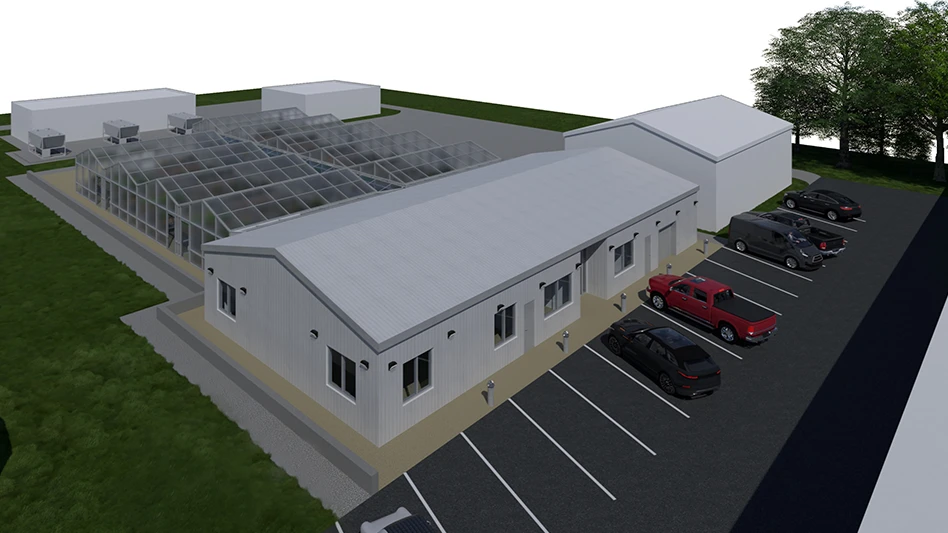
The company replaced the temporary setup with a new 2,400-square-foot steel cashier building designed for both customer efficiency and disaster resilience.
“It’s not going anywhere,” Buchanan jokes.
The enclosed structure eliminated the need to dismantle registers before every storm. It also added extra space for protecting plants during freezes and improved customer flow, with six checkout stations instead of four.
When the building finally opened during Easter weekend in 2025, customers responded immediately.
“It was like an exciting grand opening,” Buchanan says.
Her biggest advice for other retail growers is simple: Create backup systems before disaster strikes.
“Realize being open is how you get sales, and what would you do if you didn’t have power or didn’t have internet?” Buchanan says. “Really cement those backup systems in place.”
Wallace’s Garden Center: Rising from the ashes
At Wallace’s Garden Center in Bettendorf, Iowa, the disaster on May 31, 2025, came not from weather, but from fire.
Owner Kate Terrell remembers the moment her employees called.
“We’re not sure what’s happened, but we’re calling 911,” she remembers her team saying. Terrell was just down the street, running errands on what had been her first day off at the tail end of the busy spring season.
The blaze broke out in the Wallace’s production area, destroying a pole barn, storage space and multiple connected hoop houses. The affected area housed much of the behind-the-scenes infrastructure that kept the greenhouse operating: soil mixers, flat fillers, fertilizers, chemicals, plastic pots, tools, tags and production equipment.The fire spread into several gutter-connected hoop houses before firefighters could contain it.
“It took them the better part of six hours to get the fire totally out,” Terrell says. “Once they thought it was out, they sent up a heat drone to find hotspots. Then they put those out. It was kind of an incredible operation.”
Fortunately, the layout of Wallace’s property helped prevent even greater damage. The production area sat at the back of the 10.5-acre property, away from the main retail store.
Staff also acted quickly to vent smoke from the remaining greenhouse structures.
“The greenhouses are all roof-vented — they’re dual atriums. The roof was partially open because it was a nice day,” Terrell says. “Once there wasn’t an imminent danger, the firefighters let us go in and open the roof fully. All the smoke went up and out.”
Luckily, spring season was winding down, and while benches were still full, much of the backup inventory had already sold. Nonetheless, the immediate aftermath was chaotic.“We had to close the store for four days in order to reset,” Terrell says.
Despite the destruction, Terrell says her strongest memory from that time was the response of her staff.
“They were awesome,” she says. “They evacuated customers, got people out safely. Nobody panicked. Some of my employees lost personal items in the fire — wallets, purses burned up — and they weren’t even concerned about their own things at the time. It was more just like, ‘OK, did we get all the customers out?’ And nobody was hurt.”
In fact, Terrell says with a jovial tone, customers initially resisted leaving.
“They were like, ‘Well, can I just pay for my cart and leave then?’” Terrell says. “And it’s like, ‘No, there’s a fire. There’s literally flames chasing you!’”
Through the chaos, community support arrived almost immediately. A nearby grocery store delivered bottled water for firefighters and evacuees. Fellow business owners offered generators, labor and equipment.
Industry connections also became invaluable. With 14,000 chrysanthemum cuttings arriving within days, Wallace’s had to rapidly replace destroyed production equipment, including a burned-up soil mixer and pot filler. The company immediately began contacting growers and suppliers looking for replacement machinery.
“This industry is small enough that you can, say ‘Hey, do you know a guy?’” Terrell says.
Just like the stormy summer at Buchanan’s, the disaster at Wallace’s also accelerated operational changes the company had already been considering. Wallace’s had previously debated switching plastic pot suppliers but hesitated because of the cost of replacing shuttle systems.
“Not anymore,” Terrell says. “They all burned up.”
The rebuilt greenhouse — just over 12,000 square feet — now features a more efficient layout, concrete floors, higher gutter heights, improved ventilation and modern production infrastructure. The previous structure was decades old and included wood framing.
Wallace’s also added loading docks, movable bench layouts and upgraded ventilation systems to improve both employee workflow and customer experience while cutting back on the electricity previously used for the fans.
Still, recovery proved exhausting. One of the most difficult tasks, Terrell says, involved documenting every item lost in the fire for insurance purposes.
“If you were to walk out of your office right now and then be forced to make a list of every single thing that’s in your office, you’re going to forget things,” Terrell says.The experience led Wallace’s to adopt new documentation practices. Terrell now walks through the operation quarterly and records video inventories on her phone.
“How helpful would it have been if I’d had a video of the whole area?” she asks.
The insurance process took nearly a year. But despite the stress, the business emerged stronger. In April 2026, Wallace’s celebrated the opening of its rebuilt greenhouse with a ribbon-cutting ceremony that brought emotional closure for employees.
“We’re going to call it the Phoenix,” Terrell joked during construction. But the name stuck.
Employees lovingly say they’re headed to the Phoenix as they walk toward the property’s newest addition.

Explore the June 2026 Issue
Check out more from this issue and find your next story to read.
Latest from Greenhouse Management
- The Growth Industry Episode 17: Investing in IGCs with WorryFree® Plants
- New UF study sheds light on the hidden toll of back pain among horticulture workers
- 2026 Irrigation and Automation Market Report: Tradition rains
- Empowering the Future of Precision Cultivation: Resource Efficiency, Root-Zone Science and Scalable Automation
- Oasis Grower Solutions hires plant scientist Timothy Frey
- New green industry leadership development program for women now available
- Clean production protocol
- Seed Your Future launches '50K to Grow 50K' campaign to connect young people with horticulture careers