Photos courtesy of University of Kentucky
Editor's Note: This article originally appeared in the June 2026 print edition of Greenhouse Management under the headline “Coverage conundrums.”

When Casey Byrd talks about disaster recovery, she speaks from experience.
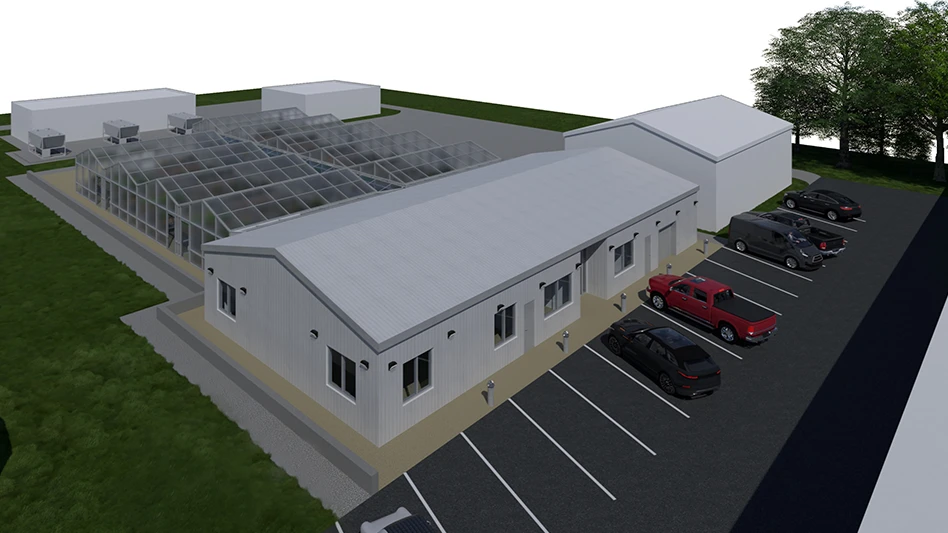
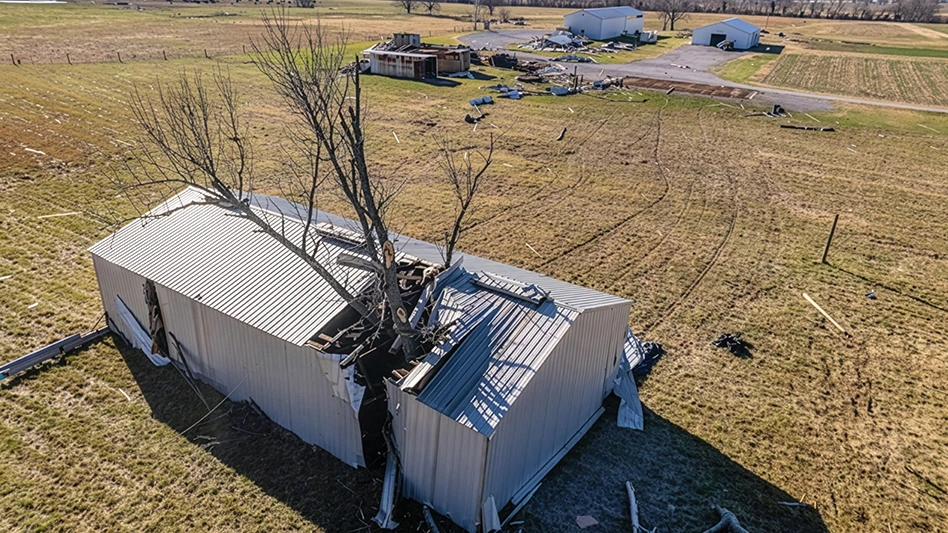
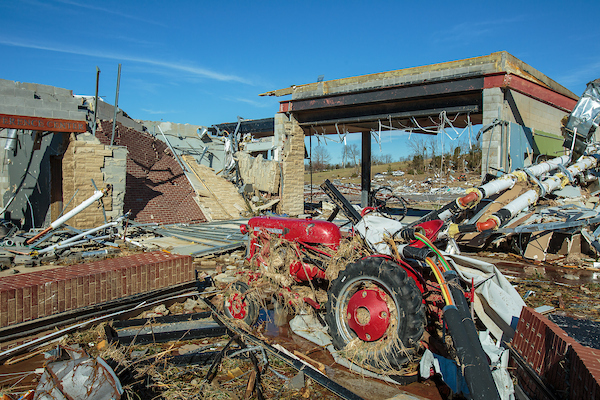
The agriculture and natural resource county agent with the University of Kentucky was working at the university during the 2021 destruction of the UK Research and Education Center at Princeton by a tornado.
Five years later, the space is just about to reopen.
“They had just built a state-of-the-art facility,” Byrd says. “Now, western Kentucky is considered to be part of Tornado Alley. We learned that the hard way. And that was one of our soil testing labs, too, so the main campus lab has just been inundated for years doing all the testing for the whole state. So, we’re excited to get them back up and going.”
Byrd notes that the university’s long process of recovery parallels the experience of horticulture industry businesses that have been hit by natural disasters. She says that’s particularly true when it comes to issues around insurance and rebuilding. And when a disaster is widespread, like a flood or tornado, getting everything back to normal can be an endurance test.
“Typically, in these areas that are hit, all of the contractors and stuff are booked out,” Byrd says. “They’re working on the big projects first, and then they go down the list. And so that can leave a lot of independent greenhouses in limbo for a while or just completely on their own to try to find grants to get them back up and running while they’re waiting on insurance. And it can be a whole mess.”
Navigating that mess takes preparation. That’s the subject of a January 2025 fact sheet written by Byrd and published by UK’s Center for Crop Diversification.
We caught up with Byrd to talk about how greenhouse growers can better position themselves for disasters and the lesser-known insurance areas that tend to be overlooked.
Patrick Alan Coleman: Is extended recovery and rebuilding time due to the amount of work that adjusters and estimators suddenly have to do, or is it also related to how complicated the insurance can be in those cases?
Casey Byrd: I think it can be both, and it’s also how prepared the grower is. In my publication, I have an annual greenhouse insurance checklist.
So, if they’re working through that every year and updating their policies and documenting their new structures and things like that, it could be a lot easier because they already have all that information ready to hand over to their agent.
Whereas folks who aren’t doing that work and updating their risk management plans and their insurance and documenting their new investments, they’re going to be struggling to gather all that information that these agents need.
PAC: Is there something unique specifically about greenhouses that make their insurance burden different than any other sort of industry? Is there something about those structures that are uniquely difficult to insure or require steps to insure?
CB: Let’s say I have a high tunnel with plastic that’s 10 years old, but it was still going to last a few more seasons, and I just put in a new ventilation system.
That’s why I think documentation is so important, because the agent will look at it and say, “Well, maybe we can’t really cover that plastic because you’re going to have to replace it next season anyway, but your new ventilation that you just put in that was $10,000, that’s something that’s a little bit more tangible.”
PAC: What kind of documentation should growers consider?
CB: We had weeks and weeks of snow here, and my greenhouse growers were posting on social media that they were out there with brooms every few hours clearing that off. That’s also documentation that would be important in the case of an insurance claim. It’s saying, “Hey, we were out here doing our due diligence.”
Also, oftentimes these structures are undervalued. Yeah, maybe you purchased this high tunnel 10 years ago, but what is it going to cost now to replace? Because 10 years ago, it was much cheaper than it is today. So, make sure that you’re valuing in a way that can get you back up and running without a lot of out-of-pocket costs.
PAC: Is undervaluation or lack of insurance the biggest issue for greenhouses?
CB: The biggest issue isn’t a lack of insurance. It’s a misunderstanding of what that policy actually covers. And that’s why I think it’s super important to have a good working relationship with your insurance agent. You need to make sure that you ask questions: What’s covered in a total loss? How can we mitigate gaps?
PAC: What about equipment that is fabricated in-house? I always see tools in greenhouses that were designed and built by the grower to address problems unique to their operation.
CB: I like to call that farmer ingenuity. We are always looking for ways to make the most of what we have, whether it’s scrap metal laying around or a couple of old lawnmowers. I mean, we just really think outside of the box, and that’s where documentation is going to come in. How much time and labor is in it, your parts, what would it cost if you went with a turnkey, brand-new model?
Just take it to your insurance agent, say, “Hey, I want to make sure this is included in my policy. Is this something that we can put in the underwriting?” You’ve got to make sure that your insurance matches how the business actually operates, not just what’s easiest to insure.
Explore the June 2026 Issue
Check out more from this issue and find your next story to read.
Latest from Greenhouse Management
- The Growth Industry Episode 17: Investing in IGCs with WorryFree® Plants
- New UF study sheds light on the hidden toll of back pain among horticulture workers
- 2026 Irrigation and Automation Market Report: Tradition rains
- Empowering the Future of Precision Cultivation: Resource Efficiency, Root-Zone Science and Scalable Automation
- Oasis Grower Solutions hires plant scientist Timothy Frey
- New green industry leadership development program for women now available
- Clean production protocol
- Jiffy hosting Microgreens Grower Day