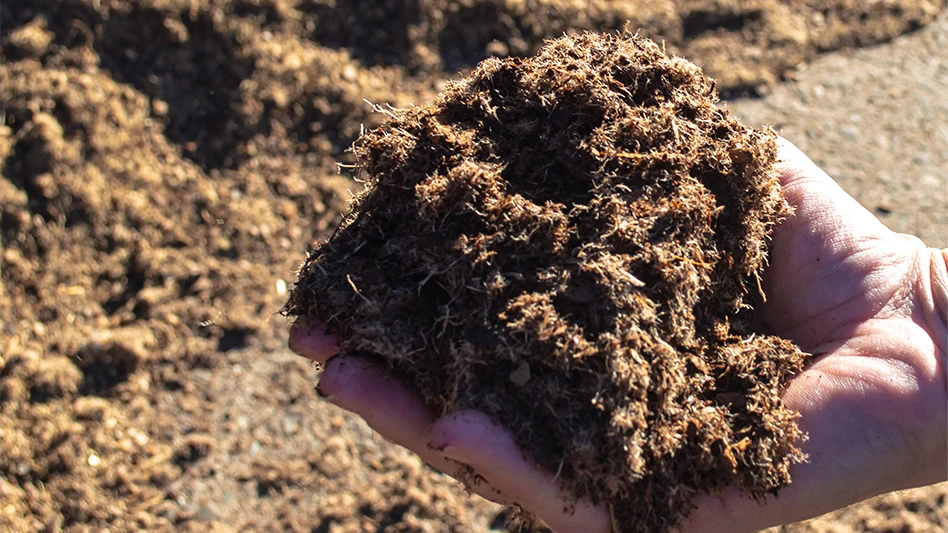
Photos courtesy of Profile Growing Solutions
For nursery growers, producing healthy, market-ready plants starts below the surface. Growing media influences how effectively plants establish roots, access water and nutrients, and withstand the stresses that come with production. The right substrate can also help nurseries improve consistency, finish plants efficiently, and, most importantly, sell more plants.
That makes growing media an important place to look for opportunities to improve nursery production. The right growing media can be key to producing healthy, desirable plants.
One way nursery growers can take their growing media to the next level is with engineered wood fiber. HydraFiber®, a thermally refined, engineered wood fiber from Profile® Products, is designed to provide consistent physical properties while complementing other components in a growing media blend.
For nurseries looking to optimize root-zone conditions, manage moisture, and gain more flexibility from their growing media, here’s why engineered wood fiber deserves a closer look.
What Makes Engineered Wood Fiber Superior?
Wood has a long history in growing media, but not every wood-based component is the same. In fact, wood differs based on wood species and processes.
Early wood products used in growing media included sawdust, wood shavings, and wood chips. More recently, manufacturers in the U.S. and Europe have developed fibrous wood products using processes such as extrusion and disc refining.
Engineered wood fiber, by contrast, is produced through a defined process using wood of a specific species and grade before it becomes part of a growing media blend.
Profile Products, for example, uses heat and pressure to digest wood before disc refining it so fibers remain within specified sizes for a given product. The material is then dried and compressed up to 13 times before shipment. Customers then incorporate HydraFiber into substrate blends with negligible impact on nitrogen fertility.
For nursery growers, that engineered consistency matters. Substrate performance needs to remain dependable across containers, crops, and production cycles. A highly controlled manufacturing process helps reduce variability in the physical and chemical properties of the material going into the final mix.
Creating More Airspace for Better Rooting
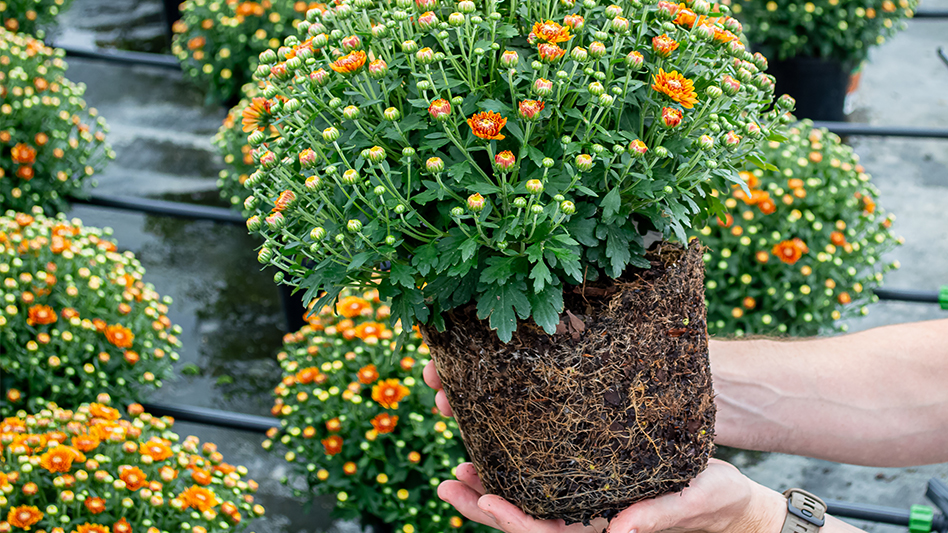
A strong root system is fundamental to producing resilient nursery stock. Airspace is one way engineered wood fiber can benefit a nursery substrate.
Engineered wood fiber can be up to 98% porous, creating more airspace compared with other common growing media and supporting better root-zone development.
The benefits extend beyond rooting alone. Adequate airspace supports the movement of oxygen through the root zone and can contribute to several essential plant functions. Airspace also enhances nutrient uptake via transpiration and assists in respiration and temperature regulation.
For nurseries managing crops over extended production periods, maintaining favorable root-zone conditions can help support plant quality from establishment through finish.
Managing Moisture More Effectively
Nursery irrigation requires a balancing act. Too much surface moisture can create unwanted conditions, while insufficient available water can stress plants and complicate irrigation management. Engineered wood fiber can help balance those moisture needs.
First, it can promote an optimal level of surface moisture. A drier surface can help limit algae development and fungus gnat presence and potentially reduce other pest and disease issues associated with improper drainage or overwatering.
At the same time, engineered wood fiber can also improve the amount of plant-available water. Even incorporating 10% to 20% of engineered wood fiber into a peat blend increases the available water for plant uptake by 10% to 37% in every plant, thanks to the higher surface area of fibers.
That water is readily accessible to plants, and the material also rewets easily. Those characteristics can help nursery growers create a root zone that offers both air and plant-available water rather than forcing a choice between the two.
Building More Resilience Into Your Growing Media Supply
Nursery growers need more than consistent growing media performance; they also need substrate components they can source reliably.
Recent supply challenges have demonstrated the vulnerability that can come with dependence on materials such as Canadian sphagnum peat moss or imported coconut coir exclusively. Comparatively speaking, wood fiber is consistent and readily available. With top-quality wood processing facilities in the United States, HydraFiber offers nurseries a domestically produced growing media component.
HydraFiber’s physical form can create logistical advantages, too. Because it can be highly compressed and has a low bulk density, fewer shipments are needed compared with materials such as peat moss and coconut coir. For nurseries using substantial volumes of growing media, that can translate to lower freight costs, less product handling, and more efficient use of storage space.
Consistency Matters
Choosing a wood fiber for nursery production means looking closely at how it is manufactured. Not all wood fiber products are created equally. Unlike chipped or shredded wood, engineered wood fiber undergoes a controlled manufacturing process designed to produce specific, repeatable properties.
Depending on the manufacturing process, engineered wood fiber can be sterile and devoid of heavy metals and pesticides. Profile’s manufacturing and testing processes produce a digested, processed material that is driven by science and data and quality-controlled from start to finish. The result is consistent physical and chemical properties that help reduce variability in final mixes.
For nurseries, that consistency can help support repeatable growing media performance from one crop cycle to the next.
Why HydraFiber for Nursery Production?
Ultimately, a growing media component has to earn its place in the mix by helping growers produce healthy, market-ready plants efficiently.
HydraFiber offers nursery growers a combination of root-zone and operational benefits, including increased airspace, improved moisture control, consistent physical properties, and a reliable U.S.-based supply. It is available in multiple grades and product forms to meet different propagation and production needs.
Even incorporating a small percentage of HydraFiber into your substrate can make a significant difference. For nurseries looking to improve growing media performance without sacrificing consistency or availability, HydraFiber offers a practical option that can help support the production of healthy, resilient, and sellable plants.
Learn more about HydraFiber at profilegrowing.com.
Latest from Nursery Management
- Plantpeddler announces results of Variety Day 2026
- Get to know Marcus Jansen
- Stat of the Week: Companies with a customer experience mindset drive revenue 4-8% higher than others
- SmartPlant offers market intelligence for horticulture industry
- Monrovia presents garden design trends for 2027
- Elusive blue
- American Floral Endowment announces 2026-27 educational grants
- Cities may be the ultimate training grounds for invasive species, UF/IFAS researchers say