Editor's Note: This article originally appeared in the September 2026 print edition of Nursery Management under the headline “Modern methods.”
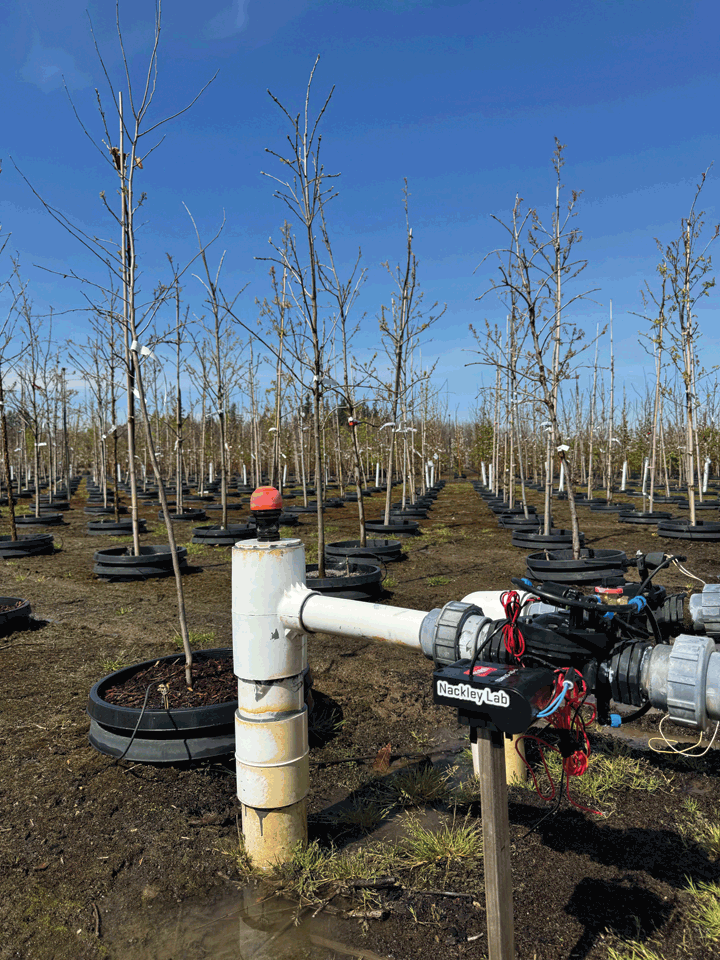 This valve controller expansion provides benefits, but will require additional work to retrofit into a nursery’s existing irrigation systems.
It’s been said that modern nursery production is “a logistics company that happens to work with plants.” Many nurseries begin with a single production area and gradually expand wherever land becomes available. Over time, production blocks may become separated across multiple fields or properties, sometimes located long distances from the main shipping and operations center.
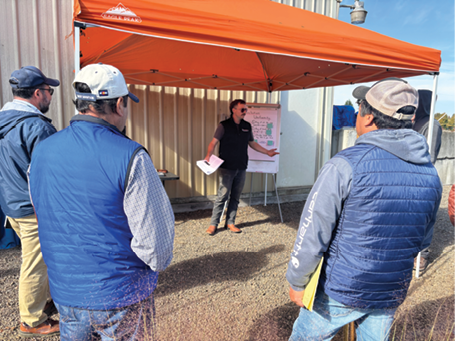
One major logistical challenge is irrigation management. In large nurseries, employees may travel significant distances each day to manually operate irrigation zones. Plants that are out of sight for too long can quickly develop problems if irrigation runs too short or too long. Many nurseries rely on multiple short irrigation cycles during summer to keep pace with plant water demand while reducing runoff and leaching. However, running multiple irrigation cycles each day can create logistical challenges for employees simultaneously managing crops, pulling orders, and moving equipment throughout the nursery.
Through the Labor, Efficiency, Automation, and Production (LEAP) project, a transdisciplinary team of researchers, Extension specialists, industry partners, and growers are evaluating automation technologies in commercial nursery production systems. In Oregon, LEAP collaborators partnered with a 114-acre nursery where some production blocks are located nearly half a mile from the main operations area. More than 50 irrigation zones are currently managed manually by opening and closing valves in the field. During summer, irrigation management often begins before sunrise and continues throughout the day to keep pace with crop demand and changing weather conditions.
Growers and managers noted that wireless communication range and easy-to-use mobile applications would be important considerations for long-term adoption. Oregon State University scientists Clint Taylor and Zoie Yetley are working with growers to evaluate irrigation automation in pot-in-pot production zones. The project team began with 25-gallon container blocks because larger containers provide a greater buffer against irrigation interruptions than smaller container systems.

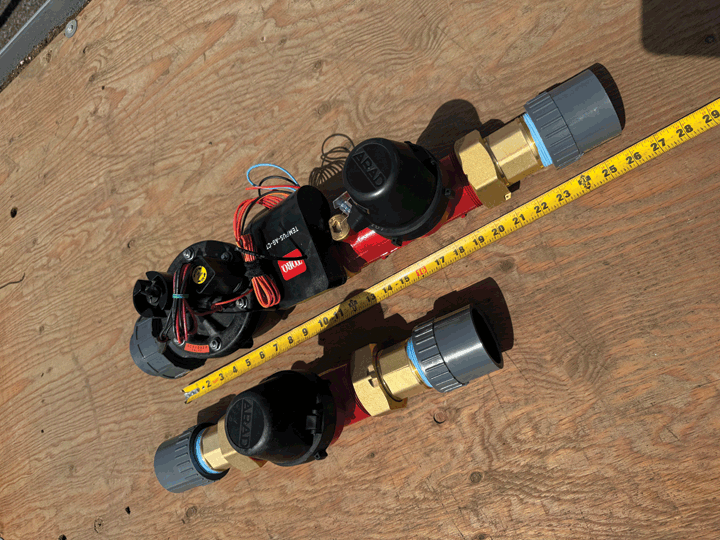
The project has also reinforced that integrating automation into existing nursery infrastructure may require adjustments specific to each operation. Many nurseries have substantial investments in irrigation infrastructure, and components such as valves, solenoids, and control systems are not always directly interchangeable with automation technologies. Software usability also matters. Mobile applications and graphical interfaces must be practical and intuitive enough for growers and irrigation managers to use comfortably during daily operations.
Another participating nursery manages production blocks separated by public roads and multiple properties, making centralized irrigation monitoring and control especially appealing. In addition to labor savings, growers expressed interest in reducing overwatering to help manage runoff and liverwort pressure. As nursery operations expand across multiple fields and properties, growers are increasingly managing the logistics of coordinating water, labor, equipment, and information across large production systems. LEAP collaborators will continue working directly with growers to evaluate irrigation automation tools that support labor efficiency, water management, and daily nursery operations.
Explore the September 2026 Issue
Check out more from this issue and find your next story to read.
Latest from Nursery Management
- Plantpeddler announces results of Variety Day 2026
- Get to know Marcus Jansen
- Stat of the Week: Companies with a customer experience mindset drive revenue 4-8% higher than others
- SmartPlant offers market intelligence for horticulture industry
- Monrovia presents garden design trends for 2027
- Elusive blue
- American Floral Endowment announces 2026-27 educational grants
- Cities may be the ultimate training grounds for invasive species, UF/IFAS researchers say