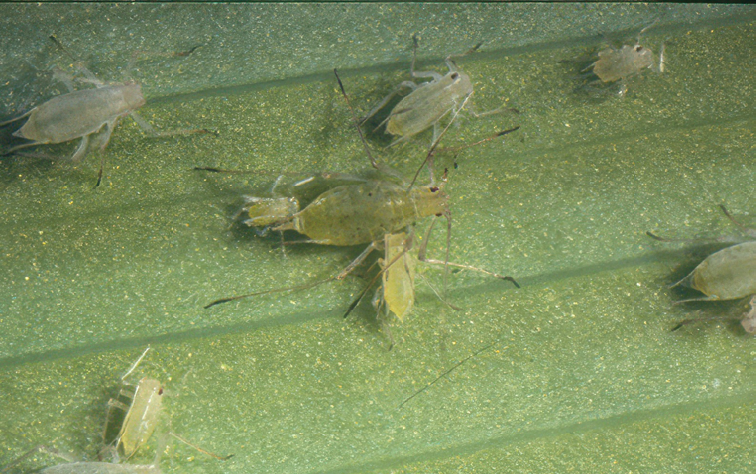
When an insecticide fails to keep targeted pests at bay and prevent plant damage, despite using the product according to label recommendations, it might be insecticide resistance.
There are four primary reasons pests become resistant to insecticides applied in horticultural cropping systems, all due to resistance mechanisms that are inherently present in insect populations.
These resistance mechanisms make insecticide applications less effective, which decreases the ability of greenhouse producers to reduce pest pressure and protect their plants from damage. And insect pests may possess one or more resistance mechanisms.
1. Metabolic resistance
This resistance develops when detoxifying enzymes in the insect convert the insecticide’s active ingredient into a nontoxic compound. That compound is then excreted out of the body along with other waste products. Resistant insect pests have higher levels of these detoxifying enzymes than susceptible individuals and can detoxify the active ingredient of an insecticide faster.
These enzymes can detoxify insecticides from different chemical classes.
2. Altered target site resistance
Altered target site resistance, which is also called target site insensitivity or physiological resistance, happens when mutations or genetic alterations reduce the sensitivity of the insecticide’s target site by modifying or altering the target site. The target site is where the insecticide active ingredient binds in the insect pest body, such as the nervous system, muscles or respiratory system.
The insecticide active ingredient cannot bind to the designated target site when it is mutated or altered, thus reducing the effectiveness of the insecticide in killing the insect pest.
3. Behavioral resistance
Behavioral resistance develops when there is a change in the activity or behavior of an insect pest population in response to prolonged or consistent exposure to the same insecticide. Pests may detect or recognize insecticide residues, thus avoiding contact with them.
In addition, insect pests may stop feeding if they encounter certain insecticides or leave an area where an insecticide has been applied by moving to the underside of treated leaves, moving into the interior plant canopy or flying away from the treated area.
Behavioral resistance has been reported for several insecticide classes, including organophosphates, carbamates and pyrethroids.
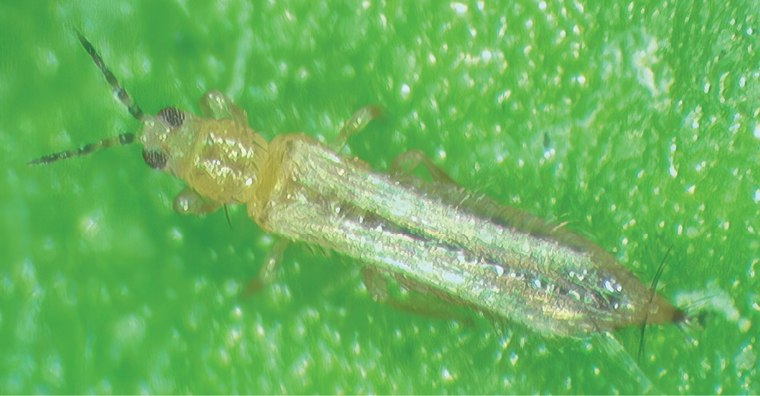
4. Cuticular resistance
Cuticular resistance arises when changes in the composition of the cuticle (exoskeleton), such as increased thickness or reduced permeability, prevents or reduces penetration of an insecticide into the insect body. Cuticular resistance can create barriers that slow absorption or reduce penetration of insecticides.
Consequently, reduced penetration can protect insect pests from insecticides because detoxifying enzymes have more time to degrade or convert the active ingredient into a nontoxic compound. Resistant insect pests are more efficient in reducing insecticide penetration than susceptible individuals.
Cuticular resistance typically occurs in conjunction with other resistance mechanisms, such as metabolic or altered target site resistance.
Greenhouse producers will not know why exactly a pest population is becoming resistant to an insecticide. Therefore, growers must rotate insecticides with different modes of action during the growing season to effectively maintain insect pest populations below plant damaging levels and delay the development of resistance in insect pest populations.
For more information, refer to this extension publication: Cloyd, R. A. 2021. Resistance Management of Arthropod Pests in Greenhouse Production Systems. MF3564.
Read the full 2026 Miticide Market Report:
From the Sponsor: Prioritize a rotational approach to mite management for superior results

Explore the April 2026 Issue
Check out more from this issue and find your next story to read.
Latest from Greenhouse Management
- The Growth Industry Episode 17: Investing in IGCs with WorryFree® Plants
- New UF study sheds light on the hidden toll of back pain among horticulture workers
- 2026 Irrigation and Automation Market Report: Tradition rains
- Empowering the Future of Precision Cultivation: Resource Efficiency, Root-Zone Science and Scalable Automation
- Oasis Grower Solutions hires plant scientist Timothy Frey
- New green industry leadership development program for women now available
- Clean production protocol
- Jiffy hosting Microgreens Grower Day