Editor's Note: This article originally appeared in the November 2026 print edition of Greenhouse Management under the headline “Growing Dutch.”

A flower bulb is pure potential. It conceals fascinating metabolic machinery needed for a bright, full bloom. But because it requires a period in the frigid dark, a gentle spring and a warm, early summer to bloom, growing cut flowers from bulbs is a unique commercial challenge.
Doing it year-round increases the difficulty. Selling the bright cut stems to a nationwide market driven by the vicissitudes of consumer trends makes the task even more arduous.
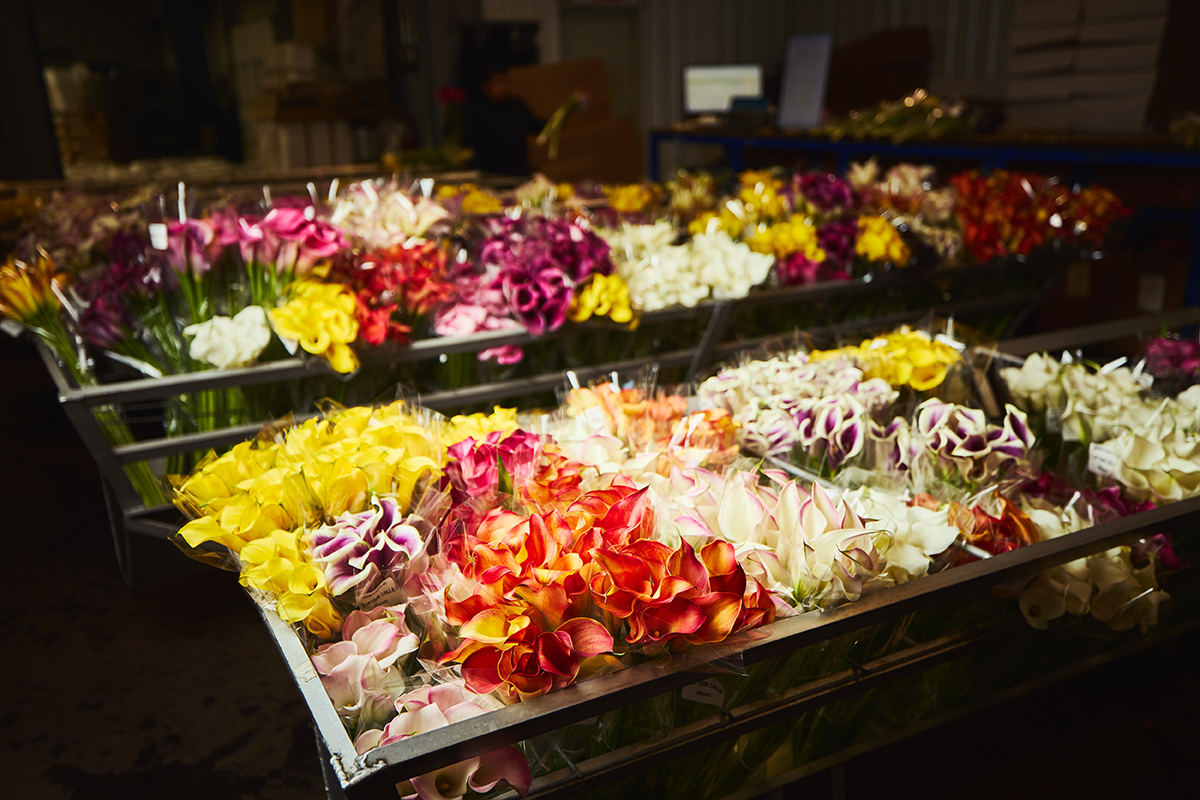
Oregon Flowers, Inc. has met the challenges head-on. Since its founding in 1985 by Martin Meskers, the family-run business has learned to master heat, cold and light, producing a staggering 100-plus varieties of cut lilies and tulips under glass. It doesn’t hurt that the Meskers share a familial and cultural identity with the greatest flower bulb producers in the world: the Dutch.
The slogan of Oregon Flowers states that they produce “Flowers grown with a Dutch touch.” Ask what that looks like in practice, and the answer is expansive and sometimes unexpected.
“I always say, jokingly, that’s why I kept my accent,” Martin says with a chuckle. “The ‘Dutch touch,’ I think it’s there just by who we are.”
Meet the Meskers
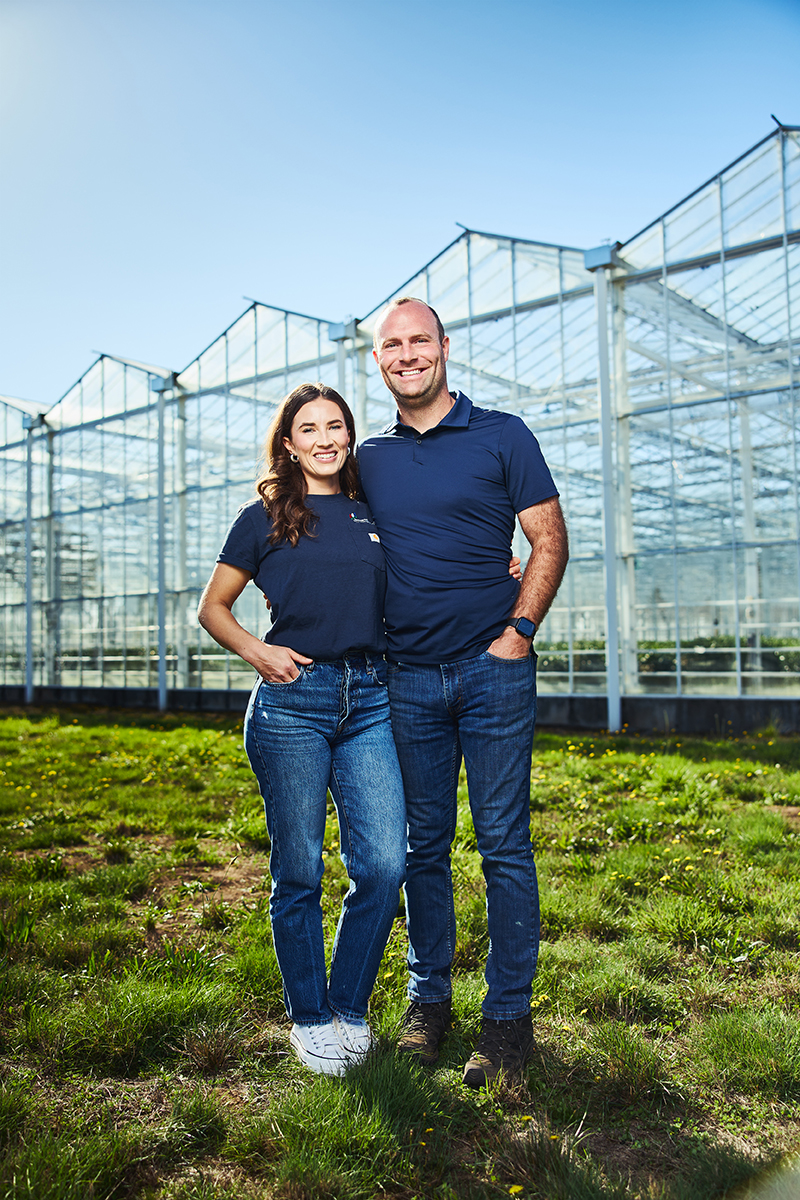
Historically, the Meskers were bulb growers. Martin’s family was part of the bulb growing industry in the Netherlands, and Martin was educated in the fields.
His skills were advanced enough that in 1979, at age 21, he was recruited by a company in the United States to produce lily bulbs typically sold to consumers. He and his wife Helene moved to the Willamette Valley in Oregon with what their son and current business operator Tyler describes as “$200 cash and four suitcases.”
Martin realized the climate in Oregon wasn’t necessarily conducive to growing bulbs. But the market for cut flowers was exploding. Martin decided it was time to start his own business and called his father in the Netherlands to ask if they could ship some bulbs for flower varieties not found in Oregon.
“So, we started on a small scale, growing lilies and tulips, but only outside or in cold houses,” Martin says. “We were very primitive, very young, very inexperienced and low on money and everything, just trying to get our small business going.”
Once their first spring-planted crop was cut in June, Martin and Helene took their flowers to market. The flowers were well-received, but the timing wasn’t. Some florists wanted them the following week or the week after, but the crop was sold in just under a month. The only way to meet the demand was to start growing year-round. That meant more bulbs, season-extending high tunnels and eventually their first glass greenhouse.
After 41 years in operation, Oregon Flowers is a rarity in the United States. There are precious few year-round cut lily and tulip growers. Being one of the few stateside players gives them a unique advantage in the market. They can deliver fresher and more competitively priced flowers compared to imported stems that may have spent days in transit from overseas.
The strength of that rarity has allowed them to grow to 10 acres of greenhouses in continuous production with the second generation at the wheel. Tyler Meskers and his wife Megan oversee operations while raising four children under 10 years old in the house where Tyler grew up on the flower farm property. The days of primitive growing have long passed.
Now, the business thrives on efficiency and automation, driven by a Dutch style of growing. To improve timing and decrease labor, Oregon Flowers has moved from planting bulbs into the ground to a crate system that allows them to move the bulbs through climate-controlled zones before entering the greenhouse.
Under cover, robots lay the crates down in rows and then pick them up once the blooms have been harvested. The growing media is removed from the crates and recycled using an industrial steamer before being placed back into crates for the next round of production.
But all the automation and efficiency would be nothing without producing the right flowers.

Of bulbs and blooms
Oregon Flowers has created a cyclical production process. The continuous production ensures that, as long as there is demand, they will always have a selection of predominantly Oriental, Asiatic and novelty lilies, as well as seasonal tulips, in stock. That’s crucial for their clients, who are split among wholesale florists, grocery stores and a small percentage of direct-to-retail online sellers.
The process starts with bulb selection. Tyler travels to the Netherlands annually, which allows him to get up close to new varieties.
“We’re always actively switching varieties out, changing things,” he says. “We want to keep buying the newest, the best stuff that’s out there.”
That requires finding a balance between aesthetics and health improvements in the varieties he chooses, he explains. After all, chasing trends in colors or floral design connected to weddings or sympathy is nearly unfeasible.
“We’re placing our orders (almost) two years in advance before we see them in our greenhouses. So, for us to forecast what the demand will be two years from now is extremely difficult,” Tyler says.
That lead time is due to the timing of bulb production. Bulbs are typically harvested in winter in the Netherlands, Tyler explains, and that means ordering over a year ahead of when the bulbs will arrive in Oregon. In October 2026, for instance, Tyler had just confirmed the bulb order for winter 2027 and spring 2028 production.
The strategy is to pick bulbs that offer a large variety of flower colors while placing emphasis on genetics that provide resistance to stresses like Botrytis and Western flower thrips.
“We’re always just looking for varieties that can handle stress the best, that can handle year-round production so that we can offer something consistently,” Tyler explains. “A good example is that a hotel lobby in New York City may want lilies, and they want them from a good supplier, and they want a variety that they know. So, if we could supply them that same variety every week with the same quality and the same characteristics, that’s a win for us.”
Durability after bloom is also incredibly important. Considering the business serves a national market, flowers that can’t travel are a no-go. That informs the questions Tyler asks about any variety.
“How can it handle shipping from Portland to LaGuardia? How can it handle being in a box for an extra day if it sits on a tarmac in LAX?” he says.
Lily logistics
Oregon Flowers purchases its bulbs for the year at once but keeps a portion reserved and frozen overseas to spread out some risk of having all the bulbs on-site.
“We hold some product for late season in Europe. We hold things that we need now in our own facilities,” Tyler says.
That allows them to consider the crucial and dynamic issues related to international shipping, like tariffs and shipping costs.
“We also look at the exchange rate because we buy everything in euros. There’s a lot of factors. Container availability, the overall economy, ports, strikes at the ports, trucking, fuel prices, all those things give us a gut feeling of whether we should ship everything in now or leave more in Europe and keep the bare minimum here.”
Either way, every bulb that lands at the facility is essentially ready to enter production. The trick is in planning. The entire process can take around four months, though that time can be dependent on the season. Winter months increase production time by a few weeks, while summer makes production shorter.
Flower bulbs are naturally dependent on seasonal shifts to produce their brilliant flowers. But year-round production means making winter, spring and early summer happen when they’re convenient for production, not when Mother Nature wants them to happen.
Once nestled into their crates, the bulbs are held in a freezer that keeps them dormant by simulating winter temperatures like those they experienced pre-harvest in the Netherlands. When it’s time for the bulbs to enter production, the crates are moved to another refrigerated room that simulates spring temperatures. This causes the bulbs to start producing roots, a process that takes about four weeks. Finally, after rooting, the bulbs are brought into the early summer climate of the greenhouse and laid out by robots that have been in use for almost 20 years.
Creating summer
The greenhouses are Dutch-style, gutter-connected Venlo houses, clad in glass rather than poly to allow the most light transmission possible.
“We chose glass Venlo greenhouses because the glass structure creates a better year-round indoor climate,” Tyler says. “It is also easier to control the environment inside a glass greenhouse than in a poly greenhouse. Glass greenhouses are more expensive to build for our crops, but we feel controlling the climate to our best ability is necessary; therefore, glass is essential for us.”
Climate is controlled via Priva climate control systems to automate vents, fans, shade curtains and lighting. It is integrated with humidity sensors and weather stations that have predictive technology. For instance, if cool, clear nights are expected, the greenhouse can be optimized for heat retention ahead of time rather than reacting once the indoor temperature has cooled.
While Oregon Flowers has invested in glass to let in as much light as possible, the family also utilizes supplemental lighting. The newest structures use LED fixtures, while HPS lighting is used in older structures.
While automation is key to efficiency, consistency and success, the Meskers still believe human touch is necessary. Watering, for instance, is still done by hand.
“We have some tools to help us with irrigating, moisture readers, but we’ve always fallen back on just the green thumb, walking the crop and feeling the environment,” Tyler says. “We see the need, and then we can go to the computer and run irrigation. There’s a few sensors we have in the greenhouse, but we haven’t gained enough confidence in them.”
Pest pressure in the greenhouses is managed through an IPM program that leans on beneficials. Tyler notes that it has taken a long time to reach a point where beneficial populations have made chemical applications rare. That’s important, because florists who design for events often want a product that’s “naturally grown,” Tyler says.
“I can’t say we don’t use it at all, but the last two years, I can probably count on my hand how many times we’ve hit that new greenhouse with a chemical application,” Tyler says. “We’ve found some beneficials that we feel pretty good about that we’re deploying. If we do everything right, we could probably get away with just using full beneficial control. But there are some hotspots, some issues that come up, and then we have that tool in our back pocket if we need to use it.”
Steaming hort
One of the more innovative aspects of Oregon Flowers’ operation has been a part of growing in Europe for many years: growing media recycling.
Unlike ornamental growers, the company is not shipping media with its product. It only ships cut stems. Instead of throwing the media into a waste pile after production, everything remaining in the crates after harvest is turned out into an industrial steamer.
The first step shreds the organic matter into a fine material, which requires adding about 15% of fresh bark into the mix before it is sent into the steaming line. The mixture is injected with steam that kills bacteria, insect larvae and weed seeds. The mixture then composts for about 30 minutes before emerging at 170 °F as inoculated media, which is cooled before being placed back into production.
“Finding a way that you can keep moisture in the soil consistent from the top of the pile to the bottom, but then also keeping the temperature at the bottom of the pile the same as the top, that’s the tricky part,” Tyler says. “There are augers and rotators inside the steam unit to keep it all consistent.”

A Dutch touch, but all American
Martin Meskers has been an American citizen for 25 years. While he is proud of his Dutch roots, he has an abiding love for his chosen country.
“We’re Americans. We sell in the American markets. We love this country,” Martin says. “We like pretty much everything about it. And I know we’re going through some challenges now, but overall, this is a great place to run a business, raise a family, live your life.”
While the company uses Dutch techniques to grow, Oregon Flowers is an ambassador for American marketing techniques that are unfamiliar to growers in the Netherlands, who sell in their own unique market.
“We like to share how we sell,” Tyler says. “What kind of box do we ship in? How do we get our customers their product? How do we get paid? Those are all things that we always have a healthy conversation about, and you can be completely open because it’s just simply two different areas of growing, but also two different areas of doing business.”
But the Dutch influence remains. Megan was Tyler’s childhood sweetheart before becoming his wife. The couple lived in the Netherlands together as Tyler learned the business.
She knew some Dutch, but after a trip to a butcher that resulted in far too much ground beef, she realized it would be beneficial to learn the language. Now, she and her husband are in the process of succession, and she focuses on the financials and the human resources of their Dutch-hued operation.
“We had talked all along about the dream of helping run the business someday and doing that together,” Megan says. “And thankfully, life has evolved in such a way to do so. And we’re super fortunate and grateful to be living on the farm with our four kids and able to have this farm family lifestyle together.”
Will their four children enter the business, too? The Meskers aren’t pushing it, but there are already signs of early entrepreneurship.
“They’ve built pallet forts and tray forts. And right now, they work with one of our bulb suppliers, and they’re growing potted lilies to sell for Christmas. So, they’re kind of starting their own little business practices and getting inspired,” Megan says.
And that’s a sign that the future of Oregon Flowers, Inc. is as bright as a Dutch morning, or as strong as the coffee sipped during the daily coffee break, known as “koffietijd.” Because, like the bulbs they’ve pressed into pots, the youngest Meskers are also full of potential.
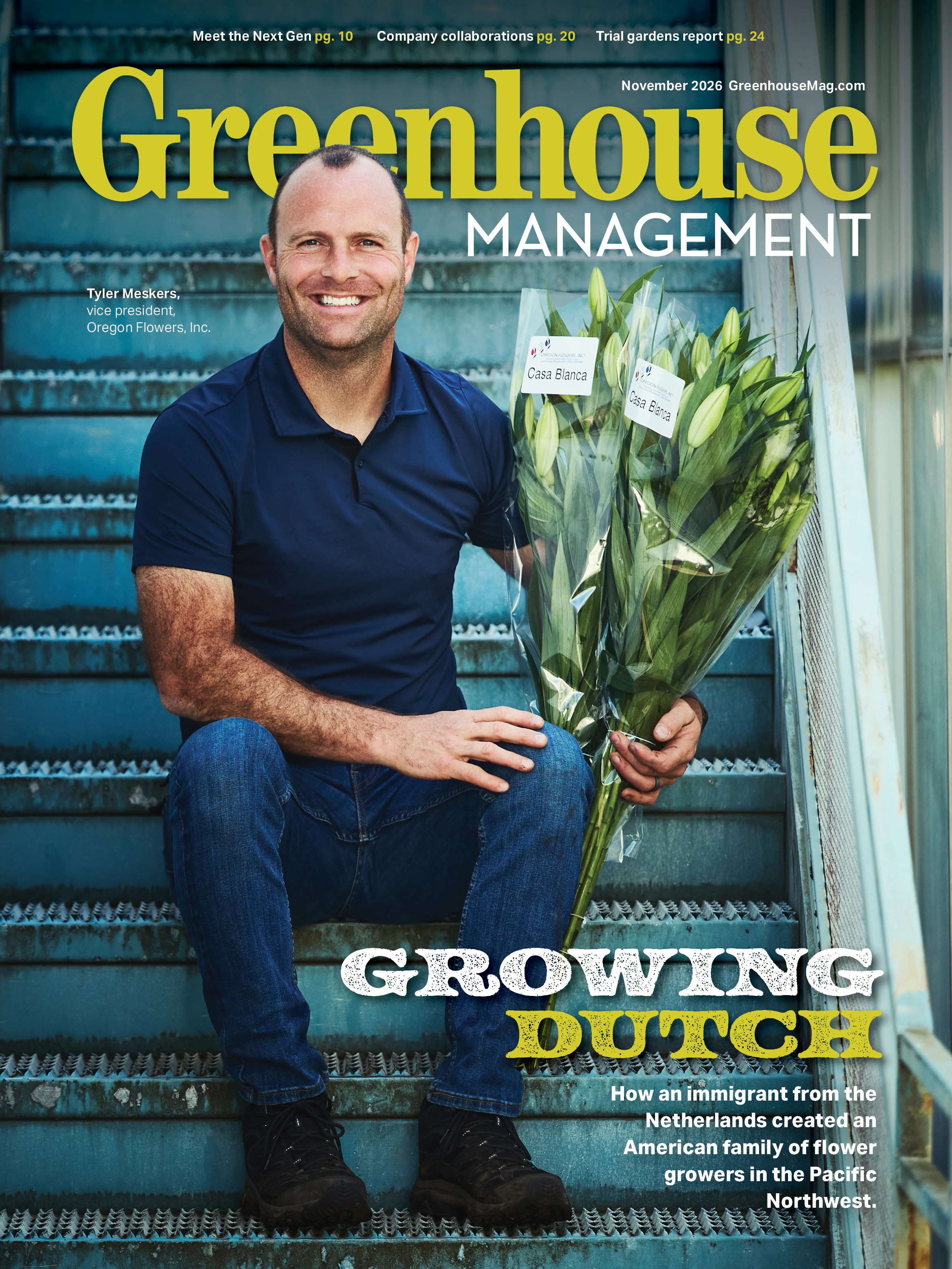
Explore the November 2026 Issue
Check out more from this issue and find your next story to read.
Latest from Greenhouse Management
- The Growth Industry Episode 17: Investing in IGCs with WorryFree® Plants
- New UF study sheds light on the hidden toll of back pain among horticulture workers
- 2026 Irrigation and Automation Market Report: Tradition rains
- Empowering the Future of Precision Cultivation: Resource Efficiency, Root-Zone Science and Scalable Automation
- Oasis Grower Solutions hires plant scientist Timothy Frey
- New green industry leadership development program for women now available
- Clean production protocol
- Jiffy hosting Microgreens Grower Day