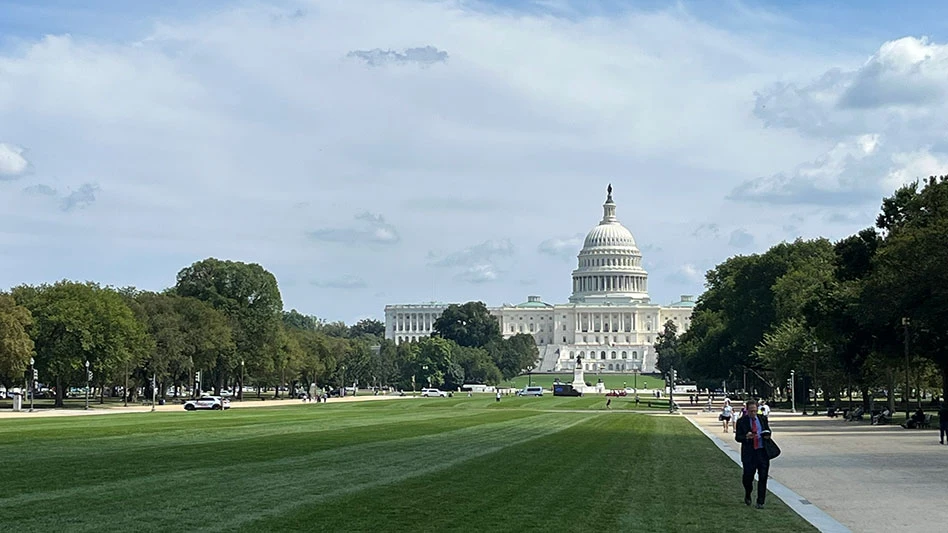
Photo © Matt McClellan
The Agricultural Act of 2026, the Senate's version of a Farm Bill, failed to move out of committee after a 10-11 vote along party lines.
The U.S. Senate Committee on Agriculture, Nutrition, and Forestry met Aug. 6 to debate the Senate’s version of a Farm Bill. More than 200 amendments were proposed as part of the bill’s markup process, and after four hours of debate, the committee voted on whether to advance the bill for consideration by the entire Senate.
“I’m deeply disappointed by this outcome,” Chair John Boozman (R-AR) said in a statement. “We have a responsibility to stand with America’s farmers, ranchers and rural communities. Everyone recognizes the serious challenges they continue to face, and blocking the Farm Bill only adds to the uncertainty and hardship.”
The sticking point is how quickly states would be required to take on a larger share of administrative costs for the Supplemental Nutritional Assistance Program, or SNAP. The Republican members of the committee were in favor of a one-year delay, while Democrats pushed for two years.
The bill featured year-round E-15, updates and increases to credit and loan limits, and expanded programs and support for risk management tools for specialty crop growers. Read an overview of the bill here.
Senator Tommy Tuberville (R-AL) did not vote, and the proxy votes of Senators Mitch McConnell (R-KY) and Elissa Slotkin (D-MI) could not count toward final passage. As a result, the markup technically recessed, subject to the call of the chair, who did not adjourn the markup.
After the farm bill vote, Senator Amy Klobuchar (D-MN), ranking member of the Senate Committee on Agriculture, Nutrition, and Forestry, said the SNAP cost shift to states and counties is a big enough problem that it pushed Democrats to vote against the bill.
“Amid tariff-related rising grocery prices in states across the country where SNAP has been critical, this is only a one-year fix,” Klobuchar said. “It still advantages high error rate states over states with mid-level error rates. A state with an error rate twice that of Minnesota will pay nothing in the second year, whereas states that have reduced their error rates will still be disadvantaged over high error rate states. Our members are simply asking for the two-year delay so all states will be on the same footing in working to reduce their error rates.”
Boozman, who introduced the 900-plus page bill in late June, expressed frustration that SNAP issues are holding up the passage of legislation that could help strengthen an industry that needs it.
“This debate was about the Farm Bill, not protecting the mismanagement of billions of dollars in food aid,” Boozman said. “I remain committed to working with those who put our farmers and rural communities first on advancing solutions that strengthen agriculture.”
The Senate began its five-week recess on Aug. 7. Boozman can call the committee back to vote on the Farm Bill again once they return to Washington D.C. after the recess.
“I am committed to continuing to work with Chairman Boozman on this bill to get it done, and there are good things in it for our farmers and ranchers, including year-round E-15,” Klobuchar said. “As noted by the Chairman, the Agriculture Committee meeting remains open for further discussions on this bill.”
The House of Representatives passed its 2026 Farm Bill, dubbed The Farm, Food, and National Security Act of 2026, at the end of April. Once the Senate passes its version, the House and Senate Agriculture Committees will meet for a conference committee to reconcile any differences between the two bills.
Latest from Greenhouse Management
- The Growth Industry Episode 17: Investing in IGCs with WorryFree® Plants
- New UF study sheds light on the hidden toll of back pain among horticulture workers
- 2026 Irrigation and Automation Market Report: Tradition rains
- Empowering the Future of Precision Cultivation: Resource Efficiency, Root-Zone Science and Scalable Automation
- Oasis Grower Solutions hires plant scientist Timothy Frey
- New green industry leadership development program for women now available
- Clean production protocol
- Jiffy hosting Microgreens Grower Day