Adobe Stock | korhan oztunc
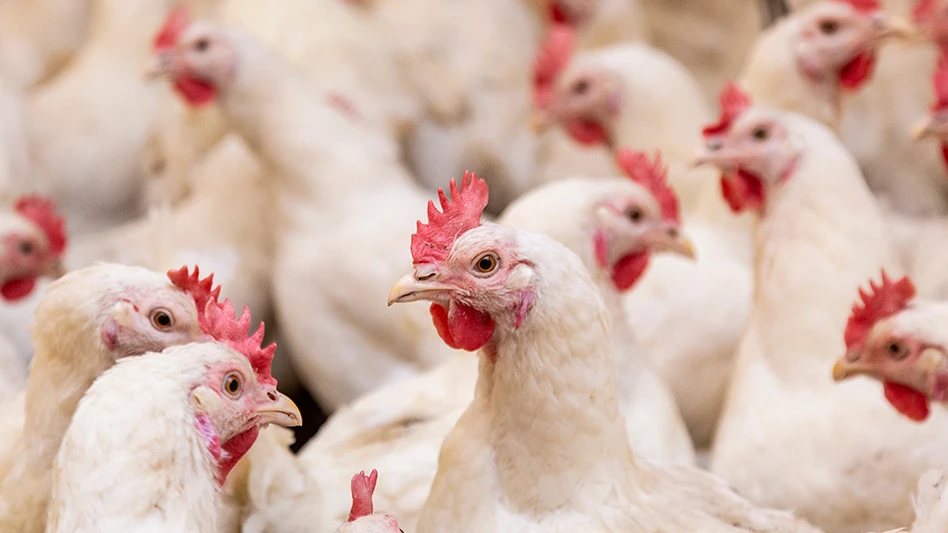
Artificial intelligence (AI)-based tools could help poultry producers detect Salmonella more quickly by analyzing smartphone images of poultry feces, according to a new University of Georgia study published online in Computers and Electronics in Agriculture.
Researchers at the University of Georgia developed an AI-based system that uses deep learning and computer vision to classify fecal images as Salmonella PCR-positive or PCR-negative. The goal is to provide poultry producers with a rapid, low-cost screening tool that could help identify flocks at higher risk for Salmonella.
Current Salmonella surveillance typically requires producers to collect samples and send them to a laboratory for microbiological testing, a process that can take several days. Researchers said an on-farm screening tool could enable producers to identify potential problems sooner and make more timely management decisions.
The project, “Salmonella Detector: A Mobile Application for On-site Broiler Salmonella Infection Diagnosis,” was led by Guoming Li, Ph.D., of the University of Georgia's Department of Poultry Science and Institute for Artificial Intelligence. Researchers evaluated the system using thousands of fecal images collected from poultry farms in both the United States and Africa.
The researchers found the AI model performed well when trained and tested using data from the same geographic region. When evaluated across regions, the model achieved up to 85% accuracy, demonstrating the potential for broader application while also highlighting the challenges of regional differences in environmental conditions, management practices and image characteristics.
To improve performance, the researchers combined deep learning image analysis with tree-based machine learning classifiers and optimized the system to run on smartphones and other devices, allowing predictions to be generated directly in the field.
Researchers developed prototype web, iOS and Android applications and made the software publicly available to support additional research and industry development.
The authors concluded that the technology shows promise as a practical decision-support tool for poultry producers but emphasized that additional validation across more geographic regions and production environments is needed before it can be widely adopted. They said the system is intended to supplement, not replace, traditional laboratory testing.
The project was conducted as part of the U.S. Poultry & Egg Association’s research program.
Latest from Quality Assurance & Food Safety
- FSIS to Expand Animal Drug Residue Testing Capabilities
- FDA Advises Food Facilities to Protect Registration Information
- FDA Says Cyclospora Lettuce Test Was False Positive
- Taylor Farms Removes Iceberg Lettuce Sourced from Mexico Amid Cyclospora Outbreak
- FDA, CDC Tie Multistate Cyclospora Outbreak to Taco Bell Lettuce
- BCG and CGF Release New Report on AI Usage by CPG and Retail Companies
- IntelliAM AI Launches Industrial Intelligence Platform
- QA Virtual Conference to Explore Pest Control Strategies for Food Facilities