Photo courtesy of 80 Acres Farms
80 Acres Farms, the Hamilton, Ohio-based vertical farming company, announced on Monday, Aug. 3, 2026, that it is winding down operations after roughly a decade in business.
The company cited an inability to secure the capital needed to keep going.
Approximately 300 employees are affected, most of them in the Cincinnati Tri-State area, according to the Cincinnati Enquirer.
According to a WARN notice filed Aug. 3, 2026, by 80 Acres Farms with the Ohio Department of Job and Family Services, negotiations were ongoing with a company to acquire 80 Acres Farms.
The notice reads, "Unfortunately, until immediately before this notice was issued, the Company was actively engaged in negotiations regarding a potential acquisition that, if completed, was expected to provide the funding necessary to continue operations and avoid or postpone the closure. The negotiations had progressed, and the Company reasonably believed the transaction would move forward. However, on the evening of August 2, 2026, the prospective acquirer unexpectedly withdrew from the transaction. Without the anticipated transaction proceeds and with no other funding available to sustain operations, the Company was required to make the immediate decision to wind down its business."
The Ohio WARN notice said 145 jobs will be affected in Hamilton.
Co-founder and CEO Mike Zelkind released a statement on the company's LinkedIn page:
"After an exhaustive effort to find a way forward, 80 Acres Farms is winding down operations.
For a decade, our team has proven that vertical farming can work at scale — building and operating indoor farms that ultimately supplied more than 18,000 retail locations across the U.S. We're proud of our work, the problems we solved, and the fresh, clean produce that fed so many people.
Unfortunately, under current circumstances, we could not secure the capital required to continue that work.
We are deeply grateful to our employees, our retail partners, and the communities that have supported us. We have seen vertical farming's potential up close, and we still believe that this industry is just getting started, and that we have helped plant the seeds for generations of future harvests."
80 Acres Farms was founded by Mike Zelkind and Tisha Livingston in 2015.
Its produce — which during its 10 years has included tomatoes, cucumbers, salad kits, salad blends, microgreens and herbs — has been sold in retail locations nationwide, including large grocery chains such as Albertsons, H-E-B, Meijer, and big-box retailer Walmart.
The company raised $160 million in Series B funding. In February 2025, it raised $115 million and acquired Plantae Biosciences, an Israeli plant-genetics biotech firm. By March 2025, 80 Acres acquired Kalera, including three vertical farms in Georgia, Texas and Colorado.
In August 2025, 80 Acres announced "a strategic merger" with Soli Organic to form what the companies called "one of the world's largest and most advanced indoor farming networks." The companies projected first-year revenue would reach around $200 million.
Eric W. Stein, executive director at the Center of Excellence for Indoor Agriculture and Produce Grower Vertical Thinking columnist, explained that high capital costs, facility size and investment expectations continue to be "a real problem for vertical farms."
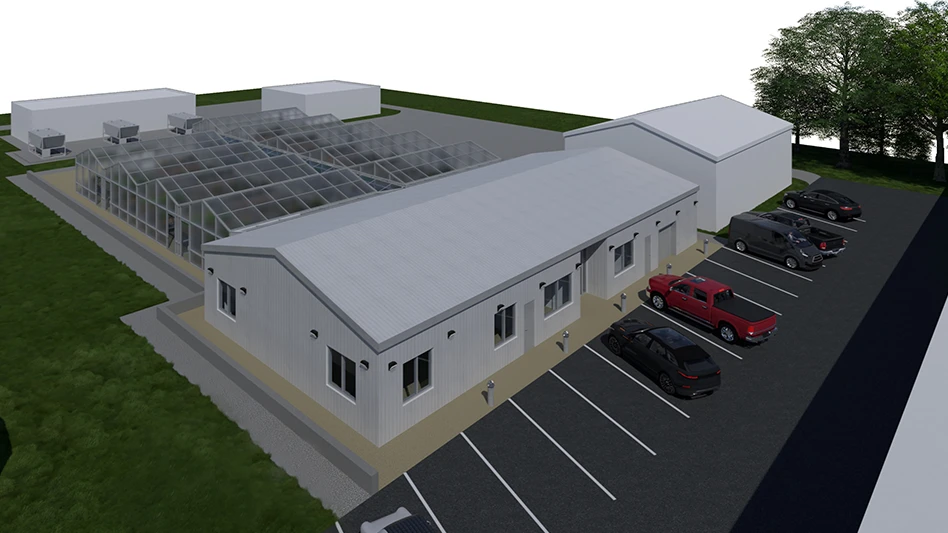
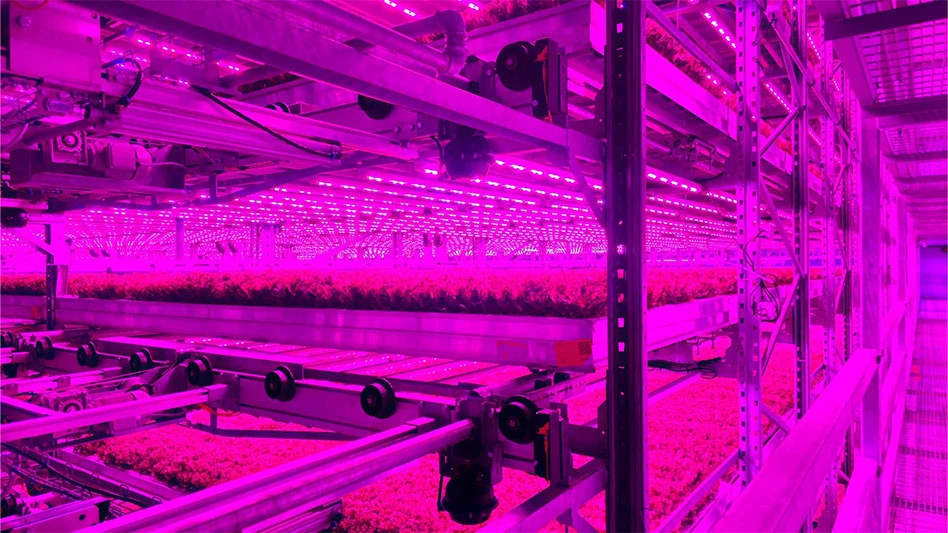
"80 Acres had a very sophisticated and costly conveyance system. I wonder how easy it was to maintain, which could have been a pain point," he said. "Also, their facilities were huge at some 200,000 square feet. I don’t think this is correct size for a vertical farm. It is much too big."
Instead of investing so much in IT and data management to increase yields, vertical farms should put their money into plants and people, Stein added. In addition, the "macro cost structure was increasing, including interest rates, energy, labor, etc., and this did not help with cash flow."
"I think this illustrates that vertical farms need to be right-sized, established realistic expectations with investors, deploy appropriate tech that is lower cost and performs at pareto optimality (e.g., 80/20) and stay focused on the core product and process of growing," he continued. "And don’t get distracted with IT and data management unless it contributes to the bottom line. Finally, build purpose-built facilities that are smaller, easy to maintain and are more sustainable. Keep it simple."
Sources: Previous reporting from Produce Grower staff; 80 Acres Farms website; Newswire; AccessNewswire; and PR Newswire
Latest from Greenhouse Management
- The Growth Industry Episode 17: Investing in IGCs with WorryFree® Plants
- New UF study sheds light on the hidden toll of back pain among horticulture workers
- 2026 Irrigation and Automation Market Report: Tradition rains
- Empowering the Future of Precision Cultivation: Resource Efficiency, Root-Zone Science and Scalable Automation
- Oasis Grower Solutions hires plant scientist Timothy Frey
- New green industry leadership development program for women now available
- Clean production protocol
- Jiffy hosting Microgreens Grower Day