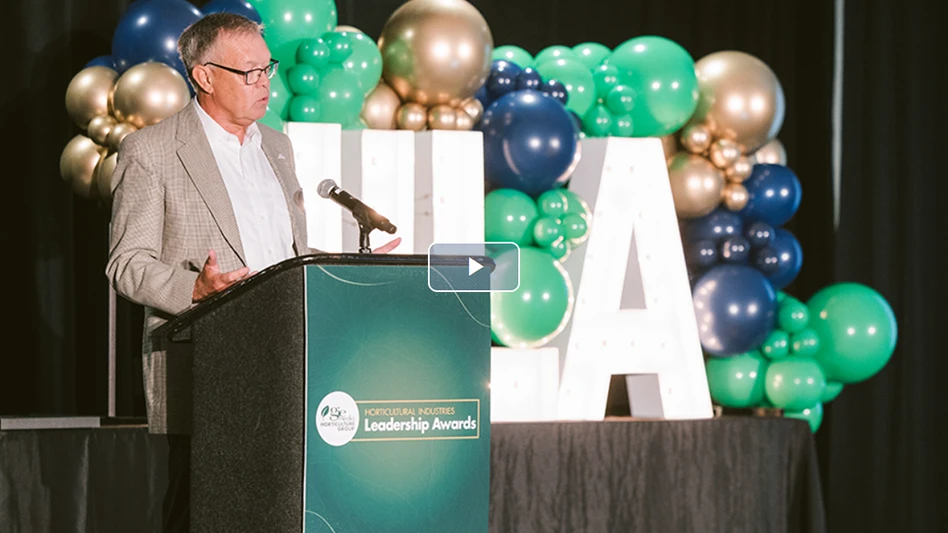
Katie McDaniel: How did you get started in horticulture?
Kristopher Criscione: When I was in my undergraduate studies, I was reading a book called, “The Martian.” For those who don’t know, “The Martian” is basically about an astronaut who was a botanist. He and his colleagues were working on Mars, and he accidentally got stranded there. So, he had to grow all of his food on Mars, and I was hooked. I wanted to grow plants in space. So, I studied botany in Spain, and as soon as I got back, I switched schools and transferred my major. My undergraduate university required an internship somewhere in the field. They wanted you to get your hands dirty, get real world experience. So, I interned at a nursery called Pinelands Nursery in New Jersey, and I fell in love with outdoor container production. So, I pursued graduate school, and here I am at Virginia Tech.
KM: What do you do as the nursery production specialist?
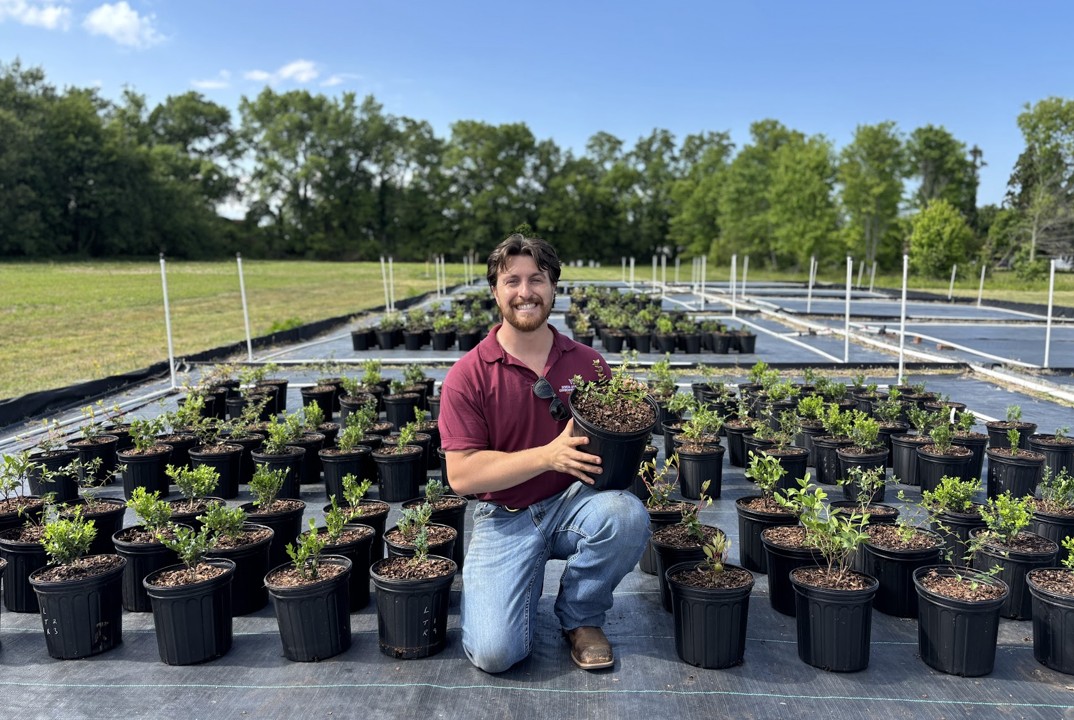
KC: I am an assistant professor at Virginia Tech and I’m located at the Hampton Roads Agricultural Research & Extension Center (AREC). That’s in Virginia Beach; we’re not on campus. My appointment is a 50-50 research extension split, and it’s a great ratio. My research appointment is really focused on developing practical, actionable, adoptable solutions for the nursery industry to either help with economic costs or to help improve their environmental stewardship.
We conduct experiments here at the research station that can either help decrease irrigation inputs, help reduce fertilizer applications or accelerate growth and development of slow-growing nursery plants.
Then my extension appointment really complements the research side of my program, where I try to help growers develop solutions to atypical issues with regards to production management. It’s become one of my favorite parts of the job to talk with growers and help them develop solutions and to help their operation become a little more efficient.
KM: Your research program is focused on integrative rootzone management practices. Could you break that down, for us who don’t have PhDs in horticulture?
KC: I like to consider myself a system scientist, so we look at the nursery container holistically, like when you have a big machine or a car, there’s not one cog or gear that’s doing all of the work — it’s an aggregation of so many different little components that contributes to the overall system — that’s how we view nursery production.
There’s no single component to growing a nursery plant. It requires a lot of in-depth, complicated, synchronized things. So, we don’t really focus on one management practice; we focus on the whole system. We don’t look at just substrates, for example. We look at how the substrate changes irrigation efficiency and what does that do to the root system.
My program is really built on three main pillars, and we have a central theme to it: Can we improve root growth and development, or can we augment root growth and development to speed production time? And our pillars are looking at engineering our soil-less substrates. 1. Can we engineer our substrates to be more efficient with regards to water use, or can we use substrates to engineer our root systems. 2. Can we better manage our irrigation inputs. 3. We look at the root system themselves. So, we look at ways that we can directly improve root growth and development, whether that’s through agrochemicals — such as a bio stimulant or a rooting hormone, like our propagation chemicals, auxin. Can we stimulate root growth to accelerate production of slow growing plants, or can we use modern-day technology like air pruning pots to develop more fibrous root systems. That’s what we mean by integrated root zone management. We don’t look at one thing; we look at the whole system.

KM: How can growers optimize container root development?
KC: Since the 1960s, we really haven’t put a lot of time and energy into understanding how we can improve root growth and development.
But we have been able to observe some methods to improve roots. So first and foremost, and I may be biased because I’m a substrate scientist at heart, but getting the correct substrate — that relationship between a root growing inside of these particles that we just throw in a container — is so dynamic and complex. If you don’t have the correct substrate, you are going to really see it in that root system.
The correct chemical properties is important, but we can manipulate that very well with our substrates. The hard part is manipulating the physical properties. Water storage and having enough water for the roots is important in our substrates. But roots do a really wonderful job at accessing moisture when it’s dry. They’ve developed and evolved for millions of years, but when they don’t have a lot of oxygen, we can see root growth decrease pretty fast.
My favorite example is if you have a container that needs water, what do you do? You irrigate. And in 10 or 15 minutes, boom, your container has water. But let’s say your container’s too wet and you don’t have enough oxygen. Really, the only solution is time. You just have to wait. And that’s why having a substrate with enough air space is so important. So, one of the first things to consider to increase your root growth is find a substrate that can exchange gas and oxygen efficiently.
Another method that I’m a huge advocate for is cyclic irrigation, so optimal irrigation management programs. Instead of irrigating one large irrigation volume a day as most growers do, you break up that large irrigation volume and apply it in small increments throughout the day. You can really maintain a constant level of root zone moisture that can help stimulate more lateral root development and you get overall healthier roots.
One of the biggest improvements in root development in modern day production that I’ve seen is growing in a white pot. We see that our standard nursery black pots can get up to 140 °F, which at that point, the roots are basically boiling. With a white pot, we can reduce those temperatures at about 20 °F. Now that might not seem like a lot, but I bet if we all were in a room, and I cranked up that thermostat 20 °F, we would really feel it, and the roots do too.
KM: Do you have any hacks for growers who already have a ton of those black pots? Would spray painting them white work?
KC: Yes, we have done that before, where we’ve taken a can of spray paint and that does work. But when you have thousands of pots that need to get spray painted, that would be tough. Some growers will buy white pots and just slide a black pot into it, so when they’re ready to harvest the container, you just slide the black pot out and keep the white one. It helps save on costs a little bit. Of course, the initial investment’s a lot, but that is a solution.
KM: Oftentimes, growers will pay more attention to shoot growth yield and the quality of the plant that’s being seen by the customer. Why is it just as important to pay attention to the roots?
KC: I think I get asked that question almost every day, why do the roots even matter? And it’s a valid question because it’s the top part of the plant that sells, right? Nobody goes to, well, I do … but nobody goes to a garden center and to buy a plant just because of the root system. People go to buy these ornamental products because of the flower color or how many flowers there are or the leaf pigmentation.
But the root system, I would argue, is even more important for container production than the shoot. The reason being is everything we do in container production is tailored to generate a healthy root system. The substrate that we choose, how much water and air space that substrate holds, how much fertilizer we can put down, rootzone temperatures, like we just spoke about, it’s all about the root system. I believe that we as a research community and the industry need to put a lot more investment into understanding better how we can generate healthier root systems.
KM: What do you enjoy doing when you’re not working?
KC: My fiancée and I have a shepherd at home. He’s a shepherd-husky mix. He’s got both personalities of the breeds; he never stops talking, or singing as I like to call it. But we just rescued another pure shepherd, and both together are like a bull in a China shop, and they don’t know that they’re bulls. It’s been a lot of energy and work training them, so that’s what I’ve been spending a lot of my time doing. It’s remarkable to be able to see a dog that has really never been trained before. We rescued her from a puppy mill. She’s maybe one year old and she’s already had a litter of puppies (at the mill). It’s been amazing over the last few months to be able to see her think about decisions and watch her learn and become more comfortable. I’m a dog person, so go out everybody, go buy a dog right now or adopt a dog.
In the fall and spring, I have a motorcycle that I love riding around. I grew up in Jersey, so I’m used to riding around the beach, so it’s been fun being back in that beach environment. Now that it’s summer, every year I grow a lot of peppers, about 70 or 80 peppers in containers, and I like to make my own hot sauce. My hot sauce brand is called It’s a Science and our motto is, it’s not rocket science, it’s hot sauce. So that’s fun to do.
KM: Do you have several varieties of peppers? Where do your sauces rank on the Scoville scale?
KC: Last year I made it a little spicy, so it was requested this year to not make it spicy. I should really write my recipes down, but every year I find it fun to just come up with a different cocktail of different peppers and proportions and recipes to use. My secret ingredient is cilantro; I’ll give everybody that secret. It’s been a lot of fun to grow and make all of that homegrown.
KM: What is your favorite plant and why?
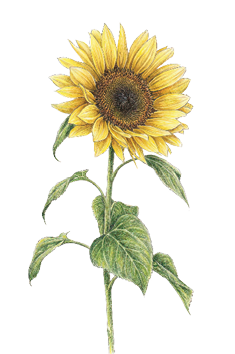
KC: The dreaded favorite plant question. I would say sunflowers because they are biologically, poetically and aesthetically a beautiful plant. Biologically they have the most expansive, responsive root system. I grew sunflowers a lot for my PhD, and I do now too, so maybe I feel a bond with them because I’ve grown them so much. They also follow the sun, they’re heliotropic, which I find fascinating that plants can move that quickly in a day. But poetically, they represent happiness, sunshine and good positive energy. And aesthetically, they’re just simply beautiful plants. So, it’s a trifecta of a plant and I love them.
Latest from Nursery Management
- Plantpeddler announces results of Variety Day 2026
- Get to know Marcus Jansen
- Stat of the Week: Companies with a customer experience mindset drive revenue 4-8% higher than others
- SmartPlant offers market intelligence for horticulture industry
- Monrovia presents garden design trends for 2027
- Elusive blue
- American Floral Endowment announces 2026-27 educational grants
- Cities may be the ultimate training grounds for invasive species, UF/IFAS researchers say