Editor's Note: This article originally appeared in the January 2026 print edition of Nursery Management under the headline “Thunbergia mysorensis.”
I have always been attracted to tropical vines. My therapist thinks that perhaps I have a bit of a Tarzan complex, but I really don’t think that’s the case. I have tried medications, which don’t seem to work. Aversion therapy was a complete bust. I have come to terms with the fact that I may just be addicted to climbers, creepers and danglers.
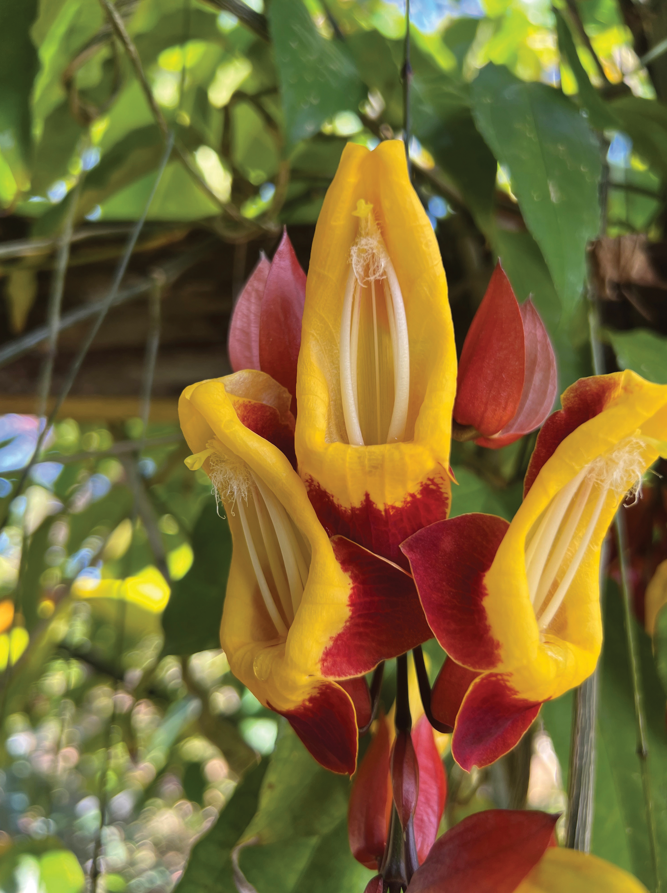
Among the many tropical vines I’ve seen and grown over the years, none make me swing more than Thunbergia mysorensis. Often called the “brick and butter vine” or Mysuru (Mysore) clock vine, it will take your breath away when you see it in a tropical garden or in the wild.
Long pendulous chains of waxy blossoms drip from the plant like living jewelry, each flower a blend or deep mahogany red and bright golden yellow. Our friend Tom Piergrossi at Vintage Green Farms near Hilo, Hawaii, had a stunning specimen in full bloom when my partner, Michelle, and I visited last February.

Native to the Western Ghats of southern India, Thunbergia mysorensis thrives in environments with warmth, humidity and ample filtered sunlight. In cultivation, it is most often trained along a pergola or high trellis, so its flower clusters can hang freely. Given enough support and room to roam, the vine grows with impressive vigor, rewarding gardeners with cascades of blooms from late spring through fall.
Thunbergia mysorensis is quite easy to grow. I have always propagated it vegetatively from cuttings. It roots easily and can be greenhouse grown year-round. It will bloom readily when grown in six-inch pots and staked.
It certainly needs protection from the cold. Night temperatures above 50 °F will be beneficial. It appreciates regular moisture, good air movement and a bit of afternoon shade. In cooler climates, gardeners often keep it in bright conservatories or large patio containers, bringing it indoors before temperatures begin to dip.
Thunbergia mysorensis has an undeniable stage presence. It invites people to look closer, linger longer and marvel at the intricate artistry that plants can create. But whatever you do, please don’t swing on the vines!

Explore the January 2026 Issue
Check out more from this issue and find your next story to read.
Latest from Nursery Management
- The Growth Industry Episode 14: Meet Lionel van der Walt, AmericanHort's new CEO
- Growers and suppliers say BFG Supply Co. will close
- Stemmer from BioWorks
- BioWorks introduces Stemmer silicon-based plant health solution
- Silver Fern awarded grant to expand AI-powered demand planning for greenhouse, nursery growers
- All-America Selections announces first three new AAS Winners for 2027
- 2026 Special Recognition Award recipients announced at PPA National Symposium
- [WATCH] July issue recap