We’ve crunched the data from our 2026 State of the Industry Report, and the results paint an interesting picture.
Sales are up, but profits are down for more growers than last year. It’s no surprise.
Businesses are being squeezed. Growing plants costs more than it used to, and with their customers facing the same economic challenges, growers may be worried that if they raise prices to make up for their increased costs, their customers won’t buy them (or will buy them cheaper somewhere else).
However, the demand is there. Not every nursery felt the squeeze in the same way. Some reported being more profitable in 2026. They figured out how to make lemonade.
Last year, 41% of growers who took our survey said they planned to grow more container trees than 2025. This year, that number dropped a bit, and the same thing happened to container-grown shrubs, from 47% to 36% increasing numbers. Even perennials experienced the drop, from 53% to 44%.
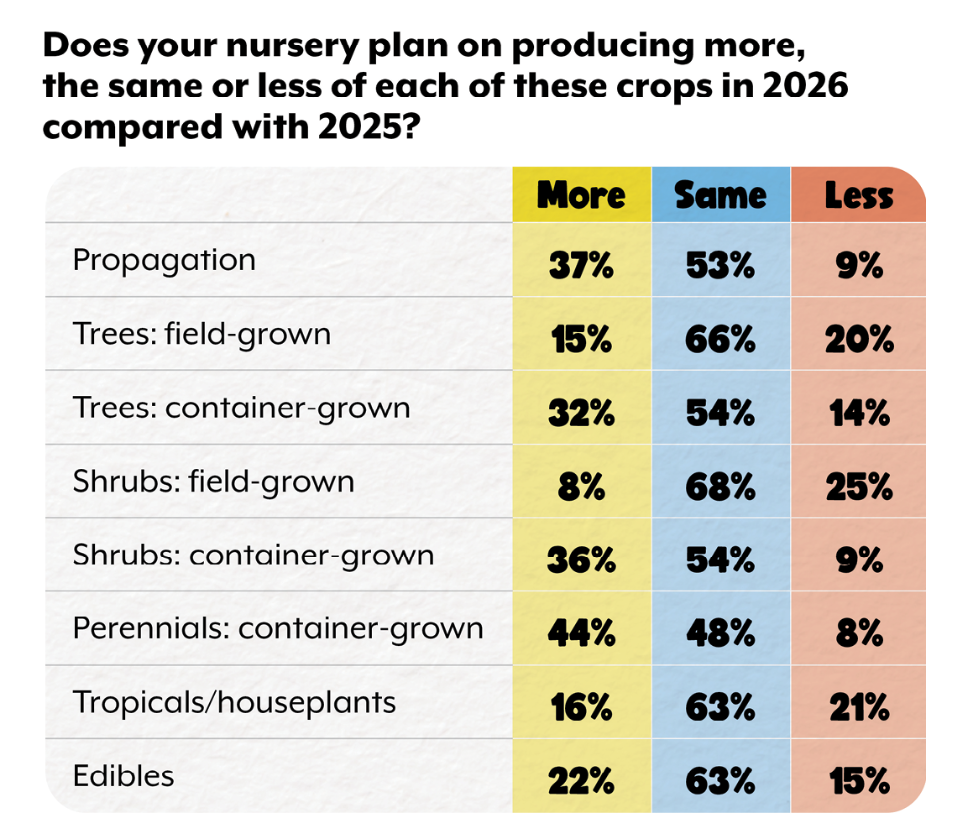
When asked, Does your nursery plan on producing more, the same or less of each of these crops in 2026 compared to 2025?, the highest percentages are in the “same” column. It’s no shock that with the economic challenges and uncertainty, most growers are playing it safe and not making any major production changes.
This year’s survey of nearly 200 of our most-engaged readers includes data on sales, profits, prices and more.
Latest from Nursery Management
- New UF study sheds light on the hidden toll of back pain among horticulture workers
- Top 10 things to know about program selling
- Oasis Grower Solutions hires plant scientist Timothy Frey
- New green industry leadership development program for women now available
- Seed Your Future launches '50K to Grow 50K' campaign to connect young people with horticulture careers
- American Floral Endowment announces two new Vic & Margaret Ball Internship Committee members
- Midwest Groundcovers explores strategic partnerships for Merry Christmas Holly and Peter Orum collection of proprietary Ilex genetics
- Cities may be the ultimate training grounds for invasive species, UF/IFAS researchers say