Adobe Firefly
The University of Minnesota’s West Central Research and Outreach Center (WCROC) partners with many plant breeding companies around the world to trial plants for the local climate. Data from these trials is used by plant breeders to make research and development decisions. Information from our shrub trials can be used to identify plant hardiness, support marketing for sales in our area and identify if the plant performs as the breeder expects in our region.
WCROC is located in Morris, Minnesota, which is USDA Zone 4b, as well as being in historic prairie land. Prairie climate includes cold, windy winters with variable snowfall, and hot, humid summers. Lately, severe weather, including extreme wind and heavy rainfall, has become more common. In other years, drought conditions have occurred. This variability makes us a strong partner with breeders for plant trialing.
Trial methodology
Shrubs are trialed at the WCROC for three years including three winters. Plants are grown in the ground with minimal amendments and no winter protection. When needed, supplemental irrigation at one inch per week is provided. The first year is for plant establishment and no data is collected outside of the height and width of the plant before the first frost. Starting in the second year, winter injury is reported as a percentage. Growing season data is collected monthly in June, July and August on a 1-5 scale (1 below average, 3 average, 5 excellent). A variety of traits are evaluated such as flowering (visual quality and bloom date), foliage quality, disease, insect and animal damage, pollinator presence and overall appeal. The final data point is the end of year height and width. Data collection is repeated the following year, and winter injury information is taken in the third spring before the plants are removed from the field. Shrubs that perform above average (4) or excellently (5) across all data points may earn the Tough and Terrific title.
Earning the name
To be a WCROC Tough and Terrific shrub, plants must meet a series of strict requirements. First, the shrubs must have 100% winter survival. Some winter dieback is tolerated, but an average of no more than 25% dieback across the three plants shows the plants are particularly hardy to our cold Zone 4 winters. During the growing season, plants should be rated above average to excellent (as noted, a 4 or 5 on our 1-5 rating scale) for bloom rating, foliage quality and overall appeal. Finally, plants should exhibit no insect damage, disease or animal browsing. The qualifications are tough, but that’s what makes these shrubs a truly Tough and Terrific plant and ones we can strongly recommend for local landscapes.
The following Tough and Terrific shrubs are from Spring Meadow Nursery and part of the Proven Winners ColorChoice shrub collection. They were the only named shrubs that met the trials’ criteria.
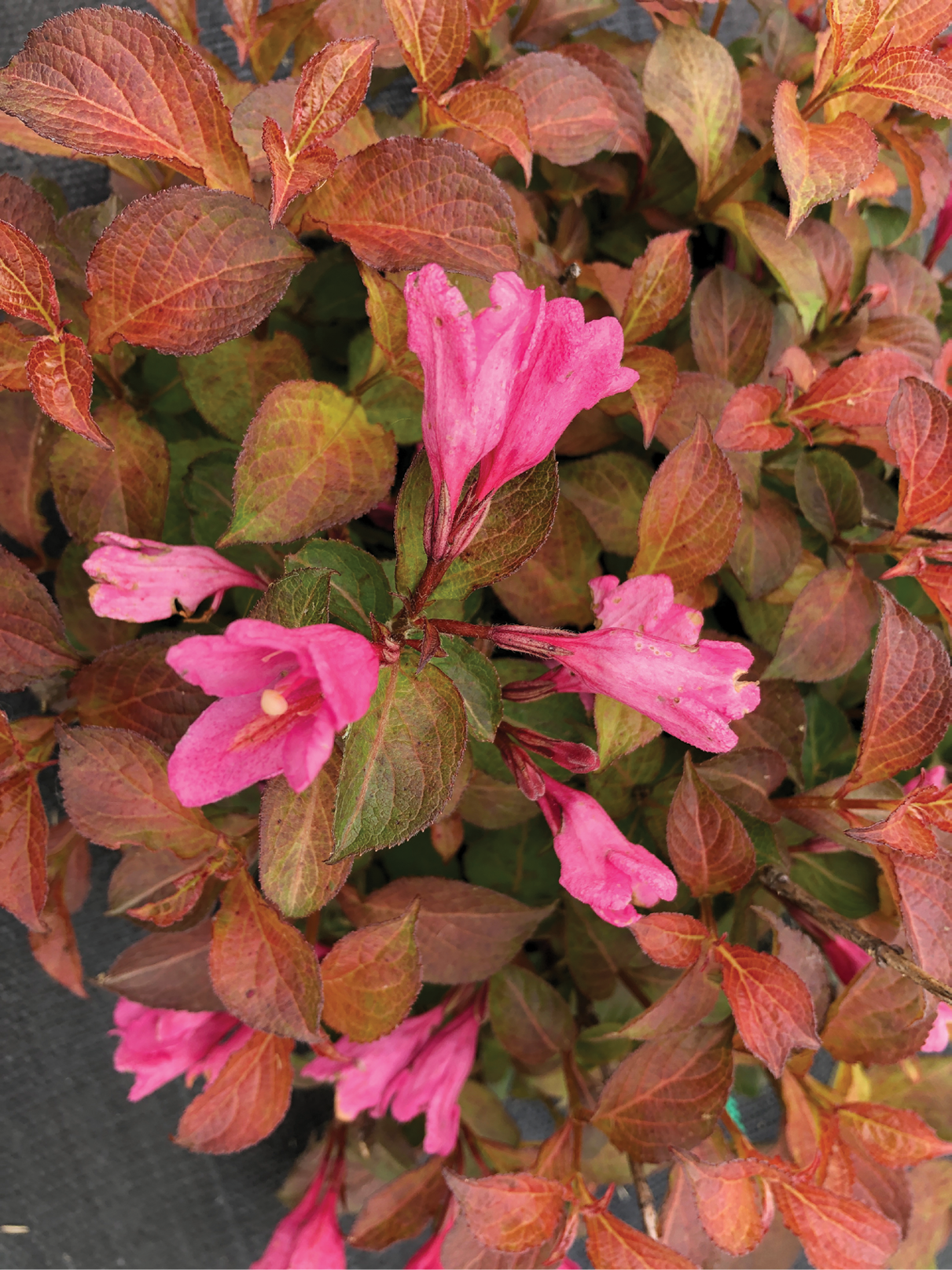
Weigela Midnight Sun (planted 2023)
This Weigela wowed us with its excellent overall appeal. Planted in 2023, Midnight Sun had no winter dieback in both the winters of 23-24 and 24-25. The flowers started to appear in early June and had a nice pink color of above average quality. Flowering continued through August and attracted pollinators. The foliage was rated above average and it was noted that there was a good flower to foliage ratio once flowering began. Overall, this plant had excellent overall appeal. Spring Meadow Nursery recommends Midnight Sun for summer foliage interest as the leaves present orange and red tones throughout the season.
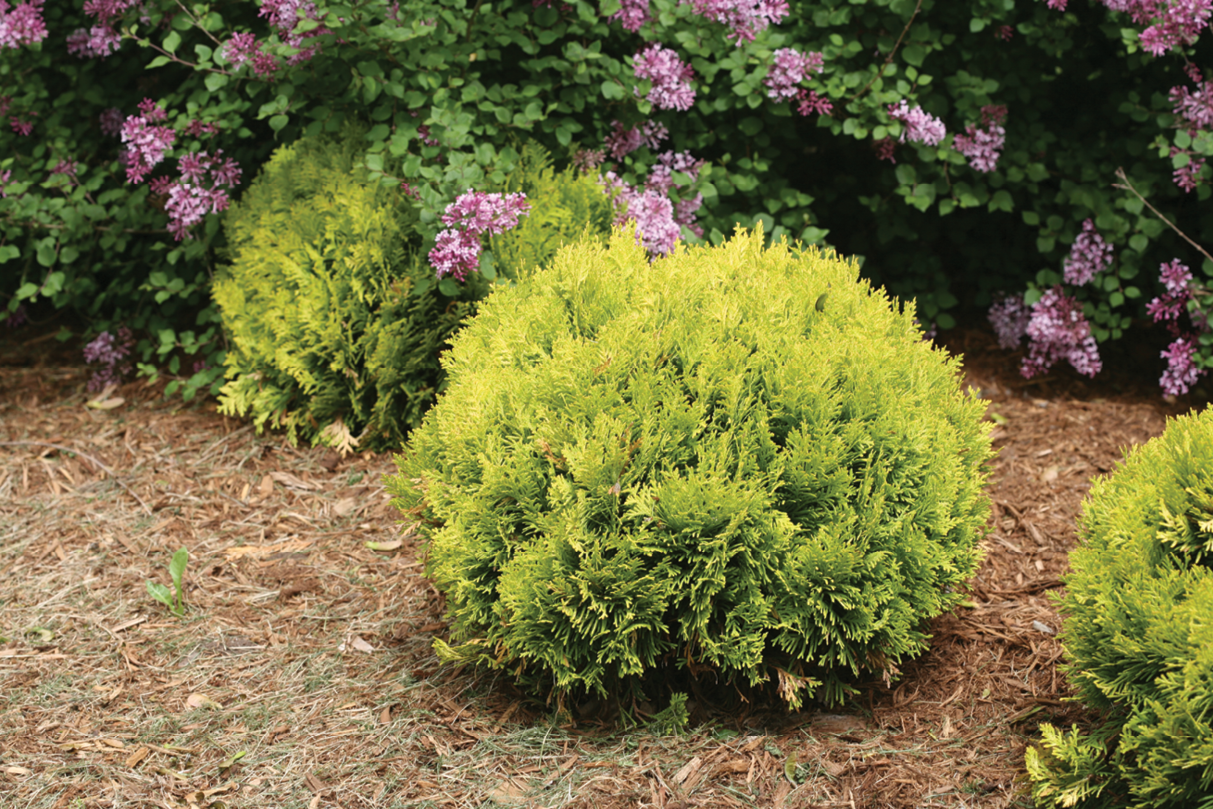
Thujaoccidentalis Anna’s Magic Ball (planted 2023)
Anna’s Magic Ball showcased above average foliage and uniformity without pruning. A color gradient was noted in mid-July, with lighter foliage framing the plant and darker foliage in the center. The plant kept its bright green color throughout the winter, making it a bright burst of color in our trial plot. Winter dieback was slight, with an average of 25% dieback in the winter of 23-24 but no winter dieback in 24-25. This indicates some winter protection might be needed during establishment. Spring Meadow Nursery recommends Anna’s Magic Ball for rock gardens, fairy gardens and containers.
More than shrubs
The WCROC shrub trials are only one part of the WCROC horticulture program. Additional trials of annuals, perennials and roses are conducted each year. Annual trials are publicly visible in the Horticulture Display Garden. The Garden has free admission and is open to the public every day of the week from sunrise to sunset.

Explore the May 2026 Issue
Check out more from this issue and find your next story to read.
Latest from Nursery Management
- The Growth Industry Episode 14: Meet Lionel van der Walt, AmericanHort's new CEO
- Growers and suppliers say BFG Supply Co. will close
- Stemmer from BioWorks
- BioWorks introduces Stemmer silicon-based plant health solution
- Silver Fern awarded grant to expand AI-powered demand planning for greenhouse, nursery growers
- All-America Selections announces first three new AAS Winners for 2027
- 2026 Special Recognition Award recipients announced at PPA National Symposium
- [WATCH] July issue recap