Adobe Firefly
In February 2026, I presented hydrangea and noble tree lectures to the Pennsylvania Nursery Landscape Association in Gettysburg. The audience was composed of landscape architects, designers, growers, and landscape contractors. Universally, the response to any new Hydrangea macrophylla was the degree of remontancy and/or cold hardiness. The Endless Summer series continues to dominate and the legacy/heritage cultivars, Everlastings, Magicals, and Forever and Evers have essentially disappeared from retail/landscape commerce. I envision fewer H. macrophylla introductions moving forward.
The most notable recent trend in hydrangea breeding/introduction is the ascendancy of H. paniculata. ‘Grandiflora’, introduced ~1867 from Japan, dominated in the Midwest and New England.
For many years, it was the only readily available commercial cultivar. In the 70s, 80s, 90s, the de Belders, Belgium, bred and introduced ‘Brussels Lace’, ‘Burgundy Lace’, ‘Pink Diamond’, ‘Unique’ and others. In succession, came Quick Fire (‘Early Sensation’, 1995) and ‘Limelight’ (patented 2001), the latter dominating for the 20-year life of the patent and still popular. Little Lime was introduced in 2007 and, thereafter, introductions have been rapid fire, primarily from Spring Meadow, Van Belle, Bailey and Star, many bred in Europe, specifically France and the Netherlands.
A logical question to ask is why the increase in H. paniculata. Resilient, reliable, cold hardy from Zone 3/4 to 8, flower on new growth, with a range of sizes to “fit” any garden space, would be my first thought. Commercial landscapes have adopted H. paniculata as the go to summer flowering shrub.
Nurseries now stock more H. paniculata selections than H. macrophylla. Current breeding is focused on smaller plants and names such as Dragon Baby, Little Spooky, Little Sparkle, Little Fraise, Little Hottie, Groundcover Blush and Petite Cherry reflect the trend.
Read on for my thoughts on recent introductions, organized by type:
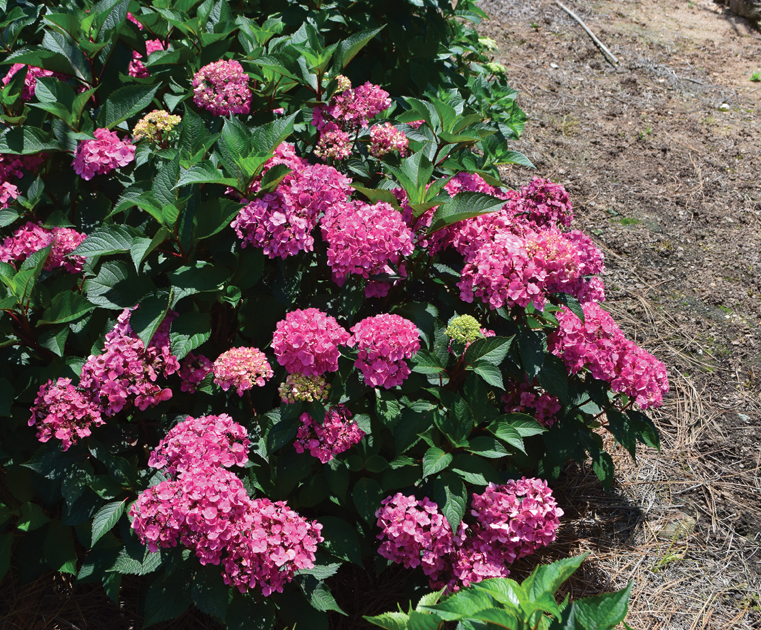
Hydrangea macrophylla
- *Let’s Dance Sky View – Remontant. An Endless Summer competitor. Did not rebloom at PII. Cercospora susceptible.
- *Let’s Dance Lovable – Remontant. Deep pink/rose mophead. Lustrous dark green foliage and red stems. Minimal Cercospora.
- Wee Bit Innocence – Pink mophead. Ordered for 2026.
- *Pop Star – Remontant lacecap. Bailey reported the fastest to rebloom after cutback.
- *Eclipse – Nonremontant, rose mophead, black foliage. A flopper. Jury still out.
- DreamCloud (2026) – Remontant. First true white mophead. This has garden legs. Pretty dark green foliage and strong stems.
- *Seaside Serenade Pebble Beach (2024-25) – Remontant. Raspberry to electric blue mophead inflorescences. Lustrous dark green, disease resistant foliage turns red in fall. Compact habit and strong stems.
- Centennial Ruby (2026) – Listed as remontant. Berry red flowers transition to steely black. European breeding. Dirr has doubts about remontancy.
- Drama Queen – Reblooming. Pink or blue flowers. 2 to 3 feet tall and wide, mounding form. Van Belle offers several European bred H. macrophylla cultivars.
 H. macrophylla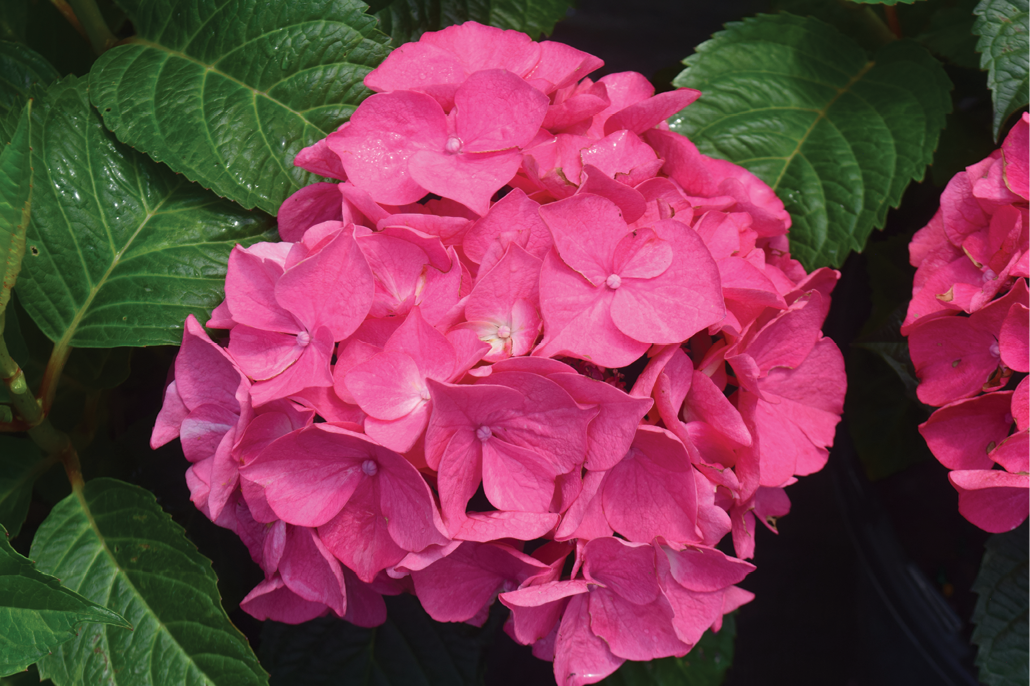
Hydrangea paniculata
- Bubble Bath – Compact, 2 to 3 feet high. Lime/cream flowers turn light pink in fall. Prolific flower production.
- Hot Sauce – Compact, 2 to 3 feet high. Cream flowers turn pink/red in early summer through fall.
- Groundbreaker series – From Alex Schoemaker, Living Creations, Netherlands. Blush, Greeny and Ruby are the initial releases. Described as 1 to 1.5 feet high and 2 to 2.5 feet wide. Flower for 100 days. Not available in U.S. yet but on their way.
- Petite series – Small, compact plants to ~3 feet high and wide. Beautiful flowers are borne aloft on strong stems. Our hydrangea tour group witnessed the following three at Signature Hydrangeas, Kent, U.K., last July. Roger Butler, owner, shared Petite Flori with Dorte Wohmann-Schmieta. I am propagating and will share plants with AHS members. The Petite series originated in France.
- Petite Cherry – Dense, compact. Large lime green panicles open in summer, turning red in September.
- Petite Flori – Compact habit. Large, conical clusters of white flowers open May to September, turning pink then dark red in fall. The peduncle and pedicels (stalks) of the inflorescence are beautiful red, contrasting with the glistening white sepals.
- Petite Star – Small, compact habit. Large panicles open lime green, then pure white, transitioning pink, then red in fall.
- Spring Sizzle – One of the earliest blooming panicle hydrangeas. In early summer, Spring Sizzle is covered in white flowers that quickly transform to deep red, even in warm regions. Plus, the inflorescences are held on strong stems. Mature 4 to 6 feet high and 4 to 5 feet wide.
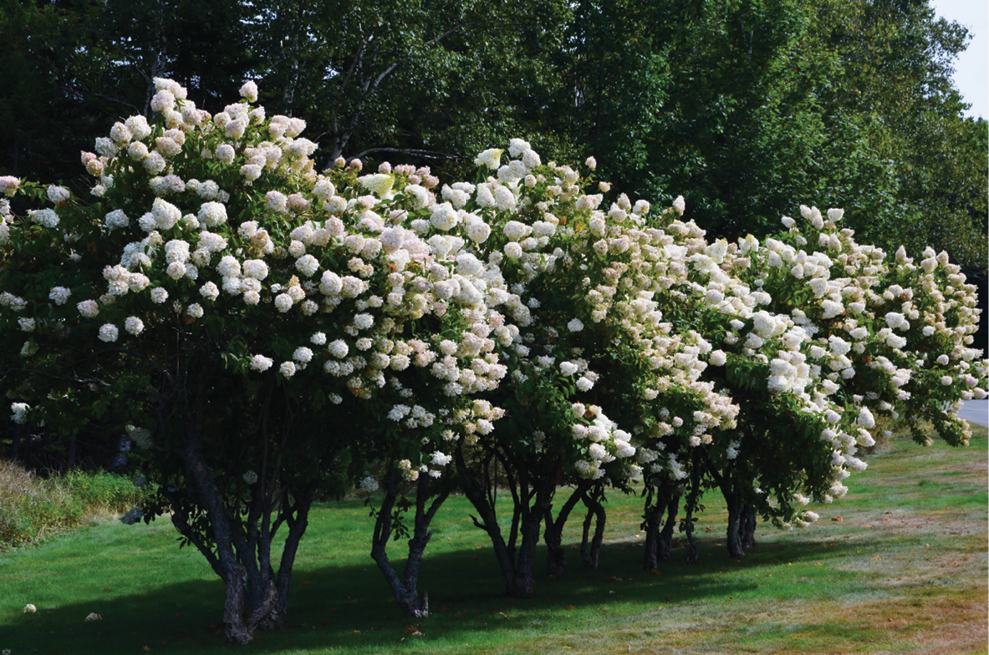
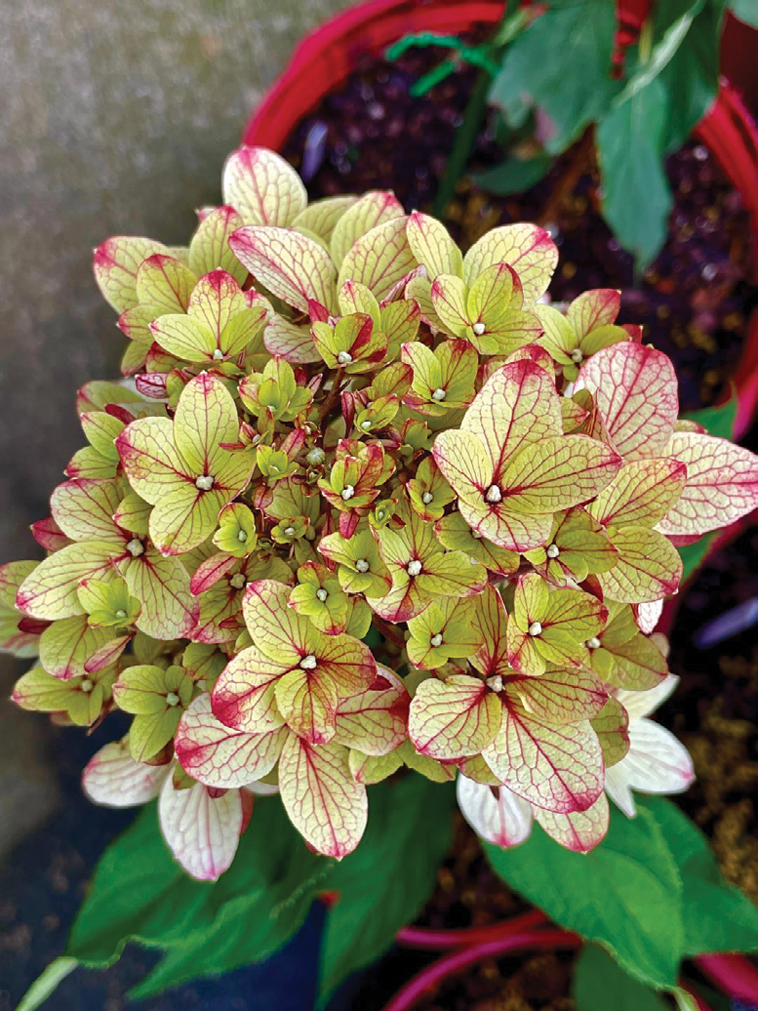
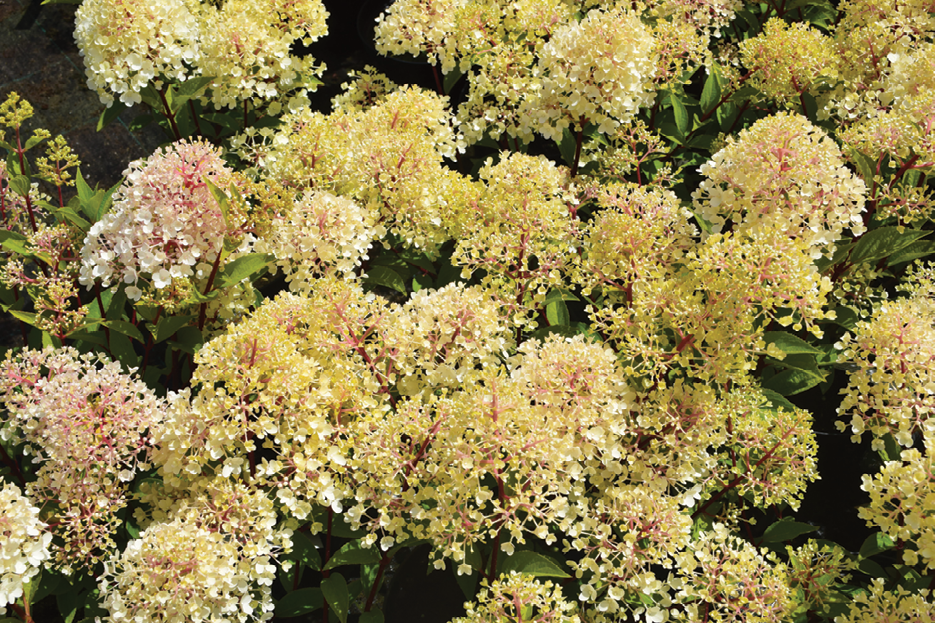
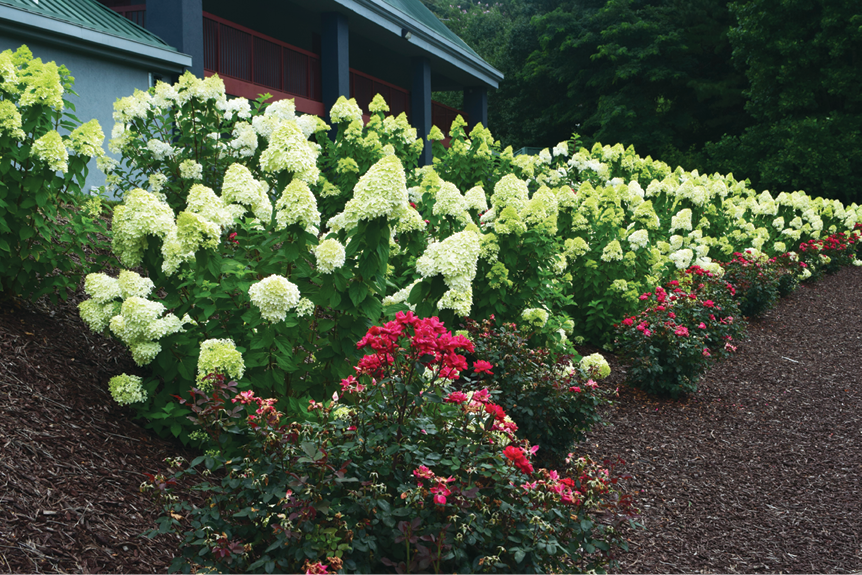
Transformational H. paniculata breeding from Virginia. I did not believe it was possible to breed the crayon box into sepals of H. paniculata, but it happened.
Hydrangea arborescens
- *Invincibelle Lace – White sepals, pink fertile flowers.
- *Invincibelle Sublime – Green mophead.
- Incrediball Storm Proof (2025) – More compact than original. White mophead.
- Wee White 2.0 (2026) – Pure white compared to dirty pink-white of the original.
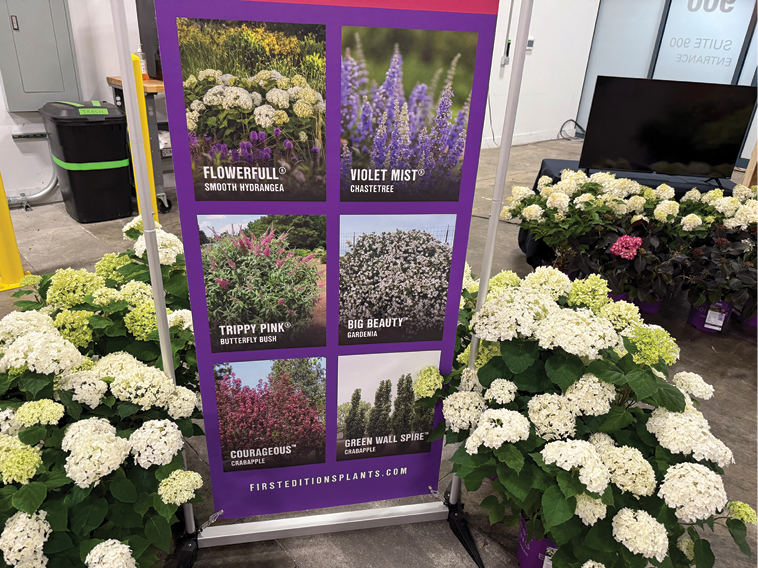
- *Flowerfull (2025) – Compact, strong stems, white mophead. Inflorescence more open, not as uniform, and sepals not as glistening white as Annabelle.
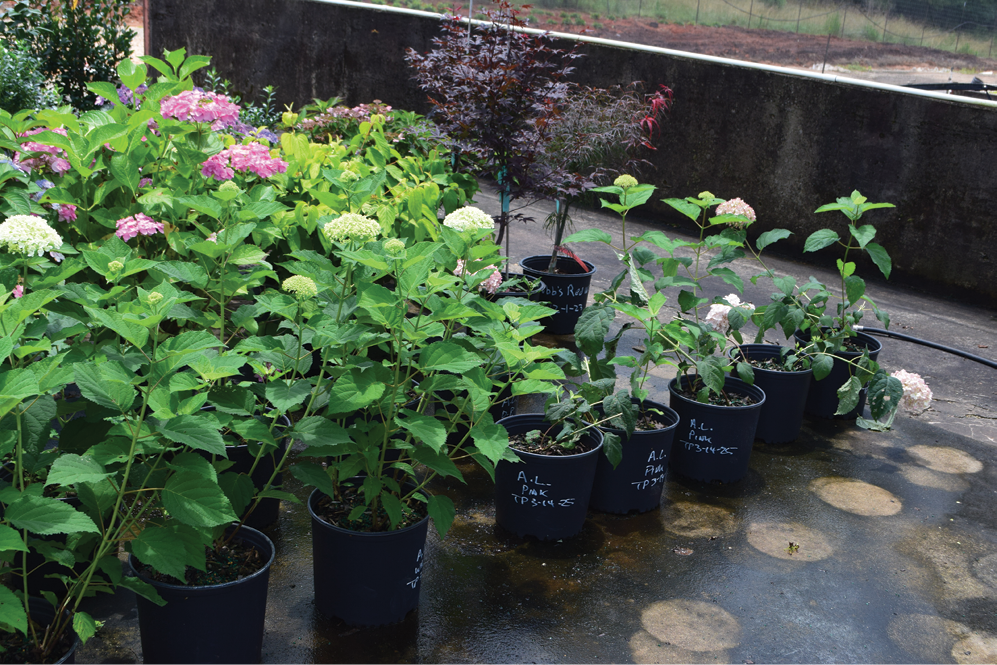
- *American Lace White (mophead) (2025) – Average. Bit floppy. Light green foliage.
- *American Lace Pink (mophead) (2025) – Light pink and very weak stems.
- *American Lace Dark Pink (mophead) (2025) – Reluctant to grow at PII. Susceptible to bacterial leaf scorch.
Hydrangea quercifolia
- *Alice N’ Wonderland – More compact version of ‘Alice’.
- *Autumn Reprise – Supposedly reblooming. Unacceptably high Cercospora infection at PII. Tall gangly habit. Yet to flower.
- *Gatsby Glow Ball (2025) – Clean foliage. White to pink flower. Mid-size shrub.
- *Li’l Annie (2024) – Clean foliage. No flower yet. Extremely compact habit.
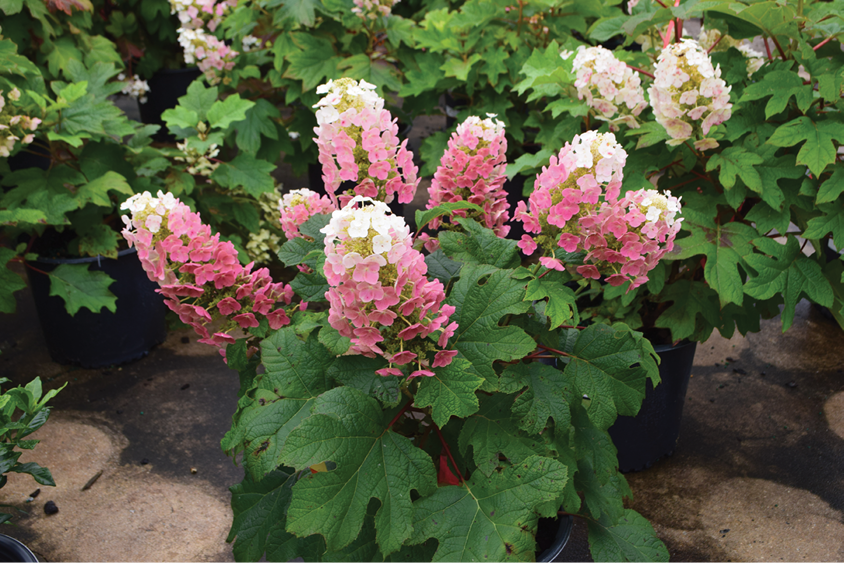
- *Ruby Slippers – Compact. Strong stems. White to deep pink flowers. Dark green foliage. Deep burgundy fall color. Disease resistant. A gem.
- *Toy Soldier – Weak constitution. Small, open, feeble inflorescences. Cercospora susceptible.
Hydrangea serrata - Mountain Hydrangea
These are the best of the more recent introductions.
- *Tiny Tuff Stuff – Original semidouble lacecap. Considered the hardiest. Successful in Chicago.
- *Tuff Stuff AH-HA (hybrid) – Beautiful double lacecap, the sepals extremely showy.
- *Tuff Stuff Top Fun – Single pink lacecap.
- *Let’s Dance Arriba (hybrid) – Mophead. Have not been impressed.
- *Let’s Dance CanDo (hybrid) – Mophead. Have not been impressed.
- Seaside Serenade Outer Banks (hybrid) – When the legacy cultivars at the Cape Cod Hydrangea Society garden did not flower, this was the star performer.
- *Pink Dynamo – Single pink lacecap. Prolific flowers. Thick dark green foliage turns purple black in fall. Mildew and Cercospora resistant.
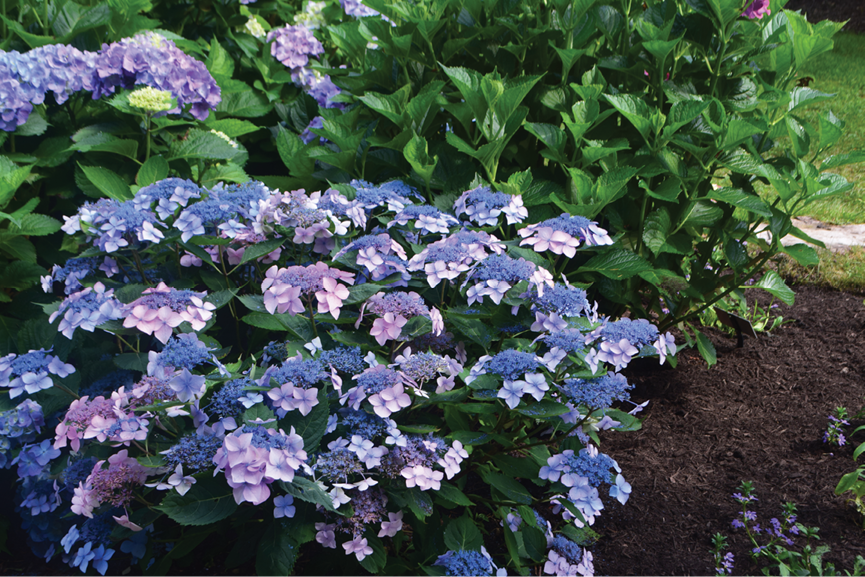
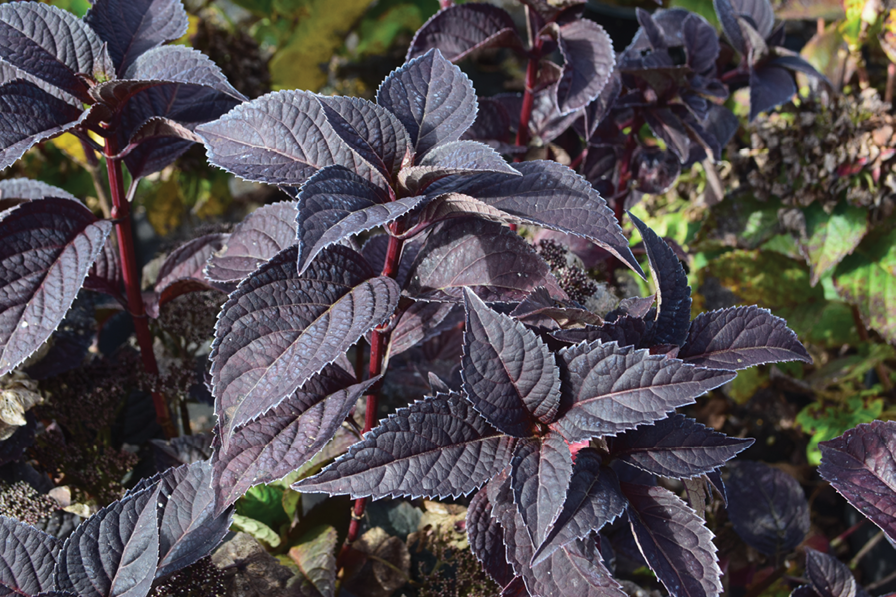
Essentially no rebloom at PII on the above selections.

Explore the May 2026 Issue
Check out more from this issue and find your next story to read.
Latest from Nursery Management
- The Growth Industry Episode 14: Meet Lionel van der Walt, AmericanHort's new CEO
- Growers and suppliers say BFG Supply Co. will close
- Stemmer from BioWorks
- BioWorks introduces Stemmer silicon-based plant health solution
- Silver Fern awarded grant to expand AI-powered demand planning for greenhouse, nursery growers
- All-America Selections announces first three new AAS Winners for 2027
- 2026 Special Recognition Award recipients announced at PPA National Symposium
- [WATCH] July issue recap