Photo © Maria Sbytova | Adobe Stock
Editor's Note: This article originally appeared in the February 2026 print edition of Greenhouse Management under the headline “Looking back and moving forward.”
For growers to understand what’s in store for the greenhouse industry, it’s important to understand how their customers are faring.
We’ve compiled the most critical data from State of the Industry reports from our sister publications Garden Center and Lawn & Landscape magazines that will shed light on the business health and confidence of those who rely on the plants growers offer.
While profits for these industries remain positive, the garden center industry may be correcting from pandemic-era highs. Meanwhile, in the landscape industry, there is an indication that more businesses than usual will be changing hands over the coming year. See additional important insights below.
State of the garden center industry
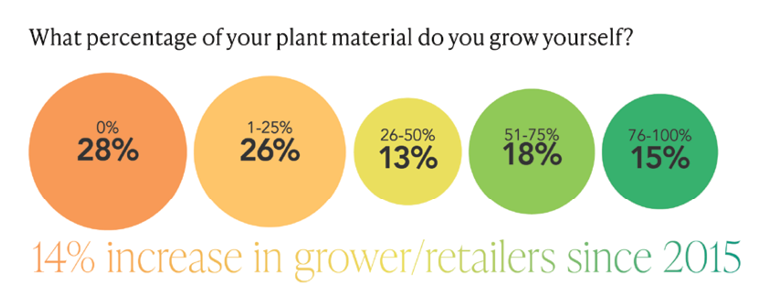

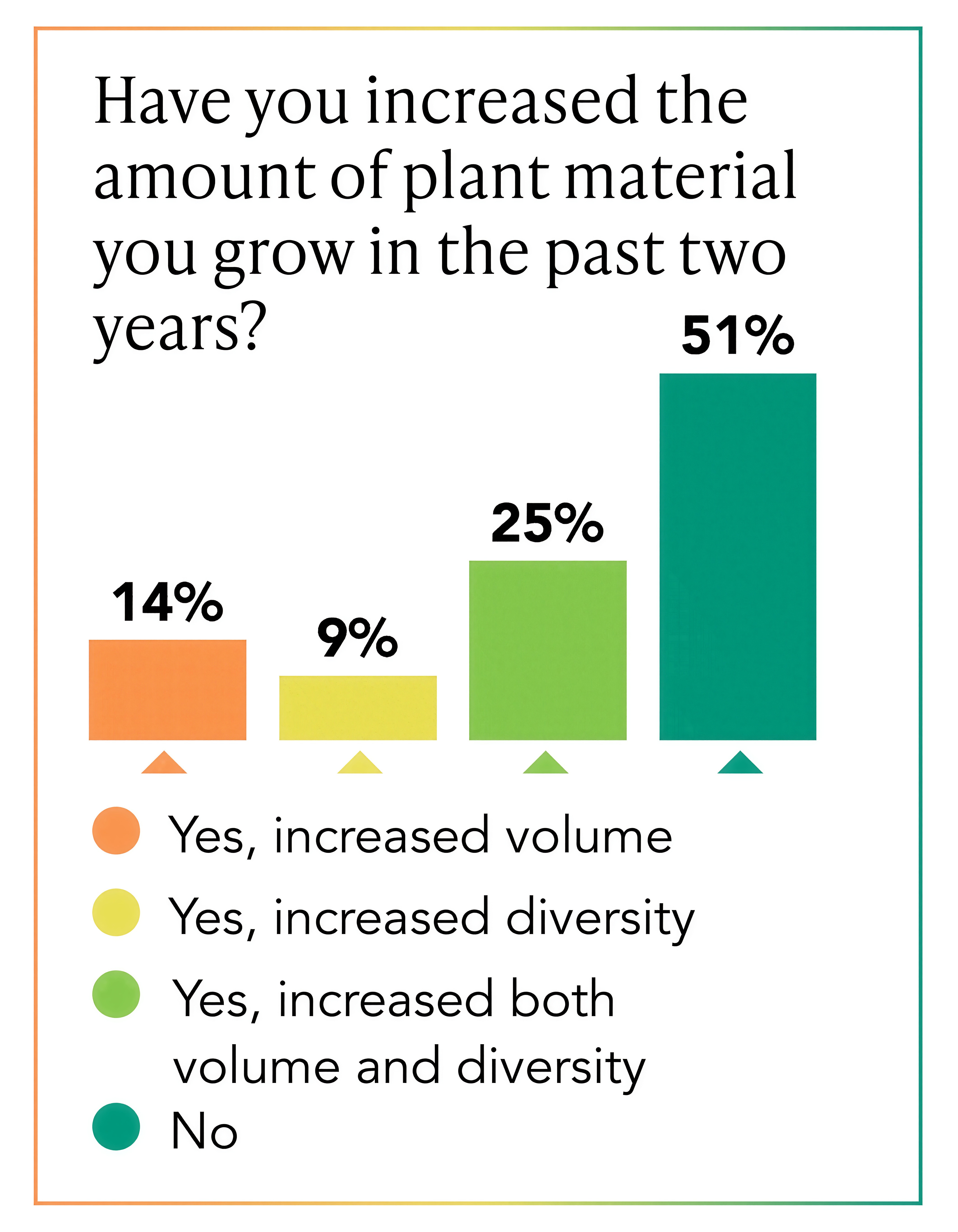
Of the retail-grower respondents, 51% say they have not increased the volume or diversity of what they grow in the last two years.
This percentage has been steadily ticking upward in the last few years, indicating that while there may be more retailers getting into the growing game, those who are already growing may be content with what they have rather than looking at expanding their operations.
But digging deeper, the data suggest that the more plant material a retailer grows, the more likely it is they reported increasing volume, diversity or both in the last two years.
It’s possible that this reflects retailers who already grow a significant portion of their plant material are deciding to grow even more. It also might be that grower-retailers who are all-in on growing are more invested in reacting to customer demand.

When looking at what retailer-growers are nurturing in their greenhouses, annuals have taken the lead at 62%, with perennials a close second at 59%. Those two categories have switched positions from 2024’s report, when perennials were at the top of the list.
There has been a 6% increase in those growing vegetables and herbs from 2024 to 2025, with 53% of this year’s respondents reporting they grow them. This category has been increasing substantially in recent years and could be due to skyrocketing food costs in the grocery store driving customers to grow their own fresh produce.
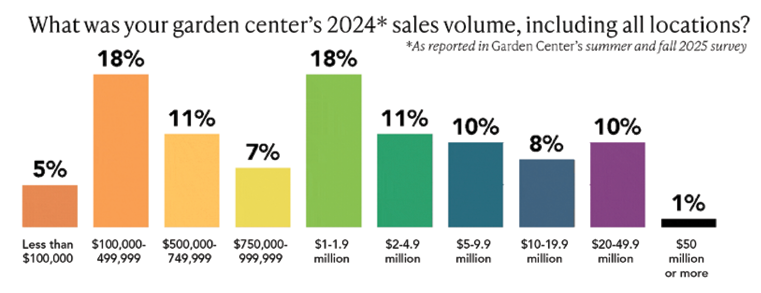
As in previous years, sales volume has been growing toward and consolidating around the $1 million to $2 million range. As in the 2024 report, about 40% of the respondents had a sales volume above $2 million.
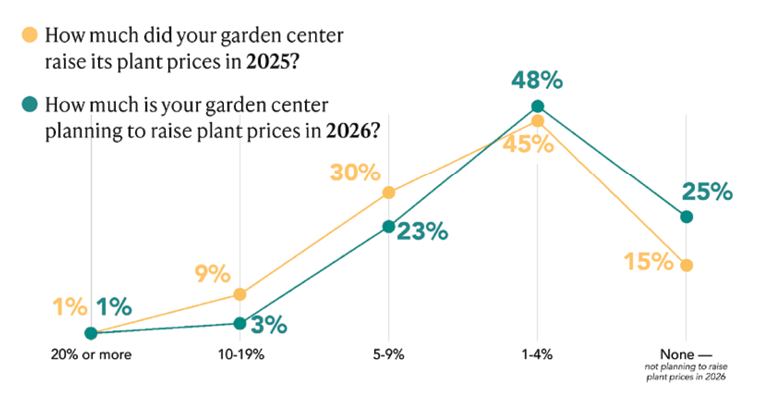
A full 75% of garden centers who took the 2025 survey raised plant prices between 1 and 10% in 2025. That is about on par with the previous year.
However, in comparing 2024 to 2025, there was a 4% decrease in garden centers who reported raising prices 10% or more. In 2025, only 10% of garden centers raised prices at those higher levels, despite the fact that 13% said they the planned to do so in the 2024 report.
But more garden centers raised prices any amount in 2025 than had planned to do so in the 2024 report. While 18% in the 2024 survey said they did not plan to raise prices at all in 2025, the actual number who kept prices the same was 15%.
Far more respondents than in previous years say they do not plan to raise plant prices in 2026. Given the soft spring sales and average profits, this figure could be due to concern that customers who are experiencing continued affordability issues may decide not to buy when faced with higher plant prices.
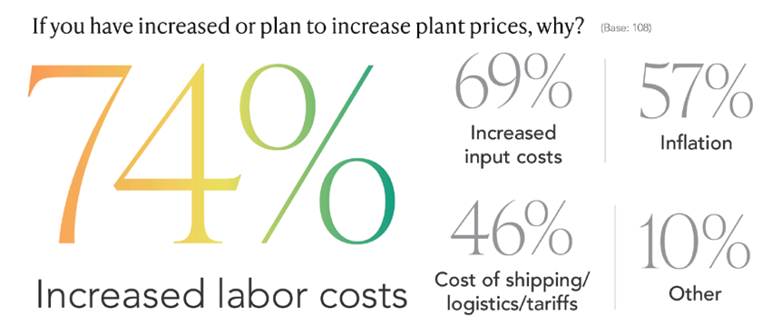
When looking at the 85% of reporting garden centers who did opt to increase plant prices, their reason to do so was most likely due to increased labor costs.
State of the landscape industry
The results of the 2025 Lawn & Landscape State of the Industry survey across the board remained similar to 2024’s survey in many areas.
One significant change came in the percentage of people who anticipate their business will be sold in the next 10 years. In 2024, 25% anticipated a sale, while in 2025, 36% percent expect they will sell. In the previous 12 months, 54% of respondents said they have been approached about selling their company, compared to 44% in the 2024 report.
Here are a few more stats that may pique the interests of the greenhouse industry:


The lawn and landscape data presented in this report was originally published in the October 2025 print edition of Lawn & Landscape magazine. The garden center data in this report was originally published online in January 2026 at gardencentermag.com.
GARDEN CENTER METHODOLOGY: Garden Center magazine surveyed more than 140 readers who are independent garden center owners, operators and managers. Survey responses were collected in summer and fall 2025. Not all percentages add up to 100% due to rounding, non-responses and some questions allowing respondents to select multiple answers. A base is provided for questions that received fewer than 140 responses.
LAWN & LANDSCAPE METHODOLOGY: Data for this survey was collected from June 17 to July 15, 2025, and is based on 193 responses. The margin of error for percentages based on 193 landscape contractors/lawn care operators is ±7.0 percentage points at the 95% confidence level. Not all results equal 100% due to rounding.
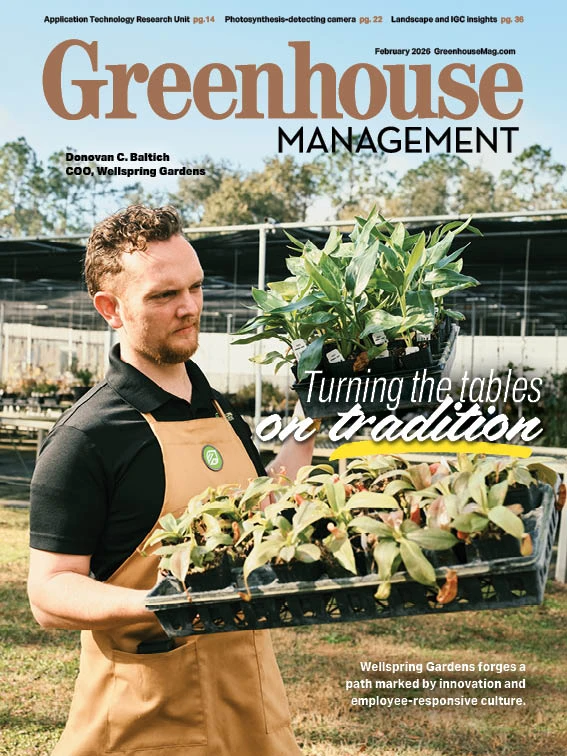
Explore the February 2026 Issue
Check out more from this issue and find your next story to read.
Latest from Greenhouse Management
- The Growth Industry Episode 17: Investing in IGCs with WorryFree® Plants
- New UF study sheds light on the hidden toll of back pain among horticulture workers
- 2026 Irrigation and Automation Market Report: Tradition rains
- Empowering the Future of Precision Cultivation: Resource Efficiency, Root-Zone Science and Scalable Automation
- Oasis Grower Solutions hires plant scientist Timothy Frey
- New green industry leadership development program for women now available
- Clean production protocol
- Jiffy hosting Microgreens Grower Day