Photos © Roger Mastroianni
Editor's Note: This article originally appeared in the May 2026 print edition of Greenhouse Management under the headline “Arid awakening.”

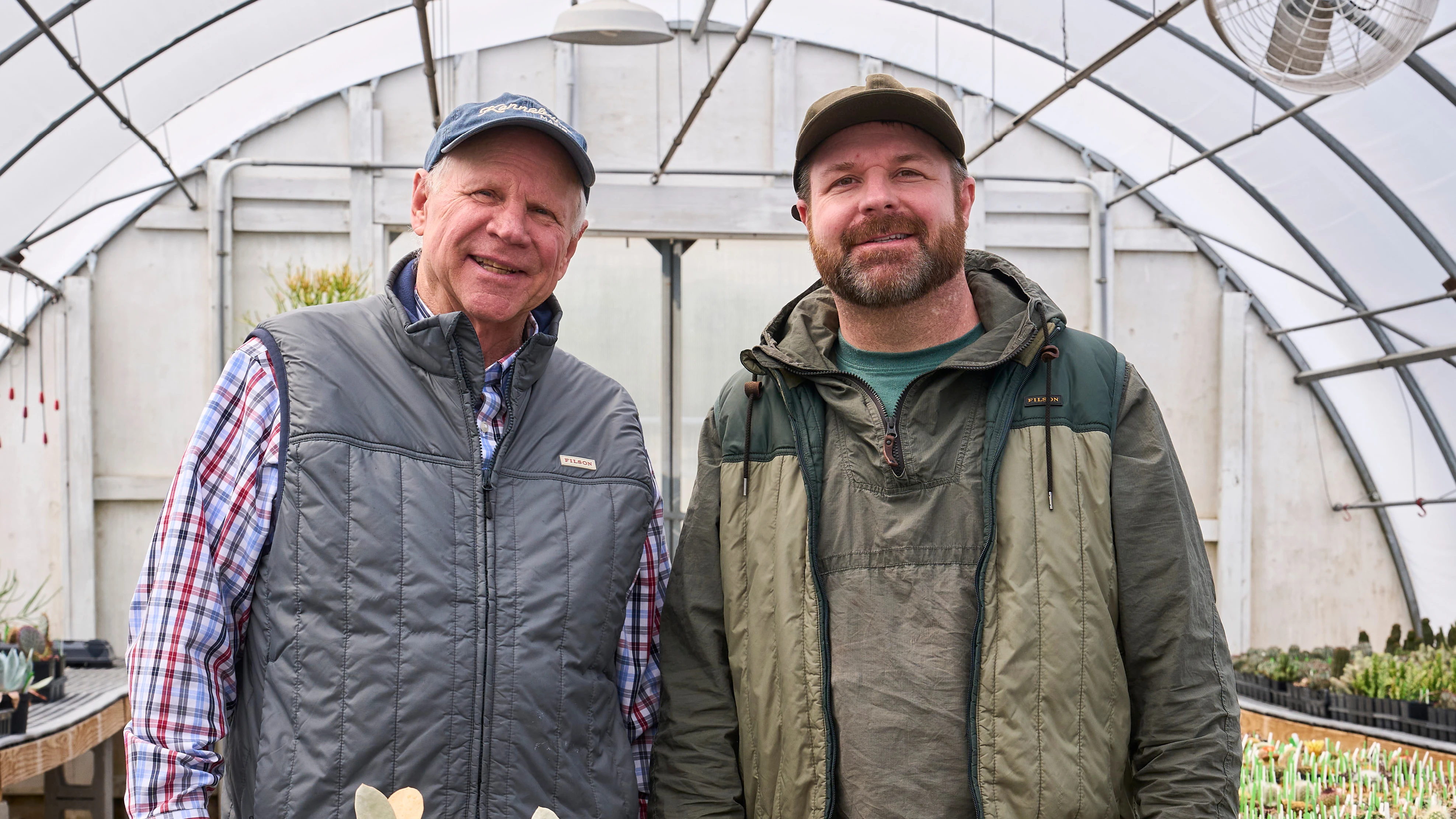
In Mentor, Ohio, where suburban development has steadily replaced the region’s once-dense network of nurseries, Havel’s Flowers & Greenhouses stands for its 90th year.
Once dedicated solely to flowers, with a florist’s shop in front of the greenhouses, the family business has evolved into a regional destination for cactus and succulent enthusiasts with the third generation of family growers, Jeff Havel.
Founded in 1936 by Jeff’s grandfather, Joseph Havel, the business began as a modest horticultural venture while the founder worked at the U.S. Post Office. Over the decades, it grew alongside the community, adapting to shifting consumer habits and young Jeff’s early interest in drought-tolerant, visually striking plants: succulents and cacti.
Now with three 100-foot hoop houses on the 4-acre property, tucked between tightly packed neighborhoods and strip malls, Jeff spends his days tending to the plants he all but forced his father, current owner Mark Havel, to allow in the greenhouse. After a boom in popularity, the shop sells more succulents and cacti than Jeff can count.
“I always like to say a few thousand,” he adds.
Start ’em young
As he puts it, Jeff’s connection to plants spans “pretty much my whole life,” he says. “I was born in ’79 and was coming to the shop and either hanging out or helping out as a kid.”
That early exposure shaped not only his work ethic, but also his fascination with horticulture. Jeff recalls the simple cactus dish gardens his father used to purchase. For the young Havel, the appeal went beyond the plants themselves.
“I was always obsessed with these cactus gardens,” he said. “There’d be a Haworthia in there and then a ceramic toy — a cow skull or a cowboy hat or a wagon wheel. I’d wait for one where a plant didn’t make it so I could take it apart and pot each plant up individually.”
A later visit to the greenhouse of Bill Hendricks — the longtime nurseryman and former Midwest Cactus and Succulent Society president— only sealed the deal.
“It was just packed with cactus and succulents,” Havel says. “He’d been collecting since he was a kid. That gave me a huge inspiration to start a collection greenhouse and build something like that.”
That hands-on experimentation — dividing plants, repotting them and eventually selling them — laid the foundation for what would become a full-scale production and retail program. And, in fact, Jeff still holds on to the first ceramic cow skull he found in that cactus garden as a kid. Customers might notice it when visiting Havel’s, shifting from plant to plant as Jeff sees fit.
Sharing a vision
The father-son duo strike a good balance in the greenhouses, with Jeff taking over two of the property’s spaces from around early fall to mid-April, when he needs to make room for Mark’s annuals.
“He has been more than cool about the succulents since we started,” Jeff says. “He was excited, but he also wanted the greenhouse space for his annual sales in the spring. He brings in plants from Florida, like dipladenia and mandevilla in mid-April. So, we work together. I have my plant sales for succulents — we’ll generally sell a good number of plants out of the greenhouse — then I’ll give Dad half of that greenhouse for the annuals.”
The remaining months are Jeff’s time to shine: propagating, grafting and eventually selling a staggering variety of plants, particularly the popular succulents Echeveria and Haworthia, as well as cacti like Hylocereus.
Come late March, Jeff hauls his work to the annual Midwest Cactus and Succulent Society Show and Sale, where cactus and succulent gardens, individual plants and hanging baskets are sold by the thousands.
Divide and conquer
With succulent popularity booming over the last decade, Jeff has no shortage of sourcing options, ranging from friends and society members to larger suppliers on the West Coast and overseas.
“There’s so many different varieties of things, so it’s taken me some years to kind of build up who I’m going to get what from,” Jeff explains. “I’ve met some really good growers out in California like Fleurizon International — they deal all over the world — and locally, like Bill (Hendricks) out of his collection. He brought us all these Haworthias.”
While sourcing plays a large role, much of Havel’s inventory is produced in-house through propagation.
“Most of what we do is from either cuttings or division,” Jeff says. “Cuttings can root in less than two weeks in the heat of summer.”
Division — splitting mature plants into multiple rooted sections — offers an even faster turnaround. “The divisions are already rooted,” he explains. “So, they’re ready to go almost immediately.”
Then there are the more specialized plants, including variegated specimens, where grafting becomes a critical piece of the puzzle. This fickle practice, often used by arborists, gives Jeff some control when looking for specific traits and speeds up growth dramatically.
“We don’t do a ton of it, but it’s a really useful tool for certain plants,” Jeff says. “People are looking for variegated stuff, plants that have yellow and green or different colors. That’s become really popular.”
The process begins with selecting a vigorous rootstock — most commonly Hylocereus for the cacti — and a desirable top portion of another plant, known as the scion. Both are carefully cut, and their vascular rings are aligned to ensure a successful union.
“You slice the understock across the top with a razor blade, and then you slice the scion the same way,” Jeff explains. “Then you line up the vascular bundles — those little circles — and hold it together, usually with rubber bands.”
Jeff says he can see the success or failure of the graft in just a few days. When it’s successful, the scion grows at an accelerated rate.
“You’ll see the two cuts kind of fuse together,” he describes. “There’s a healed callus around the edges, and then you wait a little longer to see if it starts growing. The understock really inflates the top of the plant very quickly, and it pushes growth much faster than if it were on its own roots.”
The technique proves especially valuable for those slow-growing and variegated varieties, which can take years to size up naturally. By grafting, Jeff can bring plants to market more efficiently while maintaining desirable traits. And, in some cases, grafted plants remain intact for years.
“I’ve got some that have been on there four or five years, and they’re huge,” he says. “We have to stake them up. If it’s something we want to grow out and then cut off, it might be eight months to a year. It just depends on the variety and how fast it grows.”
Despite its advantages, grafting is not always predictable, Jeff admits.
“It can be kind of hit-or-miss. Sometimes the scion shifts or the rubber band pops off, and you lose it,” he adds.
Still, for a greenhouse focused on offering both accessible and collector-worthy plants, grafting bridges the gap between patience and production, allowing Havel’s to bring unique specimens to shows year after year.
“We want to have stuff for everybody,” Jeff says. “From like $5 plants all the way up to $80 or $90.”
The rarer the plant, the higher the price tag, Jeff explains, with specific plants sometimes reaching hundreds or even thousands of dollars in global markets.
“It’s like anything else,” Jeff adds. “Once you start getting into unusual varieties, that’s where it becomes more of a collector thing.”
Keeping up with the trends makes Havel’s multi-channel approach to sourcing and growing essential. The operation works with suppliers in California, importing material internationally and integrating plants from Jeff’s own collection or fellow growers like Hendricks.
“Even members of the club will bring in a plant that’s grown a pup and share it,” Jeff says. “That way if something happens to theirs, someone else still has it.”

Less is more
Despite the complexity of a process like grafting, day-to-day plant care is relatively hands-off — with a simple greenhouse setup to match.
“These types of plants don’t need a lot of fertilizer really at all,” Jeff explains. “There are times where we don’t fertilize much at all.”
For growing media, Jeff prioritizes drainage and aeration, utilizing perlite and pumice in the mix that “helps keep everything from staying too wet.”
“Bill (Hendricks) says that he thinks the variegation happens because of the pumice,” Jeff says, adding that the pumice, sourced from the West Coast, costs more for shipping than the price of the relatively cheap material itself.
As one might imagine for desert-dwelling species, watering practices follow the same low-input philosophy. At the greenhouse, watering frequency is minimal during winter — often just once every two weeks — before increasing in spring as growth resumes.
“For customers, the biggest thing is to water only when the soil is bone dry,” Jeff warns. “Then water thoroughly and let it dry out again.”
The greenhouses utilize double-layered, air-inflated poly to improve insulation and light diffusion. Inside, the environment is carefully managed, though not overly controlled.
“Humidity is kind of what it is,” Jeff says. “We have stone floors and water moving through, so it creates a decent amount, but we haven’t had problems with it.”
Greenhouse temperatures range from 50 to 60 °F.
“Some people grow colder, but we want to keep things growing a little,” Jeff says.


Old habits die hard
Beyond production, presentation plays a significant role in the business’ appeal. Over the last few years, Jeff has developed a passion for pottery, creating custom containers that complement specific plants. Customers might notice specific pots resembling tree stumps or hollowed-out branches.
For these, Jeff takes black clay and paints over it with a milky clay slurry known as white slip. He blowtorches the slip and brushes it with sodium silicate, which dries the skin of the clay before he stretches it while the clay is still malleable. This forms various lines and cracks, similar to bark on a tree.
“Matching the pot to the plant is a big part of it,” he says.
Decorative elements — funky pots, geodes and, of course, ceramic skulls — add a layer of visual storytelling that traces back to his earliest experiences in the greenhouse.


The boom
Although Jeff had been growing and collecting succulents for years, the mid-2010s brought a surge in demand that accelerated the greenhouse’s focus.
That boom — fueled in large part by social media and changing lifestyle trends — transformed succulents from niche collector items into mainstream houseplants. Michael Rose, who joined Havel’s in 2016 as a grower interested in succulents, witnessed the shift firsthand.
The impact was immediate, particularly at the annual Midwest Cactus and Succulent Society Show and Sale, where Havel’s is now one of the largest vendors.
Held annually at the Cleveland Botanical Garden, the event has expanded from a small gathering to a showcase taking up a full building and featuring vendors, educational lectures, judged plant displays and community building.
“It used to be one room,” Jeff recalls. “Now, they give us the whole place.”
It was there, through the broader succulent community and shared passion for the plants, that the business’ working relationship with Rose took shape.
Now an essential part of the Havel’s team, Rose sees firsthand the scale of preparation required for a show like the society’s.
“We’re potting thousands of plants leading up to it,” he says. “At one point, we were bringing about 15,000 plants.”
“It’s a big deal,” Jeff adds. “You see the excitement people have for the plants. I remember one year, we completely sold out. “We came back (to the shop) and started potting up stuff out of my collection — plug trays, whatever we could — to take back down there. It was insane, but it was exciting.”


Honoring the past
As Havel’s carries on with its mix of floral legacy and prickly passion projects, the balance between tradition and innovation remains central.
The greenhouse still produces flowers, ranging from rose bouquets to African violets and cyclamen, but cacti and succulents have reshaped the business in lasting ways.
From a child dismantling a cactus garden to a grower supplying thousands of plants to one of the Midwest’s largest succulent events, Jeff’s journey reflects both personal passion and broader industry trends.
And for customers — whether they’re buying their first $5 plant or hunting for a rare collector specimen — that passion is evident in every corner of the greenhouse.
“They’re just fun plants,” Havel said. “And there’s always something new to discover.”
Explore the May 2026 Issue
Check out more from this issue and find your next story to read.
Latest from Greenhouse Management
- The Growth Industry Episode 17: Investing in IGCs with WorryFree® Plants
- New UF study sheds light on the hidden toll of back pain among horticulture workers
- 2026 Irrigation and Automation Market Report: Tradition rains
- Empowering the Future of Precision Cultivation: Resource Efficiency, Root-Zone Science and Scalable Automation
- Oasis Grower Solutions hires plant scientist Timothy Frey
- New green industry leadership development program for women now available
- Clean production protocol
- Jiffy hosting Microgreens Grower Day