Photo © Adobestock
Editor's Note: This article originally appeared in the October 2026 print edition of Greenhouse Management under the headline “Accountability is sexy.”
Somewhere along the way, accountability earned a terrible reputation. The word itself sounds like punishment. It sounds like someone sitting across from you with a legal pad and a disappointed expression.
It sounds like performance reviews, missed goals, awkward conversations and that deeply unpleasant phrase: “We need to talk.” No wonder people avoid it.
But I think we have accountability completely wrong. Accountability is not punishment. It is not blame. It is not catching someone doing something wrong and making sure they feel sufficiently terrible about it. Accountability is ownership. And ownership is sexy.
Stay with me here.
There are few things more valuable to a business owner or leader than someone who says, “I’ve got it” and actually means it. That person does not require 12 follow-up emails, three Teams messages and a casual conversation in the plughouse to make sure something happened. They do not disappear when the outcome is less than perfect. They do not suddenly develop a very detailed understanding of everyone else’s responsibilities when something goes sideways.
They own it. If they miss something, they tell you. If they need help, they ask. If something changes, they communicate. If they screw it up, they say, “That was mine.” And then comes the most important part: “Here’s what I’m doing about it.”
That sentence is basically business-owner foreplay.
Because you know what is decidedly not sexy? “Nobody told me.” “I thought someone else was doing it.” “That’s not my department.” “I sent an email.” “The customer never got back to me.” And my personal favorite: “I was waiting for you.”
The value of accountability is not that mistakes disappear. They won’t, especially in horticulture. We grow living products inside giant structures filled with water, weather, humans, machinery, insects, disease and occasionally questionable decision-making.
Things will go wrong. A truck will break down. Someone will miss irrigation. A crop will not finish the way we expected. An order will get entered incorrectly. A plug shipment will show up looking like it survived a bar fight. The forecast will change. The customer will change their order.
Perfection is not the goal. What matters is what happens next.
You can learn an incredible amount about the health of an organization by watching the first 10 minutes after someone realizes there is a problem. Do they hide it? Do they wait? Do they start building a defense case? Do they immediately explain why it was someone else’s fault? Do they quietly hope the problem will somehow solve itself before anyone notices?
Or does someone say, “Hey. We have a problem. Here’s what happened. Here’s what I know. Here’s what I don’t know. And here’s what I’m doing next.”
That person is gold.
The same thing applies to vendors. A great vendor relationship is not defined by whether something ever goes wrong. It is defined by what they do when it does.
Call me before I have to call you. Tell me the truth. Do not make me discover a problem three days after you knew about it. Tell me what happened. Own your part. Tell me the plan to resolve it.
That is how trust gets built. A vendor who can own a mistake is worth considerably more to me than one who is always searching for someone else to blame.
The same principle applies to customers, although we talk about this one less often. We spend a lot of time discussing what vendors owe customers. We spend considerably less time talking about what healthy customers bring to a business relationship.
The best customers tell you what is working and what is not. They tell you when their business is changing. They do not let frustration build for six months and then suddenly announce they are moving the entire program somewhere else. They participate in the relationship.
That does not mean the customer is always responsible for solving the problem. When something goes wrong, both sides should have an honest conversation about it.
But here is where accountability gets uncomfortable.
Owners and leaders love accountability right up until the finger points back at us. We are very good at seeing where other people dropped the ball. The employee missed the deadline. The manager did not follow up. The vendor failed to communicate. The customer changed direction. The economy softened. Labor costs increased. Freight went up. Weather happened. Mercury was probably doing something suspicious. There is always an explanation available.
But leadership accountability starts with a different question: What part of this belongs to me?
Did I clearly communicate the expectation? Did I actually define what success looked like? Did I give someone the authority to accomplish what I asked them to accomplish? Did I follow up appropriately? Did I change the priority six times and then wonder why the team seemed confused? Did I tolerate a behavior for eight months and suddenly decide today that I am furious about it? Did I create a broken process and then blame the person trying to operate inside it? Did I hire the wrong person and spend two years being angry at them for being exactly who they showed me they were?
Those questions are less fun, but they’re also where the growth is.

Because accountability and blame are not the same thing. Blame looks backward: Who screwed this up? Accountability looks forward: What happened? Who owns it? What happens next?
Blame usually creates defensiveness. Accountability creates clarity. Blame makes people hide mistakes. Accountability makes it safer to surface them. Blame says, “You failed.” Accountability says, “This result belongs to us. What are we going to do about it now?”
That distinction matters because accountability without grace turns into punishment. But grace without accountability turns into permission. Neither one builds a strong company.
Good leadership requires both. You can care deeply about people and still expect them to perform. You can understand why something happened and still require it to be corrected. You can hold someone accountable without humiliating them.
I would argue that real accountability is one of the clearest forms of respect. It says: I believe you are capable and your work matters.
If I am going to demand accountability from my employees, my vendors and my customers, I had better be prepared to model it first. That means owning my bad calls.
That does not mean everything that happens is my fault. It means I refuse to give away responsibility for what happens next. Accountability is not about finding fault. It is about refusing helplessness. It is the decision that even when circumstances are imperfect, someone is still willing to step forward and take ownership of the next move.
That kind of person is incredibly valuable. That kind of vendor becomes a partner. That kind of customer becomes someone you want to grow with. That kind of leader builds trust. And that kind of culture can survive a hell of a lot.
So yes, I said it: Accountability is sexy.
Because businesses do not need more people who can explain why something was not their fault.
We need people willing to say, “I’ve got it.”
And then prove it.
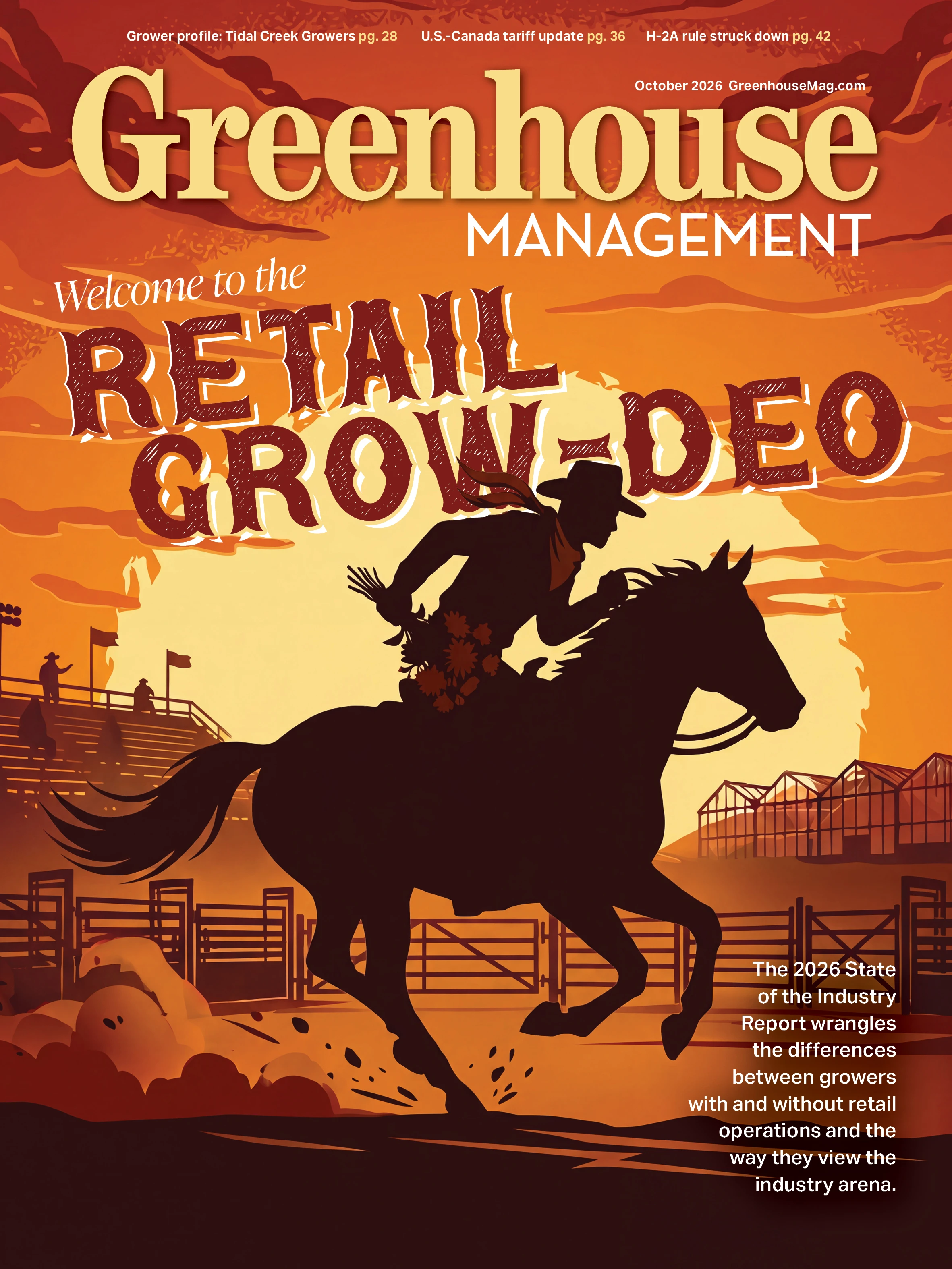
Explore the October 2026 Issue
Check out more from this issue and find your next story to read.
Latest from Greenhouse Management
- The Growth Industry Episode 17: Investing in IGCs with WorryFree® Plants
- New UF study sheds light on the hidden toll of back pain among horticulture workers
- 2026 Irrigation and Automation Market Report: Tradition rains
- Empowering the Future of Precision Cultivation: Resource Efficiency, Root-Zone Science and Scalable Automation
- Oasis Grower Solutions hires plant scientist Timothy Frey
- New green industry leadership development program for women now available
- Clean production protocol
- Jiffy hosting Microgreens Grower Day