Adobe Stock | Liudmyla
The U.S. Food and Drug Administration (FDA) released final guidance Aug. 11 to help manufacturers and processors of fresh-cut produce comply with the FSMA Current Good Manufacturing Practice, Hazard Analysis and Risk-Based Preventive Controls (PCHF) rule.
Fresh-cut produce can be particularly susceptible to contamination, which can be introduced in the environment where it’s grown, during transport, during manufacturing, when it’s commingled with other products or at retail, and the opportunity for contamination can be amplified through each of these steps as it makes its way to consumers, said FDA. Fresh-cut produce does not receive a kill step to eliminate pathogens that may be introduced during these processes, and most are sold ready-to-eat.
The guidance provides recommendations and examples of how the PCHF requirements can be implemented to protect fresh-cut ready-to-eat produce from contamination with biological hazards.
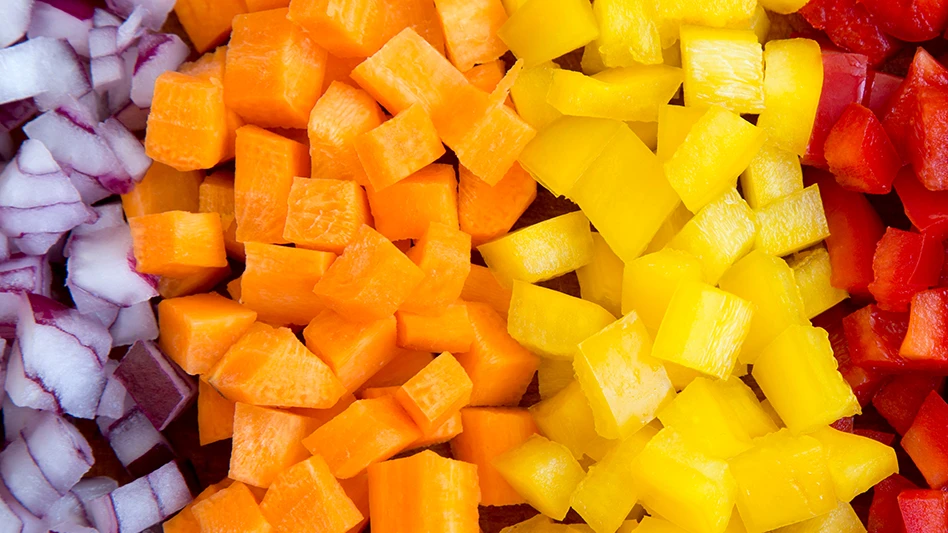
Fresh-cut produce includes any fruit or vegetable that has been physically altered from its whole state (e.g., by chopping, dicing, peeling, shredding) without additional processing (such as freezing or cooking) and distributed in fresh form. Examples of fresh-cut produce include chopped lettuce, cut cantaloupe, diced onions and shredded carrots.
The final guidance reflects public comments received on the October 2018 draft guidance and replaces the 2008 FDA fresh-cut produce guidance, said the agency.
Latest from Quality Assurance & Food Safety
- Ergodyne Introduces Two New Thermal Workwear Options
- Bipartisan Bill Would Expand Major Food Allergen Labeling to Barley, Rye and Oats
- FDA Proposes Mandatory GRAS Notifications as Agencies Advance Ultra-Processed Foods Definition
- Taylor Farms Recalls Products Made with Jalapeños Amid Salmonella Outbreak
- ‘When You Have 16,000 People Sick, It’s Hard to Ignore’: Marler, Detwiler Discuss Cyclospora
- Thermo Fisher Scientific Releases Thermo Scientific InstaFlux
- EU Updates Prompt New FDA, NOAA Seafood Export Certification Procedures
- FDA Identifies Recalled Jalapeños as Source of 345-Case Salmonella Outbreak