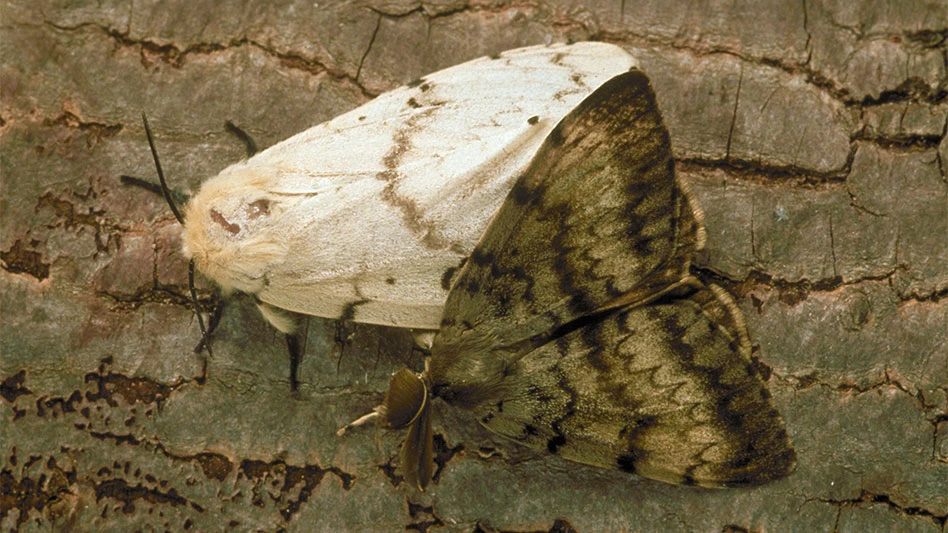

(left) spongy moth adults
USDA APHIS-PPQ (Adults), Bugwood.org
The spongy moth, Lymantria dispar (formerly known as the gypsy moth), was introduced to the U.S. in 1869 and has since become a serious pest of shade trees in the Northeast and Midwest. In some areas, it has changed the ecology of native forests, defoliating more than 13 million acres of woodlands in one season.
They are generalist feeders, happily devouring more than 450 species of plants. Oaks are the preferred host, but they also feed on alder, apple, aspen, beech, birch, black gum, cherry, hawthorn, hemlock, hornbeam, larch, linden, maple, pine, sassafras and spruce. Trees showing the most resistance include ash, balsam fir, butternut, black walnut, catalpa, red cedar, dogwood, holly, locust, sycamore and tulip tree.
The young, tiny larvae (caterpillars) do most of the damage. The caterpillars spin a silken thread suspended from a leaf, where winds disperse the larvae several hundred feet, spreading the population.

Explore the September 2023 Issue
Check out more from this issue and find your next story to read.
Latest from Nursery Management
- The Growth Industry Episode 14: Meet Lionel van der Walt, AmericanHort's new CEO
- Growers and suppliers say BFG Supply Co. will close
- Stemmer from BioWorks
- BioWorks introduces Stemmer silicon-based plant health solution
- Silver Fern awarded grant to expand AI-powered demand planning for greenhouse, nursery growers
- All-America Selections announces first three new AAS Winners for 2027
- 2026 Special Recognition Award recipients announced at PPA National Symposium
- [WATCH] July issue recap