|
|
In April, California Gov. Jerry Brown enacted water restrictions for the first time in the state’s history. And it happened some three years too late. At the time of the announcement, the state was in its fourth year of a severe drought. I’ll repeat that – fourth year. When the rain stops falling and the snowpack is nonexistent, that’s two really big clues that it’s time to act immediately. Sadly, Brown and other state leaders chose to wring their hands and hope that it would improve. Hey, I know weather forecasters are often the butt of jokes, but all that sophisticated equipment was pointing to continued drought conditions. When water disappeared in the state’s reservoirs, how many businesses shuttered because of it? How many could have been spared if Brown had acted sooner? There’s no sense in dwelling on his slow reaction time. But we can learn from it. The restrictions called for reducing water usage by 25 percent across the state. But there’s a silver lining. The governor also ordered Californians to replace 50 million square feet of lawns throughout the state with drought-tolerant landscaping. Are you ready for the increase in demand of appropriate plant material? I was surprised that California had never enacted water restrictions. Living in Texas for so long and dealing with multiple years of drought, I’m used to water restrictions. And on this page you’ve read my rants about the too-little-too-late restrictions for North Texas, where I call home. Earlier this year, North Texas was once again in the grips of a serious and multiyear drought. Big chunks of the state were experiencing extreme and exceptional drought, as specified by the U.S. Drought Monitor. Lakes were down so low that people could walk across some of them. Area water restrictions were in full swing, thankfully. Then the weather patterns that had plagued us for so long changed and it began to rain. In May, North Texas received almost 17 inches of rain, shattering previous records. At the end of May, the majority of the state was classified drought-free, according to the Drought Monitor. It’s a designation that hasn’t happened in years. And while stage one water restrictions have been lifted, the rule-making body in the area chose to keep some conservation measures in place, which previously saved an estimated 112 million gallons per day. I tip my hat to the Tarrant Regional Water District for that surprising and smart move. After all, the drought will be back, and we don't have enough water to keep up with demand. Let's learn to permanently live with water conservation techniques.
 krodda@gie.net
|

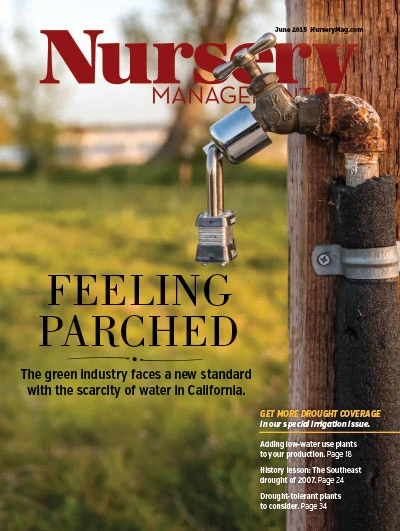
Explore the June 2015 Issue
Check out more from this issue and find your next story to read.
Latest from Nursery Management
- The Growth Industry Episode 17: Investing in IGCs with WorryFree® Plants
- New UF study sheds light on the hidden toll of back pain among horticulture workers
- Top 10 things to know about program selling
- Stat of the Week: 44% of growers plan to produce more container-grown perennials
- Oasis Grower Solutions hires plant scientist Timothy Frey
- New green industry leadership development program for women now available
- Seed Your Future launches '50K to Grow 50K' campaign to connect young people with horticulture careers
- American Floral Endowment announces two new Vic & Margaret Ball Internship Committee members