Photos © Monrovia/Doreen Wynja
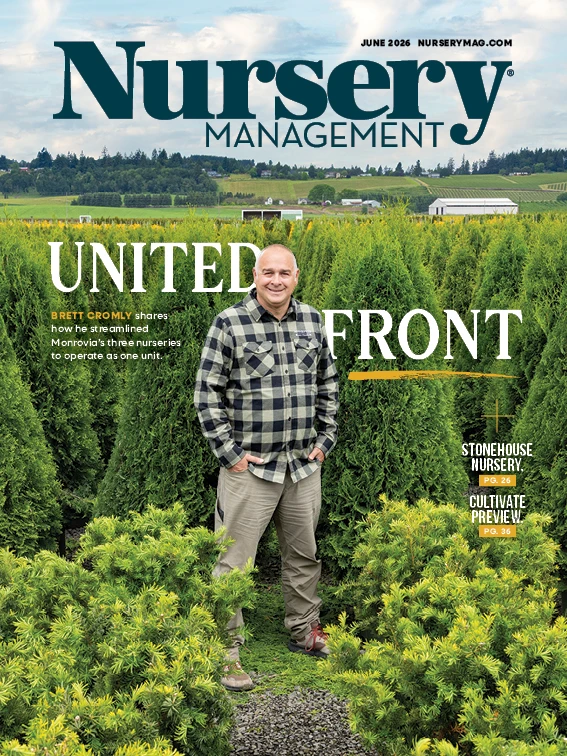
Editor's Note: This article originally appeared in the June 2026 print edition of Nursery Management under the headline “United front.”
Monrovia Nursery Company has changed a lot since being founded in 1926 by Harry E. Rosedale, Sr. The young Danish immigrant started on just 10 acres in Monrovia, California. The nursery moved to Azusa, California, in 1954, then 50 years later, moved to Visalia in the Central Valley. In the 1980s, the company acquired a nursery in Cairo, Georgia, and built another in Dayton, Oregon.
Today, Monrovia Nursery Company remains family owned. Harry Rosedale’s son Miles served as CEO until 2020 and continues as co-chairman of the board. Monrovia plants can be purchased online or at independent garden centers, Lowe’s home improvement centers and through re-wholesalers nationwide.
Brett Cromly is the general manager of Monrovia’s Dayton, Oregon, nursery. He started at Monrovia’s Cairo, Georgia nursery, where he was the sales manager for five years and the general manager for three. In December 2024, Cromly was offered the general manager job at the company’s flagship Oregon nursery, which became the company’s headquarters in 2025.

“They showed me the fireplace in the office and I said, ‘Sure,’” Cromly jokes.
Cromly is originally from Ohio, and he was buying from Monrovia before he worked for Monrovia.
“I used to come out here every year, and I told myself, ‘I can’t wait until I work at that nursery,’” he says. “I was going to find a job here somehow. I never thought I’d be running it, but that’s where I ended up.”
Cromly says that at one point, Monrovia’s three geographically different nurseries operated in very different ways. The process wasn’t nearly as collaborative as it is today. Cromly works with his counterparts in Georgia and California to keep everyone on the same page.
“We’ve been able to blend them together to run as one unit, which has been good to see,” Cromly says. “It just takes breaking down the barriers and getting people talking.”
Connecting the dots
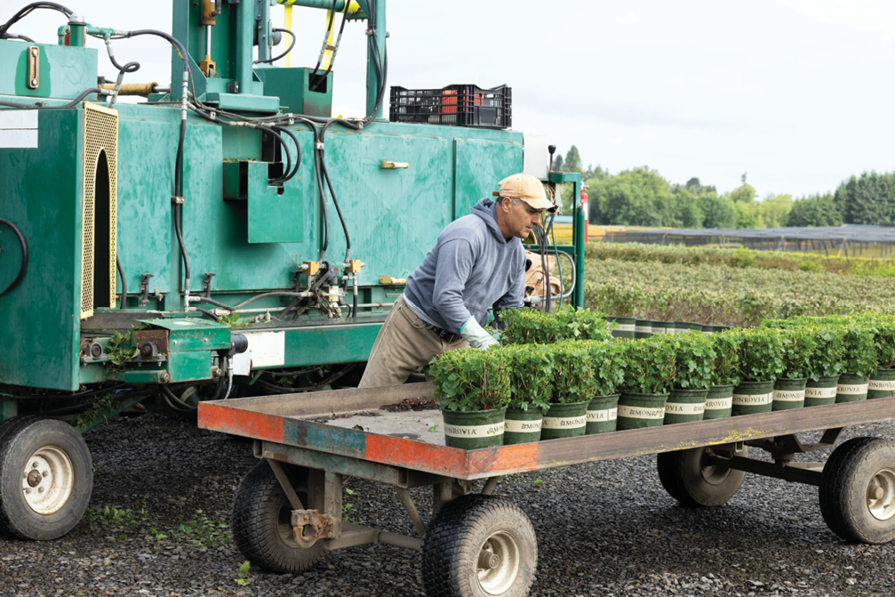
When Cromly started at Monrovia, sales and production were separate departments. One of his goals was to get those departments to work together in an effective way.
Tracy Harrison worked on the same team with Cromly in Georgia, as the production planning manager. He’s since become head grower at the Cairo nursery. At some nurseries, the dynamic between sales and production is often fraught with stress and heightened emotions.
“There’s always some finger pointing,” Harrison says. “‘This didn’t sell on time,’ ‘Well, no, it wasn’t ready on time.’ Between sales and production there has to be a bridge and a really close relationship there, and we had that.”
It took five years of incremental changes, like adjusting the mix of which plants were grown and tweaking production numbers, but Monrovia’s Georgia nursery was on the upswing.
“We were finding homes for (plants) and turning inventory like we hadn’t done in a long time,” Cromly says.
After he moved to Oregon, Cromly began implementing the same system there that he’d developed in Georgia. The first step was having sales join the production team’s meetings, working with inventory and bringing the sales manager on ride-alongs with the grower.
“Once those conversations start happening, you really start to mend the fence,” Cromly says.
Monrovia recently made another change in which the sales managers now report to the general manager instead of a vice president of sales. It might seem like a small change, but Cromly believes it makes the sales team a more ingrained part of the nursery team.

Right plant, right place
Each of Monrovia’s three nurseries have a niche, and the managers understand their location’s strengths and weaknesses.
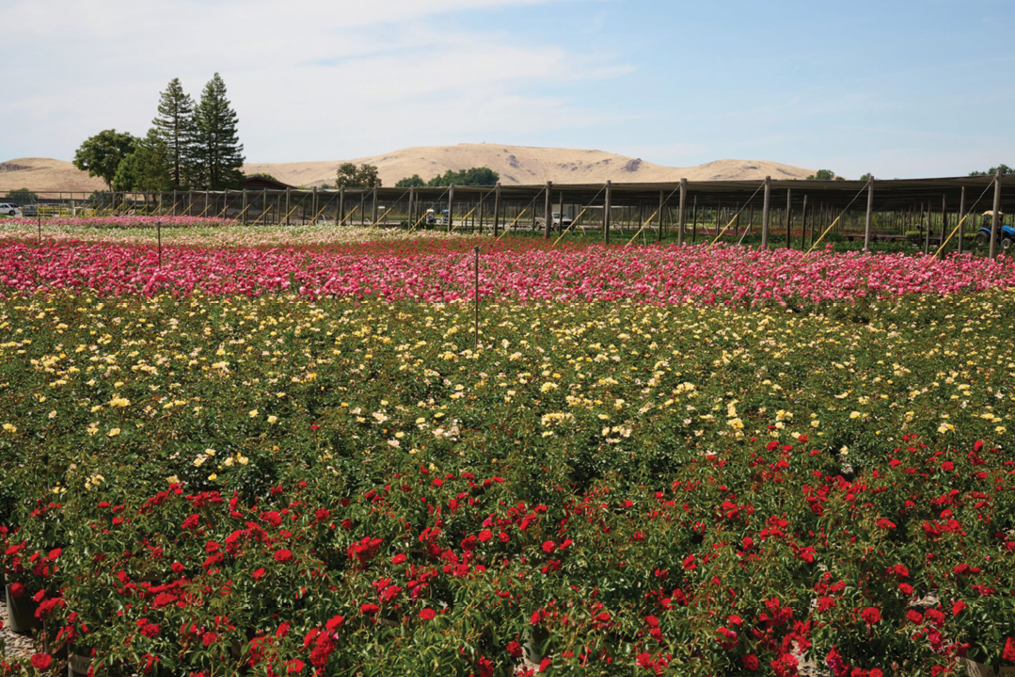
Oregon’s Willamette Valley area provides optimal growing conditions for woody shrubs, including hydrangea and rhododendron, as well as roses. The 750-acre Dayton nursery, built in 1984, is also known for its deciduous trees, conifers and Japanese maples.
Monrovia also has large-scale nursery locations in California and Georgia. Its Visalia, California, nursery includes 750 production acres in the San Joaquin Valley, ideal for growing heat and drought tolerant selections. Visalia is known for its production of bougainvillea, mandevilla, junipers, boxwood, grasses and succulents. The Visalia nursery also includes 40 acres dedicated to camellias, where Monrovia craftsmen (the company’s term for its plant production employees) grow more than 70 varieties.
The Cairo, Georgia, nursery includes 600 production acres just north of Tallahassee, Florida, and is known for growing tropicals, hollies and evergreen magnolias. Recent expansion in Georgia has allowed increased production of early spring color. This location also provides excellent conditions for trialing and testing roses, perennials and shrubs in humid locations.
“Tracy’s nursery is first-to-market color for most of the East Coast, east of the Mississippi,” Cromly says.
Some staples, like boxwood, H. macrophylla and roses are grown in all three locations. That’s because they are needed in such a great demand nationwide that Monrovia wants to be able to ship them quickly to any corner of the country in the most economical way.
Again, collaborative communication informs this process, both between nurseries and the teams within each nursery. The sales team provides input to the production planning team at each nursery, forecasting which plants they want. Harrison says the discussion involves push and pull between growers and sales trying to find the right number. They take sales history and current economic trends into account when attempting to estimate demand.
Sometimes a nursery’s sales team is bullish on a particular plant, but it isn’t the best plant for that nursery. That’s why it’s important that the production planning team is part of that discussion, Cromly says. They can add units at another nursery or change growing environments to make it successful.
“Sales may say ‘I want that plant in Georgia,’ but it’s not something we’d want to grow in Georgia,” Cromly says. “But now we know they want that plant and we can find the right location to put it in.”

Dancing to the same tune
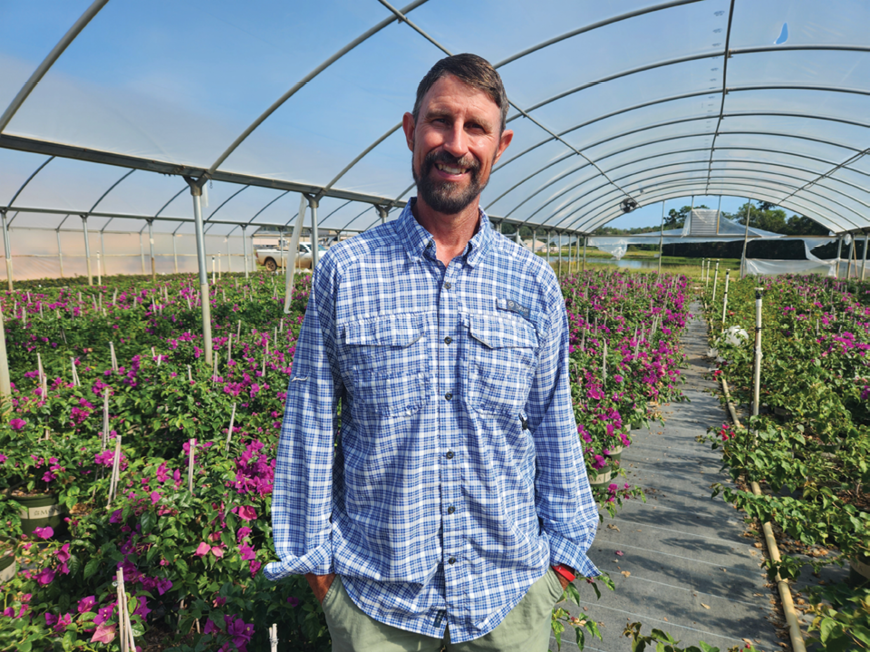
With three different nurseries in locations across the U.S., implementing a consistent system is a challenge. The leaders at each nursery — Cromly, Georgia nursery general manager Scott Andrews and California nursery general manager Pete Evans — deeply rely on each other.
Harrison says there is constant communication and collaboration between the nurseries about ways they can serve each other. Georgia, for example, doesn’t handle propagation. That nursery relies on Oregon and California to supply young plants. However, if they have extra numbers available of a particular plant that could fill a production gap in California or Oregon, they will step in to assist.
“It’s important that we all stay connected because we have the resources to do a lot of great things, but if we hoard them within our own nurseries, then the company doesn’t get the full benefit,” Harrison says.
One example of sharing resources is automation equipment. Monrovia has evaluated if their three nurseries would use certain equipment at different times of year. If so, would it make sense to move that notoriously expensive equipment around the country? Its weight might make it cost-prohibitive to ship, but Harrison says it’s worth considering.
“Each nursery has to be in tune with what the other is doing,” he says. “And we have to be all playing on the same sheet of music.”
Cromly says much of the success they’ve had is due to networking with teams from the three different nurseries and sharing best practices. For instance, if one nursery is having success growing a specific Monrovia plant that another nursery is struggling with, Cromly wants those growers to work together to find a way to mimic the successful practice.
A few times a year, Monrovia will have networking meetings, in which managers from each nursery discuss several major issues, develop strategies and make decisions.
To work together this way, the leadership has had to standardize tasks, methods and behaviors.
Harrison says that while the three nurseries are all different, they all have the same lodestone: the Monrovia brand.
“We know what Monrovia stands for within the industry, and we need to get that down to every level,” he says. “We have that framework to start with and we can standardize our processes, the way our plants look. There’s a lot of things we can do the same at all the nurseries. There’s a lot of things we can’t do the same at all the nurseries, but if we know what the overall goal is — which is the best quality in the country to ship — if we all have that same goal, we can be successful as one unit, even if it’s in a different climate or a different nursery.”

Meeting the standard
Harrison says the first step to keeping plants uniform between three nurseries is setting the original standard. Each Monrovia plant has a standard it needs to meet, from height to branching. Quality assurance procedures start in propagation.
“If we can get uniform quality there, it’s much easier to finish it looking the same.”
Every plant has its own standards on what would be an A-grade, a B-grade and a C-grade liner. Whether a plant starts in Oregon or California or is brought in from elsewhere, it needs to meet quality standards before it makes it onto the truck. Check-offs are performed at the nursery, as well, and plants need to pass inspection before craftsmen will take them to the canning line or onto the nursery.
“We have asked for plenty of credits over the years; we won’t pot it if we don’t think it meets the standards,” Harrison says. “But after a while of doing that and sticking with it, you get better material.”
Next, they use automation to give plants early frequent prunings. Globe, pyramidal and conical pruning machines with the same settings at each nursery are used to keep cuts consistent.
“We prune a lot of plants by hand at our nurseries, specialty topiaries, spirals — we’re famous for it, actually,” Harrison says. “But there’s a good number of things we can do by machine that just make cookie-cutter plants.”
Even for the hand-pruned products, Monrovia’s nurserymen have a standard they know how to reach. Whether it’s multi-trunk stems or training patio tree material, there’s plenty of collaboration that ensures each nursery is doing it the same way.
Cromly points to the roll-out of camellia in Georgia as an example of how Monrovia’s method works.
“California was the gold standard in camellias,” he says. “We had opportunities to grow camellias in Georgia, but I would say to start out it was a little, well, a lot bumpy.”
Harrison agrees that there was a learning curve. The crop grew differently in Georgia than it did in California, but the growers from both nurseries worked together to figure out how to grow successful camellias. They checked propagation as well, to make sure the stock was the same quality in both places. It took four years to have a crop that met their standard for excellence in Georgia.
“We had to tweak our process,” Cromly says. “But we all knew the standard. We knew where we needed to head. We just had to figure out how to do it in the climate Georgia provided us, as opposed to the climate California provided us.”
Mites have been a big problem in Georgia for a long time, especially in mandevilla production. But Monrovia plant protection manager Trae Crocker picked the brain of a long-time Monrovia grower about how he’d handled mites when the nursery was still in Azusa. Crocker implemented some of those techniques, including the use of beneficial insects, which Harrison says ended up managing the mite population more effectively than any chemicals they had been using.
“We’ve got a team that can be humbled enough to learn from another nursery’s successes, admit their failures and change,” Cromly says.
That attitude will serve Monrovia well as the company enters its second 100 years.
Explore the June 2026 Issue
Check out more from this issue and find your next story to read.
Latest from Nursery Management
- The Growth Industry Episode 14: Meet Lionel van der Walt, AmericanHort's new CEO
- Growers and suppliers say BFG Supply Co. will close
- Stemmer from BioWorks
- BioWorks introduces Stemmer silicon-based plant health solution
- Silver Fern awarded grant to expand AI-powered demand planning for greenhouse, nursery growers
- All-America Selections announces first three new AAS Winners for 2027
- 2026 Special Recognition Award recipients announced at PPA National Symposium
- [WATCH] July issue recap