Some of the most valuable lessons are the ones we learn from someone else’s mistakes.
That includes lessons from fictional characters. There are certain TV episodes that are funny or entertaining precisely because they are so painful to watch, like the train-wreck romance unraveling in real time on your favorite reality show. We laugh, but we also cringe behind half-covered eyes. We feel relieved and grateful that the terrible decision or situation unfolding on screen does not belong to us.
Few shows illustrate this better than “The Office,” which can trigger the kind of wheezing, uncontrollable laughter that ends in tears, while also making me want to hide behind the couch in secondhand embarrassment.
I’m thinking, of course, of “Scott’s Tots.”
In the infamous episode, wacky but well-meaning Dunder Mifflin regional manager Michael Scott faces the consequences of a promise he made 10 years earlier. When a group of students were in third grade, he vowed to pay for their college tuition if they graduated from high school. A decade later, they do. Michael, who never became the millionaire he envisioned, must tell them the money is not there.
It is excruciating. The students greet him with a song and dance. They believe their future is about to change. Then Michael has to explain, awkwardly and painfully, that his promise was built on good intentions rather than any real plan to follow through.
Lesson learned: Good intentions do not replace systems. A promise, policy or goal means very little without resources, ownership and verification. It is not enough to say something matters. Someone has to be responsible for it. Someone has to check that it is happening. Someone has to make sure reality matches the story being told.
That’s not a bad lesson for food safety.
The stories in this issue’s cover feature, “Audit Horror Stories," are not fiction. They’re real accounts from auditors, consultants and food safety professionals who have seen routine days turn into unforgettable ones — like a bagel machine malfunction that ruined what might otherwise have been a perfectly fine audit.
Like the best cringe-comedy episodes, these stories might make you laugh or gasp. They’ll definitely make you think, “Please don’t let that be us.”
The goal is not to poke fun at another facility’s mistake or turn someone else’s bad day into entertainment, but to learn from the moments auditors remember. Those moments often reveal where systems break down.
In food safety, the stakes are too high for every lesson to be learned the hard way. An audit horror story gives readers the chance to ask better questions before their own audit: Could this happen here? Would we catch it? Do our records tell the real story? Are our corrective actions preventing recurrence, or are we just hoping the issue will not come back?
Michael’s mistake was making a promise and trusting that everything would somehow work out later. Food safety professionals don’t have that luxury.
In other words: Don’t be the Michael Scott of your next audit.
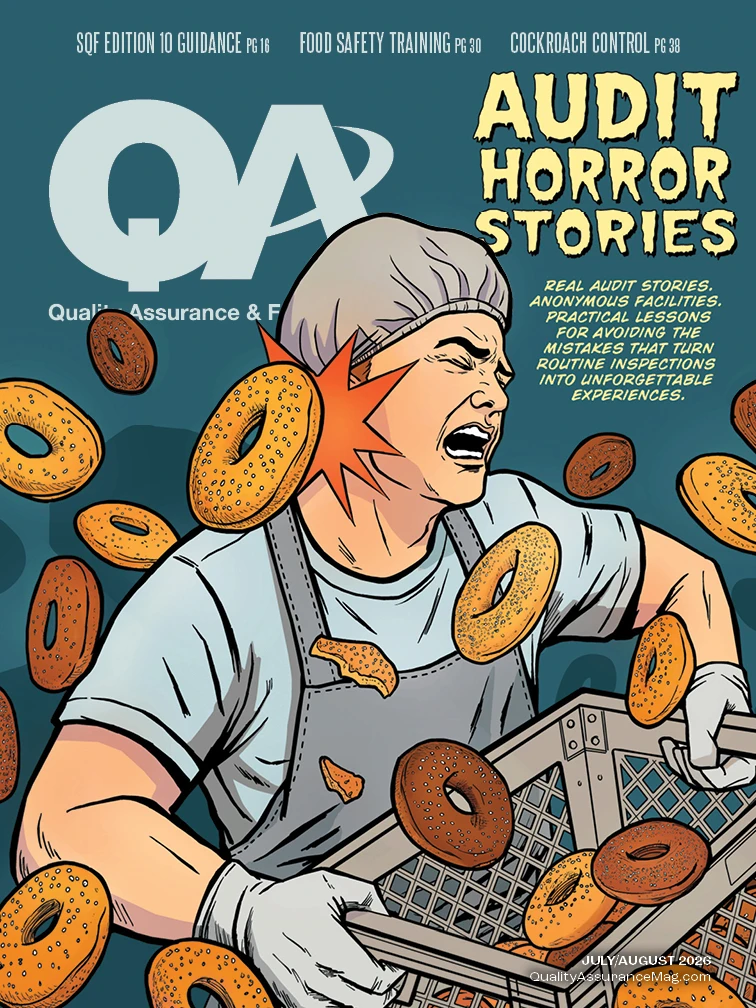
Explore the July/August 2026 Issue
Check out more from this issue and find your next story to read.
Latest from Quality Assurance & Food Safety
- FSIS to Expand Animal Drug Residue Testing Capabilities
- FDA Advises Food Facilities to Protect Registration Information
- FDA Says Cyclospora Lettuce Test Was False Positive
- Taylor Farms Removes Iceberg Lettuce Sourced from Mexico Amid Cyclospora Outbreak
- FDA, CDC Tie Multistate Cyclospora Outbreak to Taco Bell Lettuce
- BCG and CGF Release New Report on AI Usage by CPG and Retail Companies
- IntelliAM AI Launches Industrial Intelligence Platform
- QA Virtual Conference to Explore Pest Control Strategies for Food Facilities