
Whitney Cranshaw, Colorado State University,
Bugwood.org
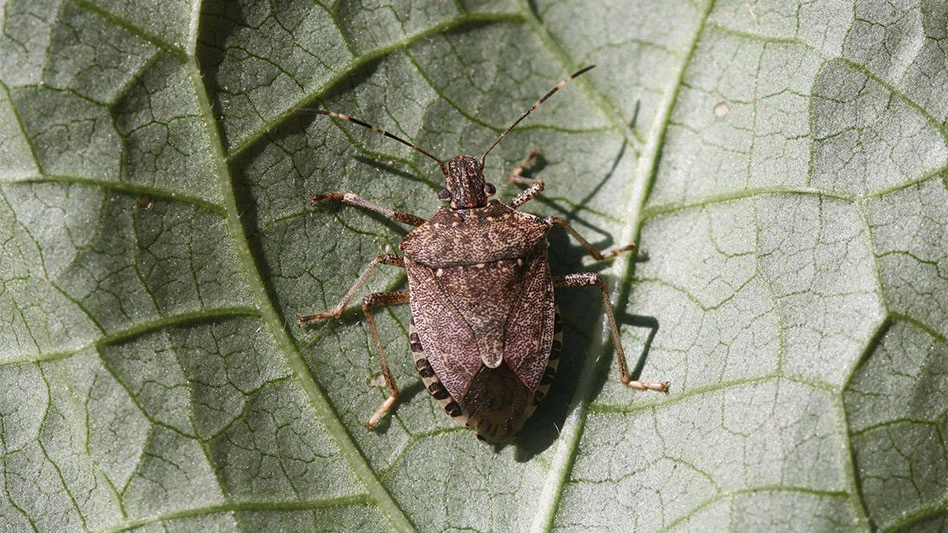
An invasive insect unintentionally brought over from Asia, the brown marmorated stink bug (BMSB), Halyomorpha halys, poses a significant risk to specialty crop growers. Since its initial discovery in eastern Pennsylvania in the mid-1990s, BMSB has become a conspicuous insect in the mid-Atlantic U.S. As part of several ongoing research projects, entomologists have been observing which plants this insect typically uses for food and reproduction in its new environment. BMSB is a tree-loving bug but has a very broad host plant range. A collection of articles originally published in China, Japan and Korea and translated with American Farm Bill funds yielded tactics used in Asia against BMSB.
Brown marmorated stink bug (BMSB) has been detected in 47 states and four Canadian provinces, posing severe agricultural problems in 10 states and nuisance problems in 21 others. It has been spotted on more than 170 different types of plants, including large trees like Eastern redbud, shrubs like English holly and ornamental trees like crabapples and flowering cherry.
Explore the February 2023 Issue
Check out more from this issue and find your next story to read.
Latest from Nursery Management
- The Growth Industry Episode 14: Meet Lionel van der Walt, AmericanHort's new CEO
- Growers and suppliers say BFG Supply Co. will close
- Stemmer from BioWorks
- BioWorks introduces Stemmer silicon-based plant health solution
- Silver Fern awarded grant to expand AI-powered demand planning for greenhouse, nursery growers
- All-America Selections announces first three new AAS Winners for 2027
- 2026 Special Recognition Award recipients announced at PPA National Symposium
- [WATCH] July issue recap